
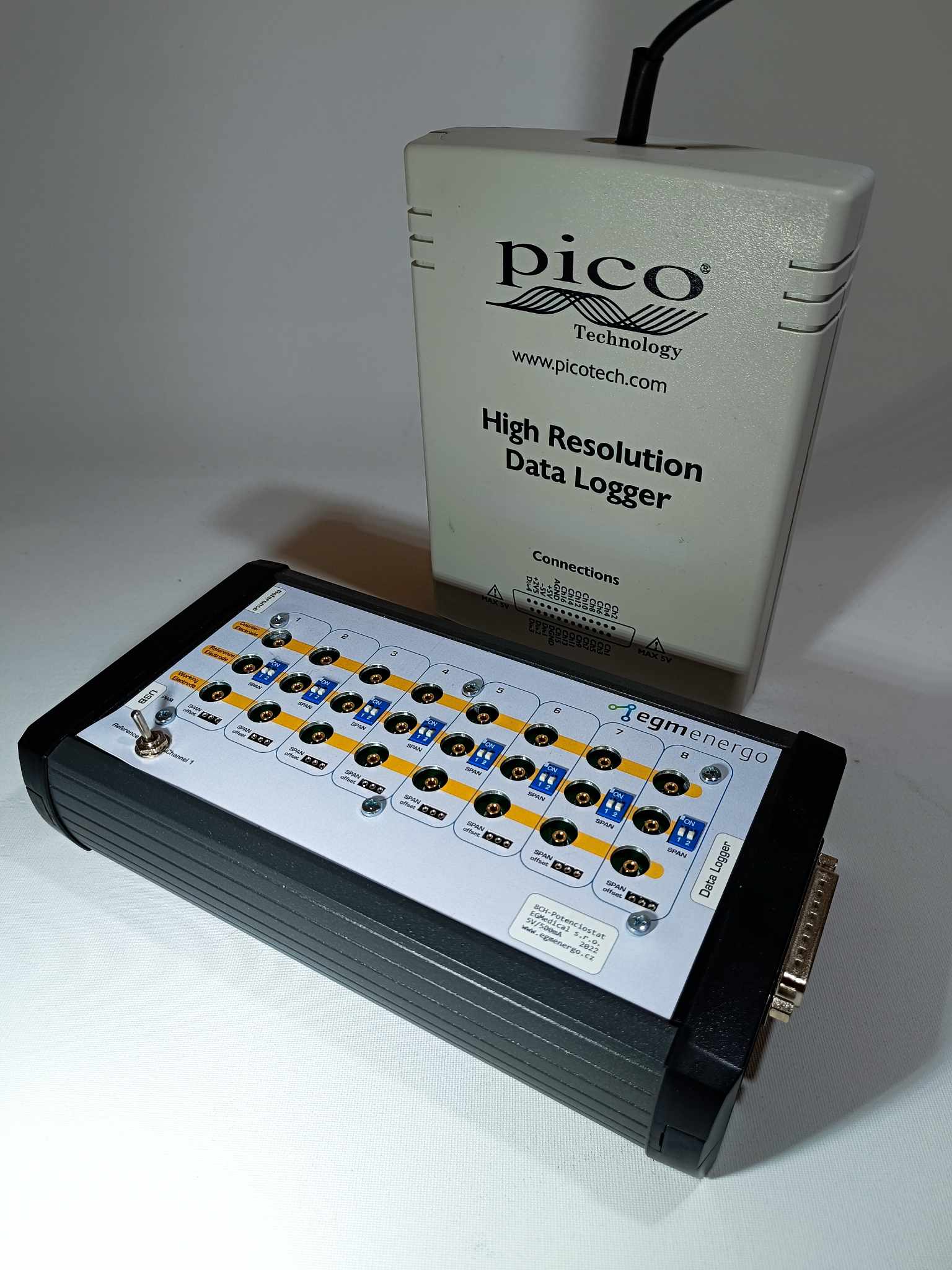
8/16-Channel Potentiostat for High Resolution Data Logger
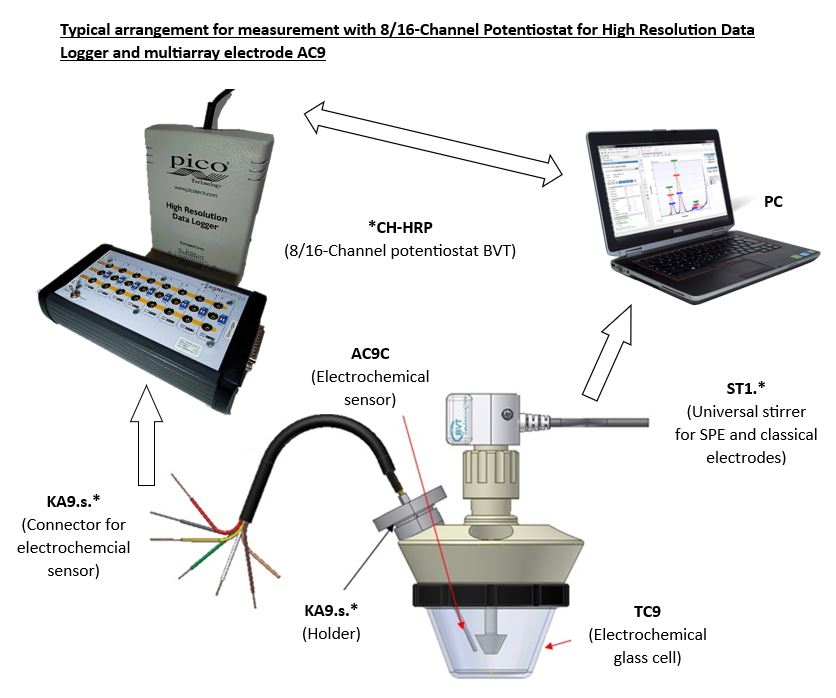
The device consists of a combination of an multi-channel potentiostat/converter (BVT Technologies) and an external USB Pico ADC high resolution data logger (Pico Technology).
The data logger can be supplied in two versions: ADC-20 (20 bits, 8 channels) or ADC-24 (24 bits, 16 channels). For detailed specifications, see the attachment at the end of the document. The device allows measurements from up to 8 or from up to 16 independent channels. The basic output signal is a voltage in the range of -2.5 to 2.5 V. All channels are programmable (the output can be concentration, temperature, pressure…).
After connecting the device to a PC with Pico Technology’s Picolog 6 measurement program installed, the voltage [V] can be processed using math channels and directly recorded in real time as temperature, current, resistance, frequency, % and pressure, see measurement example at the end of the document.
For temperature measurement, the device is compatible with resistance thermometers (Ni 1000, Ni 5000, Pt 1000. Power is provided via USB-B, the maximum electrical consumption of the device is 500 mA.
Device Usage
- Temperature measurement with different temperature sensor (resistance thermometers Ni 1000, ni 5000, Pt 1000)
- Voltage measurement
- Conductivity and resistance measurement
- Amperometry measurement
* For this product, we recommend our customers use the Training Service from BVT.
(https://bvt.cz/produkt/offer-of-long-term-automated-measurements-on-bvt-apparatus/)
You may also like…
-
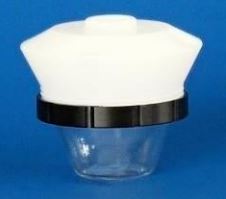
TC9 Electrochemical Glass Cell
Read moreBorosilicate glass cell serves for electrochemical measurements.
The analyzed solution can be thermostated by external thermostat MT1-1.
Cell openings are designed for stirrer ST9 or mini RDE and connector KA9.s with folder for electrochemical sensor AC9C, classical electrodes WCEc, ACEc and RCEc. The device enables the measurement with inserted samples.
-
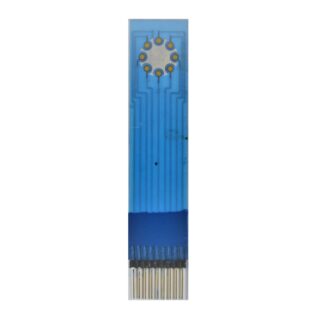
AC9C Electrochemical sensor
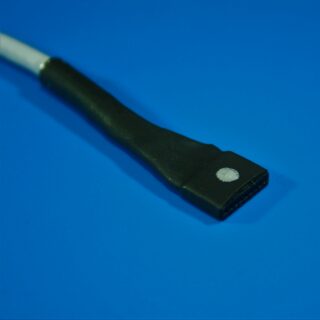
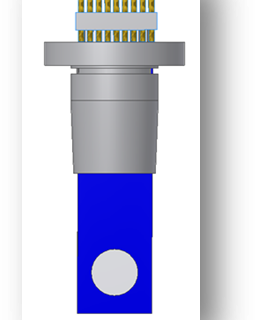
Read moreAmperometric sensor with an array of 8 working electrodes and 1 common reference electrode made by thick film technology with integrated connector
Dimensions: 59.0 x 12.7 x 0.63 mm
WE material: Au/Pt, Au, Pt, Ag, C
The sensor is formed on a corundum ceramic base. On to this surface eight working electrodes, and the reference electrode are applied. The electrodes can be made of variety of materials (see below). At the end of the sensor there is an integrated connector. It is connected with the active part by the silver conducting paths which are covered by a dielectric protection layer. Different bio-chemically active substances can be immobilised on the working electrodes of the sensor.
Related products
-

Platinum Coated Titanium Mesh Electrode with Holder – set of 10 pcs (redox.me)
Read moreThe metal counter (auxiliary) electrode is provided in electrochemical cell as a current sink to shunt excess current away from the reference electrode. Platinum Coated Titanium Mesh Electrode is a cheap alternative to pure Platinum Electrodes like Platinum Gauze Electrode or Metal Wire Auxiliary Electrode. Platinum coating makes this counter electrode inert under the reaction conditions and provides catalytic properties. The electrode is installed in the Basic Sample Holder (1 pcs included in the set), which allows full immersion of the electrode in the electrolyte (wet Tantalum contact). It well fits aqueous and organic solvent electrolyte requirements. Electrode size is customizable.
Application note
The Platinum Coated Titanium Mesh Electrode is fully immersed in the ion-conducting solution as a counter electrode. An electric current is passed between the working electrode and the Platinum Coated Titanium Mesh Electrode for a certain amount of time. After the process, the electrode should be washed several times with ethanol and dried under the nitrogen flow. Store the electrode in a dedicated compartment to avoid scratching. Discoloration may indicate the degradation (dissolution) of the Platinum layer and oxidation of Titanium mesh.
This electrode is used mainly in systems where there is a high risk of its contamination by organic or inorganic deposit during the electrochemical reaction. It is also a cheap replacement for pure Platinum electrode in electrodeposition processes.Specification
Titanium grade: GR1
working current: <5000 A/m2
Platinum content: >15 g/m2
Platinum coating thickness: 760 – 1500 nm
mesh hole size: 3 mm x 2 mm
mesh thickness: 0.5 mm
electrode size: 25x25mm2, 50x50mm2, 100x100mm2, custom
pH range: 1-12Intrastat data
HS Code: 71151000
Country of Origin: Sweden
NET weight: 100 gProduct includes
10 x Platinum Coated Titanium Mesh Electrode of selected size
1 x Basic Sample Holder (if selected) -
SPE Connector.GC.1 for measurements in glass
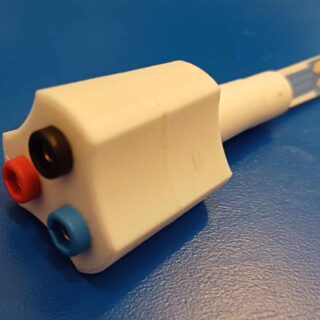
Read moreThe connector enables the use of the biosensor or electrochemical sensor based on the substrates AC1, AC4 and TS1 in glass cell TC4, TC5, TC6 or TC7.
The connector enables measurement with screen printed electrodes with width 7.26 mm and standard contact pads pitch (2.54 mm).
It is compatible with other SPE´s that use the same distance between the contact pads (2.54 mm). The cone at the connector sensor side is NJ 8/10 which enables to use the connector with any standard chemical vessels.Termination: 2 mm Banana plugs
-

Silver / Silver Chloride Refillable Reference Electrode – 6 mm dia. (redox.me)
Read moreIt is a compact refillable Ag/AgCl reference electrode equipped with ceramic frit molten into the glass body. This electrode outperforms competing products in terms of mechanical stability, voltage stability and lifetime. In general, the reference electrode is composed of a system of phases, which retain an essentially constant composition, and therefore provides a stable potential by which the working electrode potential can be monitored. The phases present in reference electrodes undergo reversible redox processes at a very high rate, enabling them to rapidly adjust to changes in the solution’s ionic activity, but leaving them sensitive to the passage of large current densities.
Application note
This electrode is commonly used with aqueous acidic electrolytes, but due to the low resistance of the frit it can be used with standard non-aqueous electrolytes, as well. The reference electrode should be stored with the rubber plug applied on the tip. Please see the full instruction here. Keeping in the solution may shorten its lifetime (the electrode operates well as long as there is at least ¼ of the solution in the electrode tube). Before use rinse it with deionized water. If air bubbles are present around the porous frit, flick the tip several times to remove them. For cleaning use detergent (dish washing detergent with water), alcohols or acetone and rinse it with deionized water at the end. To re-fill the electrode please follow this article.Specification
effective length: 30 mm or 70 mm
tube diameter: 6 mm
filling solution: 3M KCl
potential stability: <5 mV
frit resistance: 2-10 kohm at RT
operating temperature: 0-100 deg C
potential vs SHE at 25 °C: 0.207 VIntrastat data
HS Code: 90278930
Country of Origin: Sweden
NET weight: 100gProduct includes
1 Ag/AgCl refillable reference electrode
1 O-Ring
1 glass tube for storing purposes -

Basic Sample Holder – metal contact, 4 mm max. thickness (redox.me)
Read moreBasic Sample Holder with a metal contact works as an electrical conductor between an electrode material (free-standing or deposited on a substrate) and an external circuit. This holder consists of PEEK body, pure Tantalum, Stainless Steel 316L, Titanium, Copper or Nickel metal electrical contact, and PEEK screw to fix the electrode. It is compatible with most of inorganic and organic based plates, free-standing membranes or thin films deposited on flexible and rigid substrates. A maximum thickness of the sample is 4 mm. Tantalum is known to be inert to practically all organic and inorganic compounds. Tantalum’s corrosion resistance is very similar to that of glass, as both are unsuitable for use in hydrofluoric acid and strong hot alkali applications. Therefore, in those cases, we recommend the other wire contact variant. The metal contact can be fully immersed in the electrolyte.
Application note
Generally, the electrode is fabricated by fixing the electrochemical active sample into the holder using a screw. Such electrode is immersed in the ion-conducting solution as a working electrode or counter electrode. An electric current is passed between the working electrode and the counter electrode for a certain amount of time. Metal wire contact is permanently installed in the PEEK body. The holder is designed to be used multiple times. The holder should be cleaned prior to the installation of electrode material.Specification
holder body material: PEEK
rod diameter: 6 mm
contact material: Ta, SS 316L, Ti, Cu or Ni
contact wire diameter: 0.6 mm
contact wire total length: 110 mm
holder length: 70 mm
maximum sample thickness: 4 mmIntrastat data
HS Code: 90309000
Country of Origin: Sweden
NET weight: 100 gProduct includes
1 x Basic Sample Holder
1 x PEEK M3 screw
1 O-Ring (FKM for aqueous or FFKM for organic electrolytes)