Category
- NEW PRODUCTS
- CUSTOMER SERVICES
- Custom made glass products
- Custom made and Modified Screen Printed Electrodes
- Sensors and electrodes
- Cables and connectors
- Cell
- Spectro, Photo, Raman – electrochemical cells
- Membrane Capacitive Deionization configurable cell
- NREL High-Pressure Low-Temperature Electrolysis Cell
- High-Pressure (25 bar) Single-Compartment Electrochemical Cell
- Stirrers
- Pumps
- Kits & Sets
- Minithermostat
- Modular PEM Electrolyzer Test Station
- Measurements of battery and supercapacitor materials
- Potentiostats
- Manual Screen Printer
- Accessories
- Discounted SPEs (at a reduced price with visual defects/inconsistancies, but fully functional)
Category: NEW PRODUCTS
NEW PRODUCTS
Showing 1–16 of 37 results
-
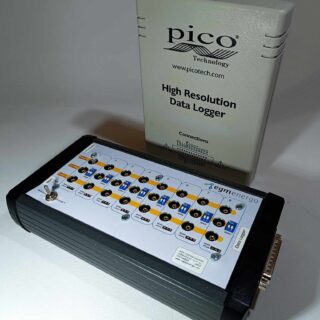
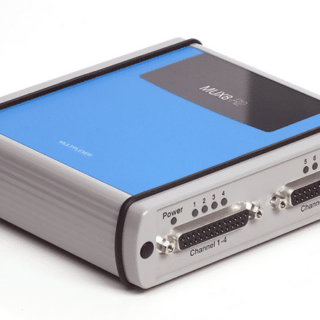
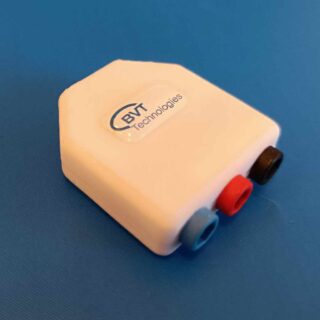
8/16-Channel Potentiostat for High Resolution Data Logger
Read moreThe device consists of a combination of an multi-channel potentiostat/converter (BVT Technologies) and an external USB Pico ADC high resolution data logger (Pico Technology).
The data logger can be supplied in two versions: ADC-20 (20 bits, 8 channels) or ADC-24 (24 bits, 16 channels). For detailed specifications, see the attachment at the end of the document. The device allows measurements from up to 8 or from up to 16 independent channels. The basic output signal is a voltage in the range of -2.5 to 2.5 V. All channels are programmable (the output can be concentration, temperature, pressure…).
After connecting the device to a PC with Pico Technology’s Picolog 6 measurement program installed, the voltage [V] can be processed using math channels and directly recorded in real time as temperature, current, resistance, frequency, % and pressure, see measurement example at the end of the document.
For temperature measurement, the device is compatible with resistance thermometers (Ni 1000, Ni 5000, Pt 1000. Power is provided via USB-B, the maximum electrical consumption of the device is 500 mA.
Device Usage
- Temperature measurement with different temperature sensor (resistance thermometers Ni 1000, ni 5000, Pt 1000)
- Voltage measurement
- Conductivity and resistance measurement
- Amperometry measurement
* For this product, we recommend our customers use the Training Service from BVT.
(https://bvt.cz/produkt/offer-of-long-term-automated-measurements-on-bvt-apparatus/)
-
AC1.GP. Electrochemical sensor with a working electrode of guaranteed purity
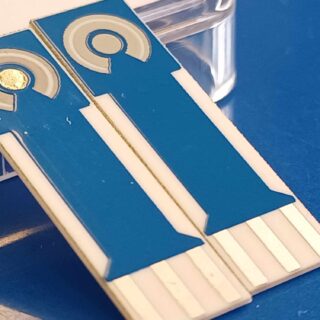
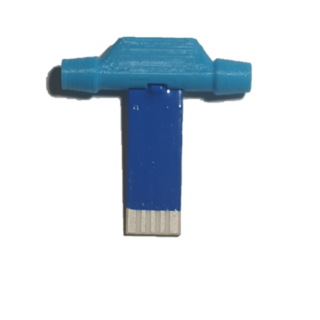
Read moreBasic amperometric three-electrode sensor with patented structure made by thick film technology.
Dimensions: 25.40 mm x 7.26 mm x 0.63 mm
WE material: gold, platinum, silver, copper, iron, nickel, cobalt, chromium, tantalum, irridium, rhenium, magnesium, palladium, zirconium and others
*Selection of sensor electrode materials other than those listed above is possible upon agreement with the customer.
The sensor is made on a corundum ceramic base. Working, reference and auxiliary electrodes are applied to this surface. Working, reference and auxiliary electrodes are made of different materials. At the end of the sensor there is a contact field that is connected to the active part by silver conductive paths that are covered with a dielectric protective layer. The working electrode of the sensor with a diameter of 2 mm is made of a material of guaranteed purity of up to 99.99 % depending on the selected material– standard layer thickness 0.0125 mm.
We also offer a working electrode made of polished gold AC1P.W*.R*, with homogenous surface with roughness less than 1 µm.
We also offer activated graphite sensors on customer request.
-
ACEc.Pt plate Auxiliary Classic Electrode Conic with platinum plate
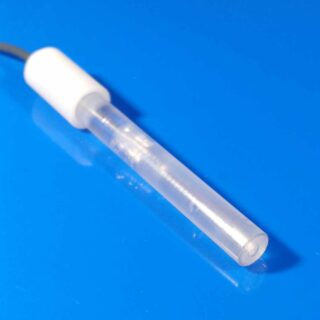
Read moreACEc.Pt plate is a glass tube with platinum plate of guaranteed purity 99.99 %. Standard connection is with a 2 mm banana plug. Auxiliary classic electrode with platinum plate (ACEc.Pt plate) is designed for electrochemical measurements.
Dimensions of Pt plate: 15 x 5 mm Pt
(Pt thickness approx. 0.21 mm)The size of the platinum sheet can be adjusted at the customer’s request.
-
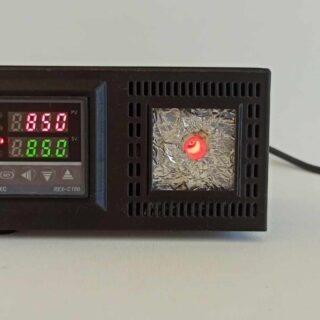
Activation furnance for electrochemical sensors
Read moreThe activation furnance is a device used for curing individual sensors of the AC1 type. At a defined temperature (up to 1000 °C) depending on the electrode and sensor materials. When the sensor is cured, the surface of the electrodes is cleaned from surface oxides and organic impurities, which results in regeneration of the sensor or its activation. In this way, for example, old sensors with immobilized enzyme layers can be cured for reuse – see example at the end ot the document.
-
Basic electrochemical cell setup (redox.me)
Read moreThis is a stationary solution basic electrochemical cell for measurements of electrodes in a form of:
a) rod/disc (6 mm dia.),
b) thin film deposited on a flat substrate (using a wire clip) and
c) membrane (using a wire clip).
The working, counter, and reference electrodes are mounted in a top casing either in 2-, or 3-electrode setup. The cell elements are constructed with materials that are inert to the sample (glass and PEEK). It well fits aqueous (FKM/EPDM O-Rings) and organic solvent (FFKM O-Rings) electrolyte requirements. The construction is gas-tight and can be used when the removal and exclusion of contaminants such as oxygen and water is required by bubbling of an inert gas through the electrolyte. The cell chamber is available in several material variants here (glass, PTFE, PEEK)
Application note:
The reference electrode tip should be placed at the level of working electrode center. This will ensure a low potential drop throughout the electrolyte solution for low-current experiment. Various auxiliary electrodes are suitable for this cell including metal wire and metal foil electrodes as well as graphite rod. The bubbling of gas through the solution must be stopped prior to experiment.Specification:
maximum electrolyte volume: 50 mL
electrode plug diameter: 6 mm
number of electrode slots: 3Intrastat data:
HS Code: 90309000
Country of Origin: Sweden
NET weight: 200 gSetup includes:
Item Qty B-A-BEC-50 B-O-BEC-50 BEC 50 mL – Basic Electrochemical Cell 1 C-A-BEC-50 C-O-BEC-50 Metal wire auxiliary electrode – 50HX15 0.6/250 mm, platinum (99,9%), 1 mm dia. gold plated pin 1 E-A-50HX15_Pt-1mm E-O-50HX15_Pt-1mm Silver / Silver Chloride Reference Electrode – Ag/AgCl 70 mm 1 E-Ag/AgCl_70 Non-aqueous Silver / Silver Ion Reference Electrode – Ag/Ag+ 70 mm 1 E-Ag/Ag+_70 Working disk electrode – 2 mm dia., PEEK BODY 6 mm dia. – 70 mm, glassy carbon 1 E-A-DISK_GC-70 E-O-DISK_GC-70 10 pcs of Tantalum wire clip with septum plug 0.6 mm dia., 60 mm long 1 E-A-Ta_CLIP-0.6/60-10p E-O-Ta_CLIP-0.6/60-10p -
Basic electrochemical H-cell setup (redox.me)
Read moreThis is a stationary solution double compartment electrochemical H-Cell for measurements of electrodes in a form of:
a) rod/disc (6 mm dia.),
b) thin film deposited on a flat substrate (using a wire clip) and
c) membrane (using a wire clip).
The working, counter and reference electrodes are mounted in a top casing either in 2-, or 3-electrode setup. The counter electrode is placed in a compartment separated from the other electrodes by ion-exchange membrane (19 mm to 25 mm dia.), so the electrochemical products appearing at working and counter electrode do not affect the opposite electrode. The counter electrode compartment is equipped with a separate inlet and outlet for easy filling with an electrolyte and evacuation of gaseous products. It can accommodate standard Metal Wire Auxiliary Electrode as well as square shape electrodes with sizes up to 25 mm x 25 mm. The cell elements are constructed with materials that are inert to the sample (glass and PEEK). It well fits aqueous (FKM/EPDM O-Rings) and organic solvent (FFKM O-Rings) electrolyte requirements. The construction is gas-tight and can be used when the removal and exclusion of contaminants such as oxygen and water is required by bubbling of an inert gas through the electrolyte. After removal of the counter electrode glass compartment, the cell gets the functionality of a Basic Electrochemical Cell – BEC 50 mL.
The cell chamber is available in several material variants here.
Application note:
The reference electrode tip and working disk electrode tip should be placed in the middle of the membrane. This will ensure a low potential drop throughout the electrolyte solution for low-current experiment. Various auxiliary electrodes are suitable for this cell including metal wire and metal foil/mesh/foam electrodes as well as graphite rod. The bubbling of gas through the solution must be stopped prior to experiment.Specification:
minimum electrolyte volume in WE compartment: 22 mL
minimum electrolyte volume in CE compartment: 6 mL
maximum electrolyte volume: 40 mL
minimum membrane diameter: 19 mm
maximum membrane diameter: 25 mm
maximum membrane thickness: 0.5 mm
electrode plug diameter: 6 mm
number of electrode slots: 3Intrastat data:
HS Code: 90309000
Country of Origin: Sweden
NET weight: 200 gSetup includes:
1 x BE H-Cell 50 mL – Basic Electrochemical H-Cell 50 mL
1 x Metal Wire Auxiliary Electrode – 50HX15 0.6/250 mm (Platinum)
1 x Reference electrode (Ag/AgCl, or Ag/Ag+)
1 x Glassy Carbon disk electrode – 2 mm dia.
1 x Plug with silicone rubber septum and set of Tantalum wire clips (set of 10) -
Basic Sample Holder – metal contact, 4 mm max. thickness (redox.me)
Read moreBasic Sample Holder with a metal contact works as an electrical conductor between an electrode material (free-standing or deposited on a substrate) and an external circuit. This holder consists of PEEK body, pure Tantalum, Stainless Steel 316L, Titanium, Copper or Nickel metal electrical contact, and PEEK screw to fix the electrode. It is compatible with most of inorganic and organic based plates, free-standing membranes or thin films deposited on flexible and rigid substrates. A maximum thickness of the sample is 4 mm. Tantalum is known to be inert to practically all organic and inorganic compounds. Tantalum’s corrosion resistance is very similar to that of glass, as both are unsuitable for use in hydrofluoric acid and strong hot alkali applications. Therefore, in those cases, we recommend the other wire contact variant. The metal contact can be fully immersed in the electrolyte.
Application note
Generally, the electrode is fabricated by fixing the electrochemical active sample into the holder using a screw. Such electrode is immersed in the ion-conducting solution as a working electrode or counter electrode. An electric current is passed between the working electrode and the counter electrode for a certain amount of time. Metal wire contact is permanently installed in the PEEK body. The holder is designed to be used multiple times. The holder should be cleaned prior to the installation of electrode material.Specification
holder body material: PEEK
rod diameter: 6 mm
contact material: Ta, SS 316L, Ti, Cu or Ni
contact wire diameter: 0.6 mm
contact wire total length: 110 mm
holder length: 70 mm
maximum sample thickness: 4 mmIntrastat data
HS Code: 90309000
Country of Origin: Sweden
NET weight: 100 gProduct includes
1 x Basic Sample Holder
1 x PEEK M3 screw
1 O-Ring (FKM for aqueous or FFKM for organic electrolytes) -
Battery Test System (32 channel battery cycler) – WBCS3000Le32
Read more- Low current model
- 32 channel battery cycler
(expandable up to 128 channels) - No. of minimum channel : 16 channels
- max. voltage range : ±5V
- max. current range : 100mA@5V
Application
- For low current application
- Micro battery application
- Sensor application
- Electroanalytical application
Features
- low current type
- channel power limit : max. 500mWatt per channel
- number of minimum channels : 16 channels
- extra channels can be added by the unit of 16 channels
- voltage range : ±5V
- current range : 4 ranges, max. ±100mA
- voltage/current accuracy : ±0.01% f.s.
- Sampling time : 10msec (20msec with option)
- potentiostat/galvanostat circuit
– no switching time (charging to discharging, discharging to charging)
– analog feedback control to keep constant voltage & current
– capability of electrochemical experiments by controlling voltage versus
reference electrode for positive voltage polarity only. - high precision
– 16bit(0.0015% full scale) ADC, DAC
– MOSFET type linear power supply circuit.
– shield cell cable to prevent EMI noise - safety
– unique “fail check” function: to protect the system and cell, the system
will automatically stop when measured value is different from control
value by battery failure or wrong cell connection etc.
– system safety parameter: if the measured value is over system specification,
the running channelwill stop automatically.
– user defined safety condition setting: user can input safety level following
test cell’s chemistry.
– automatic cell connection check: before experiment, if the cell voltage value
is near 0Volt, program gives the warning message for the operator to check
the cell connection.
– if the operator did press stop function button by mistake, confirmation message
box appears.
– to prevent over current, poly-switch is located in each channel.
– watchdog function: stop “running channel(s)” on communication failure.
– while any channel is running, operator could not close the server program.
– if main program was down by unstable operating system, independent server
program keeps the experiment (control & data acquisition) without dead time. - maintenance & system expansion
– plug-in type channels
– power supply per 32 channel
– easy expansion up to 128 channels by adding 16ch substation
– each channel has Poly switch instead of fuse. - LAN communication
- User friendly software
- Compatible with IVMANTM DC data analysis software without purchasing license code
- Customized specification available
Experimental Techniques
Energy Test
- CC/CV (Lithium battery) test menu
- CC/CC (NiCd(NiMH) battery) test menu
- Steady state CV
- Pstat IV curve
- Gstat IV curve
- EVS (Electrochemical voltage spectroscopy) test
- GITT (Galvanostatic intemittent titration technique) test
- PITT (Potentiostatic intermittent titration technique) test
Electroanalytical techniques
- Cyclic voltammetry
- Linear sweep voltammetry
- Chrono-amperometry
- Chrono-coulometry
- Chrono-potentiometry
Corrosion measurement- Tafel plot
- Potentiodynamic
- Potentiostatic
- Galvanostatic
- Cyclic polarization
- Ecorr vs. time
- Linear polarization resistance
Options
- Auxiliary voltage & temperature measurement
- Rack mount system available
- Multiple control board configuration available
- Battery jig
-
Battery Test System (8 channel battery cycler) – WBCS3000Ls / WBCS3000Le
Read more- Low current model
- 8 channel battery cycler (expandable up to 128 channels)
- max. voltage range : ±5V
- max. current range :
– Model WBCS3000Ls : ±10mA
– Model WBCS3000Le : ±100mA - Customized specification is available.
Application - For low current application
- Micro battery application
- Sensor application
- Electroanalytical application
Features
- low current type
- voltage range : ±5V
- current range : 4 ranges
– Model WBCS3000Ls : max. 10mA
– Model WBCS3000Le : max. 100mA - voltage/current accuracy : ±0.02% f.s.
- sampling time
* Without option
– 1~32 channels system: 10msec
– 33~40 channels system: 20msec
– 41~64 channels system: 50msec
– 65~128 channels system: 50msec
* With option
– 1~16 channels system: 10msec
– 17~40 channels system: 20msec
– 41~64 channels system: 50msec
– 65~128 channels system: 50msec option) - max. 300,000 data point memory on control board
- potentiostat/galvanostat circuit
– no switching time (charging to discharging, discharging to charging)
– analog feedback control to keep constant voltage & current
– capability of electrochemical experiments by controlling voltage versus
reference electrode for positive voltage polarity only. - high precision
– 16bit(0.0015% full scale) ADC, DAC
– MOSFET type linear power supply circuit.
– shield cell cable to prevent EMI noise - safety
– unique “fail check” function: to protect the system and cell, the system
will automatically stop when measured value is different from control
value by battery failure or wrong cell connection etc.
– system safety parameter: if the measured value is over system specification,
the running channel will stop automatically.
– user defined safety condition setting: user can input safety level following
test cell’s chemistry.
– automatic cell connection check: before experiment, if the cell voltage value
is near 0Volt, program gives the warning message for the operator to check
the cell connection.
– if the operator did press stop function button by mistake, confirmation message
box appears.
– to prevent over current, poly-switch is located in each channel.
– watchdog function: stop “running channel(s)” on communication failure.
– while any channel is running, operator could not close the server program.
– if main program was down by unstable operating system, independent server
program keeps the experiment (control & data acquisition) without dead time. - maintenance & system expansion
– plug-in type channels
– power supply per 8 channel
– easy expansion up to 128 channels by adding plug in channel or by adding 8ch
substation
– each channel has Poly switch instead of fuse. - LAN communication
- User friendly software
- Compatible with IVMANTM DC data analysis software without purchasing license code
- Customized specification available
Experimental Techniques
Energy Test
- CC/CV (lithium battery) test menu
- CC/CC (NiCd(NiMH) battery) test menu
- Steady state CV
- Pstat IV curve
- Gstat IV curve
- EVS (Electrochemical voltage spectroscopy) test
- GITT (Galvanostatic intemittent titration technique) test
- PITT (Potentiostatic intermittent titration technique) test
Electroanalytical techniques
- Cyclic voltammetry
- linear sweep voltammetry
- Chrono-amperometry
- Chrono-coulometry
- Chrono-potentiometry
Corrosion measurement
- Tafel plot
- Potentiodynamic
- Potentiostatic
- Galvanostatic
- Cyclic polarization
- Ecorr vs. time
- linear polarization resistance
Options
- Auxiliary voltage & temperature measurement
- Rack mount system available
- Multiple control board configuration available
- Battery jig
-
Bottom mount front contact electrochemical cell setup (redox.me)
Read moreThis is a static voltammetry cell with variants for different sample dimensions. The sample is loaded from the bottom via magnetic or screw mount, while counter or/and reference electrodes are mounted in the lid as either 2-, or 3-electrode configuration. The cell is constructed with materials that are inert to the sample environment (glass and PEEK), and it can be used with FKM/EPDM O-rings or FFKM O-rings for aqueous or organic electrolyte requirements, respectively. The construction is gas-tight and inert gas can be bubbled through the electrolyte to remove and exclude contaminants such as air or water.
Application note:
The reference electrode tip should be placed close to the sample surface to ensure a negligible potential drop throughout the electrolyte solution during low-current experiments. In the magnetic variant of the cell, the strength with which the magnets hold the sample is adjusted by adding or removing the washers under the magnets. Thanks to this procedure, the distance between the magnets changes, with it, the force of their attraction. Various auxiliary electrodes are suitable for this cell, including metal wire and metal plate electrodes as well as carbon-based electrodes (graphite or Glassy Carbon). If a purge gas is used, stop the flow during experiments for better results.Specification:
nominal exposure area: 0.07 cm2 for 5x5mm2, 0.2 cm2 for 7x7mm2, 0.5 cm2 for 10x10mm2, and 1.33 cm2 for 15x15mm2
minimum electrolyte volume: 2.5 mL
maximum electrolyte volume: 15 mL
electrode plug diameter: 6 mm
substrate size: 5x5mm2, 7x7mm2, 10x10mm2, and 15x15mm2, other sizes available on request
minimum substrate thickness: 0.4 mm**lower thicknesses are also feasible when using a pad below the sample
Intrastat data:
HS Code: 90309000
Country of Origin: Sweden
NET weight: 200 gSetup includes:
1 x BM FC EC 15mL – Bottom Mount Front Contact Electrochemical Cell, 15mL (or BMM FC EC 15mL – Bottom Magnetic Mount Front Contact Electrochemical Cell, 15mL)
1 x lid
1 x glass chamber
1 x bottom casing
1 x sample mount
1 x tantalum contact
1 x plug
1 x set of Nylon screws (screw variant only)
1 x Reference electrode (Ag/AgCl, or Ag/Ag+), 70mm, 4 mm female banana socket
1 x Metal Wire Auxiliary Electrode – 50HX15 0.6/250 mm, platinum 99.9%, 4 mm female banana socket -
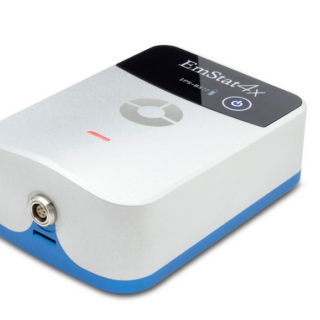
EmStat4 MUX (2-in-1: Potentiostat with integrated multiplexer)
Read moreGone are the days with too many cables. With the EmStat4 MUX you have a potentiostat and a multiplexer in one! The EmStat4 MUX is a powerful potentiostat, galvanostat and impedance analyzer and supports all popular electrochemical techniques. Its 8 channels allow for sequential measurements, for example eight Screen-printed electrodes, or eight working electrodes in eight different cells. The instrument’s measurements can be highly customized using MethodSCRIPT. The 4 different cell connections available allow for many different setups. When the measurements are finished, you can easily save your results in PSTrace, or export your results to Excel.
More information could be found tought link:
https://www.palmsens.com/product/emstat4-mux/
- Integrated 8-channel multiplexer
- Supports 2-, 3- and 4-electrode setup using Sense Lead
- Potential range: ± 3V
- Compliance voltage: ± 5V
- Current ranges: 1 nA – 10 mA
- Maximum current: ± 30 mA
- FRA / EIS up to 200 kHz
Two modes of operation
- Consecutive mode: this mode switches channel when a complete measurement has finished
- Alternate mode: this mode switches all activated channels within the specified time interval of a measurement.
In both modes the unselected Working Electrodes can either be left floating or switched to Ground to keep the specified voltage.
Supports a 2-, 3- or 4-electrode setup
- Connect four electrodes per channel by using the Sense Leads.
- Or connect only three electrodes per channel by internally connecting all Sense electrodes to the Working Electodes in software.
- Do you need to connect only two electrodes per channel? Combine the reference and counter electrode physically on the cable, or with a single click on the PSTrace software.

8 to 128 channels
Is 8 channels not enough? If more channels are required, one or more MUX-R2 can be stacked to the EmStat4 MUX for a total of up to 128 channels.
Script your experiments!
Via the script window of PSTrace it is possible to perform a different experiment on each of the channels sequentially. Alternatively, you can use MethodSCRIPT to fully customize your measurements per channel.
Multichannel or Multiplexer?
To make it easier for you to decide, if a multiplexer or a multichannel device is more suitable for your application, we have created a short explanation of multiplexers and multichannels.
See: https://www.palmsens.com/app/uploads/2016/12/Multiplexer-Polypotentiostat-or-Multichannel.pdf
-
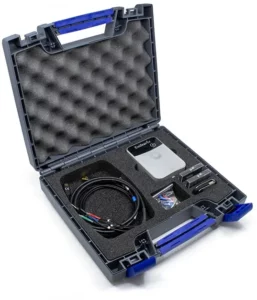
EmStat4T (Tailored electrochemistry through touch-controlled apps)
Read moreThe EmStat4T is a programmable handheld potentiostat with a touchscreen, which is ideal for sensor research and sensor-based applications. It offers two main modes of operation:
- Remote Control: where it functions as a conventional potentiostat, controlled directly by our PSTrace software for Windows or PStouch app for Android. These applications allow you to run measurements, view results, and perform data analysis.
- Standalone: where the instrument is controlled via its touch interface to run a wizard‑style app for electrochemical analysis. Compose custom apps easily using the Visual MethodSCRIPT Editor included in PSTrace for Windows. Apps eliminate the need for a computer, tablet, or smartphone. This makes the EmStat4T an ideal solution for point-of-care applications and field research such as environmental analysis or corrosion monitoring.
More information could be found tought link:
https://www.palmsens.com/emstat4t/
Tailored electrochemistry through touch-controlled apps
- Potential range ±3 V
- Max. current ±30 mA
- Supports common electrochemical techniques
- Standalone operation with MethodSCRIPT
- or remotely controlled by laptop or phone
- Bar/QR-code scanner
- Customizable cell interface with drop-detection for SPEs
Main Features

Visual MethodSCRIPT EditorCreate your EmStat4T apps
The powerful MethodSCRIPT™ language allows for easily creating your own applications to run on the EmStat4T. Compose apps using our Visual MethodSCRIPT Editor which generates the MethodSCRIPT for you.
Your measurements are safely stored

Internal Storage
The EmStat4T is equipped with 500 MB internal storage memory for storing your measurements. All internally stored measurements can be browsed and transferred back to the PC easily using the PSTrace software for Windows. Your data is always with your instrument wherever you take it.
-
Front contact photo-electrochemical H-Cell setup (redox.me)
Read moreThis is a horizontally mounted, double compartment photo-electrochemical H-Cell used to simultaneously or individually investigate thin film photo-anode and photo-cathode. The cell elements are made of PEEK and Fluoropolymers. It well fits aqueous (FKM O-Rings) and organic solvent (FFKM O-Rings) electrolyte requirements. The construction is gas-tight having two separate chambers, each equipped with gas inlet and outlet. This allows bubbling the solution and evacuating gases. Chambers are separated with an ion-exchange membrane (e.g., DuPont’s Nafion® membrane), so the electrochemical products appearing at photo-anode and (photo-)cathode do not affect the opposite electrode.
Application note:
This cell allows several approaches to perform measurements in 2- or 3-electrode setups. It is designed to investigate performance of a thin film photo-anode or photo-cathode (e.g. nanocrystalline material or conducting polymer) deposited on a rigid or flexible transparent substrate (typically fused quartz glass). The counter electrode is mounted in the second chamber either in a top casing or attached on the side of the cell as a thin film deposited on rigid or flexible substrate. The reference electrode is mounted in a top casing of the same chamber as the studied photo-electrode. Various auxiliary electrodes are suitable for this cell including metal wire, gauze and foil electrodes as well as non-metal electrodes and thin films. Typical applications include: basic photochemistry (photo-catalysis), photolytic water splitting, photoinduced charge separation and photo-corrosion.Specification:
minimum electrolyte volume: 2×10 mL
maximum electrolyte volume: 2×15 mL
electrode plug diameter: 6 mm
maximum substrate thickness: 3 mmIntrastat data:
HS Code: 90309000
Country of Origin: Sweden
NET weight: 600gSetup includes:
1 x Front Contact Photo-Electrochemical H-Cell
2 x lid – 0001CPEMA
2 x chamber
2 x sample mount
2 x Tantalum contacts
1 x micro tripod
4 x plug
1 x set of O-Rings (18 pcs)
1 x Metal Wire Auxiliary Electrode – 50HX15 0.6/250 mm (Platinum)
2 x Reference electrode (Ag/AgCl, or Ag/Ag+), 30 mm -
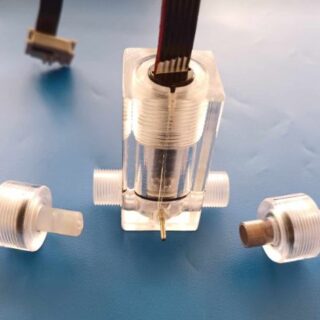
Hanging Platinum Drop Electrode
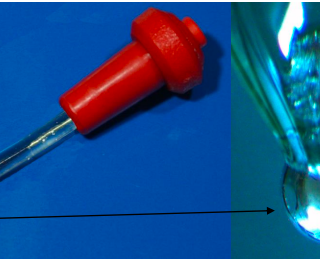
Read moreThe Hanging Platinum Drop Electrode (HPDE) is solid phase alanogy of HMDE.
The drop of liquid Pt at 2000 °C forms a drop of Pt. The surface of HPDE has nearly ideal surface which is impossible to obtain using polishing. HPDE has also spherical symmetry which enables mathematical treatment of its response.
The material is not toxic and it is chemically stable. The only disadvantage is HPDE cleaning, which can be, however, in some cases solved by carefull insertion of the electrode tip to the flame of an alcohol burner.
Thus HPDE can be used as reference electrode for complicated electrochemical studies, where it is necessary to distinguish the analytical signal from the signal generated by surface inhomogenities.Hanging platinum drop electrode (HPDE) is designed for measurements with thermostated cell TC4, TC5, TC6 and TC9.
-
High-Pressure EC, 25 bar, 50 mL – High-Pressure Single-Compartment Electrochemical Cell (redox.me)
Read moreThe High-Pressure Electrochemical Cell is a sophisticated apparatus engineered to facilitate advanced research in electrochemistry under elevated pressure and temperature conditions. The cell is capable of withstanding pressures up to 25 bar and temperatures up to 200 ⁰C, allowing researchers to investigate electrochemical processes under hydrothermal conditions or using a hot pressurized environment for organic solvents as reaction media. It is a single-compartment cell that accommodates various electrode setups, including standard 2- or 3-electrode configurations and custom arrangements tailored to specific experimental requirements. The cell is designed to accommodate various electrodes and sample types, including solids, liquids, and gases, enabling comprehensive studies across different material systems.
The cell is constructed from high-quality materials such as Stainless Steel 316L (outer body), PEEK (liner), and FFKM elastomer (O-rings), ensuring robustness and reliability even under harsh experimental conditions. Cell material system is compatible with the following material systems: aqueous electrolytes in a full pH range, organic solvents (sulfoxides, amides, ethers, alcohols, aromatic), organic and inorganic salts (including fluorinated anions, ammonium), gases (N2, Ar, H2) – PEEK, FFKM O-Rings The cell is equipped with three 6 mm dia. electrode ports, two 1/4 in. OD tube gas/liquid inlet/outlet, and assembly of a manometer and safety relief valve (25 bar) mounted on the cooling tower. Additionally, there is a 1/8 in. OD port for a temperature probe inside the PEEK liner. The cell is compatible with the high-pressure working electrode, high-pressure counter electrode, and high-pressure reference electrode. Unused electrode ports can be terminated with high-pressure plug.Application note:
Catalysis plays a pivotal role in various industrial processes, from petroleum refining to pharmaceutical synthesis. Understanding catalytic mechanisms under realistic conditions is crucial for optimizing catalyst performance and developing efficient processes. The High Pressure Electrochemical Cell offers a sophisticated platform for studying catalytic reactions under elevated pressure and electrochemical environments simultaneously. The cell is typically used to investigate the effect of pressure on electrochemical kinetics and mechanisms, study the electrochemical behavior of materials under high-pressure conditions for applications in energy storage, catalysis, and corrosion, and explore novel electrode materials and electrolyte systems tailored for high-pressure electrochemical devices.
Electrodes are not included in the cell and should be added to the quotation separately.Specification:
maximum operating pressure: 25 bar
total volume of PEEK liner: 50 mL
recommended volume of liquid: 30 – 35 mL
maximum operating temperature: 200 ⁰C
port for temperature probe: 1/8 in. (3.175 mm)
electrode port diameter: 6 mm
number of electrode ports: 3
other port diameters: 1/4 in. (6.35 mm)
pressure gauge dial range: 0 – 40 bar
recommended tubing: 1/4 in. OD, 1/8 in. ID PEEK tubeIntrastat data:
HS Code: 90309000
Country of Origin: Sweden
NET weight: 2500gSafety note:
The use of a High-Pressure Electrochemical Cell involves working with equipment capable of withstanding elevated pressures and conducting experiments with potentially reactive chemicals. Ensuring safety during operation is paramount to prevent accidents and protect personnel and equipment. Below are key safety considerations to observe when using the High-Pressure Electrochemical Cell:1. Prior to operation, all personnel involved should receive comprehensive training on the setup, operation, and safety protocols associated with the High-Pressure Electrochemical Cell. Only trained individuals familiar with the equipment should be permitted to operate it.
2. Adhere strictly to the specified pressure limitations of the High-Pressure Electrochemical Cell. Do not exceed the recommended pressure range to prevent over-pressurization, which could lead to equipment failure and potential hazards.
3. Ensure that all materials, including electrodes, seals, and electrolytes, are compatible with the pressure and chemical environment inside the cell. Incompatibilities could result in leaks, corrosion, or other safety hazards.
4. Verify that the pressure relief mechanism is in place and functioning correctly. This mechanism is crucial for safely releasing excess pressure in the event of over-pressurization.
5. Regularly inspect the seals and connections of the High-Pressure Electrochemical Cell for signs of wear, damage, or leaks. Replace any compromised components promptly to maintain sealing integrity and prevent pressure-related accidents.
6. Establish clear emergency procedures, including evacuation routes and protocols for handling pressure-related incidents. Ensure that all personnel are aware of these procedures and know how to respond effectively in case of emergencies.
7. Wear appropriate Personal Protective Equipment (PPE), including safety glasses, gloves, and lab coats, when operating the High Pressure Electrochemical Cell. Additional PPE may be necessary depending on the specific experimental conditions and hazards involved.
8. Supervise experiments closely and monitor the High-Pressure Electrochemical Cell continuously during operation. Respond promptly to any abnormalities or unexpected changes in pressure or performance.
By adhering to these safety guidelines and exercising caution and diligence, users can minimize risks and ensure the safe and effective operation of the High-Pressure Electrochemical Cell in the laboratory. Always prioritize safety to protect yourself, your colleagues, and the integrity of the experimental setup.
Product includes:
1 x pressure vessel, SS 316L
1 x PEEK liner 50 mL
1 x PEEK lid
1 x set of PEEK screws
1 x cell lid, SS 316L
1 x screw cup, SS 316L
1 x cooling tower, SS 316L
1 x manometer (0 – 40 bar)
1 x safety relief valve set for 25 bar
1 x 4-way union, Swagelok 1/4 in. OD, SS 316L
3 x electrode fitting, Swagelok 6 mm OD x 1/8 in. Male NPT, SS 316L
2 x fitting, Swagelok 1/4 in. OD x 1/8 in. Male NPT, SS 316L
2 x ball valve, Swagelok 1/4 in. OD, SS 316L
1 x set of O-rings, FFKM,
1 x temperature probe fitting, IDEX, 1/8 in. x 1/4-28, SS 316L
3 x connecting unit, 1/4 in. OD, 1/8 in. ID, 30 mm long, SS 316L
2 x C-spanner 85 mm (cell opening tool)
1 x PEEK plug, 6 mm dia.
1 x PTFE tapeRelated products:
High-pressure working electrode
High-pressure counter electrode
High-pressure reference electrode
High-pressure plug -
Membrane Capacitive Deionization configurable cell (redox.me)
Read moreMembrane Capacitive Deionization (MCDI) configurable cell has been designed to conduct research on removal of charged ionic species from aqueous or organic solutions (i.e., Desalination/Demineralization) via electrostatic (i.e., non-Faradaic) or electrochemical (redox) interactions. The MCDI cell contains two graphite current collectors that can serve as polarization electrodes. However, if the electrode material is the subject of research, it should be applied to an additional current collector, such as graphite paper or metal felt (not included in the product). Different electrode materials can be installed on both sides of the cell. If the thickness of these electrodes exceeds 250 micrometers, different gaskets are required. In such a case, please contact us for a solution.
The cell is designed in such a way that replacing the electrodes does not require removing the membranes or flow fields. It is enough to unscrew the plungers on both sides and replace the electrodes. In the standard configuration, the liquid in the main channel and side channels flows through the flow field cut from PEEK. However, these can be replaced with a porous material such as felt or a battery spacer, which will allow fluid flow. If work with materials of dimensions different from those listed in the specification is required, we can supply seals of different thicknesses or customize the cell. The cell allows for the installation of one or two ion-exchange membranes (not included in the setup). Their thickness is not critical, and it is not necessary to adjust the thickness of the membrane gaskets pressing them. The cell elements are constructed with inert materials to the sample (PEEK). It well fits aqueous (FKM gaskets and O-rings) and organic solvent (FFKM gaskets and O-rings) electrolyte requirements. The construction of the cell is gas-tight.
Application note:
MCDI cell can be configured to allow the following cell architectures:- Flow-by CDI consisting of: (i) two porous carbon or metal based current collectors coated with capacitive (e. non-Faradaic) material, and (ii) a main flow field enabling the feed water to be transported between electrodes. In this configuration, side flow fields and membranes are not installed.
- Membrane CDI consisting of: (i) two porous carbon or metal based current collectors coated with capacitive (e. non-Faradaic) material, (ii) two ion-exchange membranes (cation exchange membrane and anion exchange membrane) separating electrodes from the main flow field, and (iii) a main flow field enabling the feed water to be transported between electrodes. In this configuration, side flow fields are typically not installed. However, there are cases where installing both side flow fields is justified. All the graphics included in the product page refer to that configuration.
- Inverted CDI consisting of: (i) two porous carbon or metal based current collectors coated with capacitive (e. non-Faradaic) material where anode is treated for net negative surface charge and a cathode is treated for net positive surface charge, and (ii) a main flow field enabling the feed water to be transported between electrodes. In this configuration, side flow fields and membranes are not installed.
- Flow-electrode CDI consisting of: (i) two porous carbon or metal based current collectors with flowing electrodes made of capacitive (e. non-Faradaic) carbon suspension, (ii) two ion-exchange membranes (cation exchange membrane and anion exchange membrane) separating electrodes from the flow chamber, (iii) a main flow field enabling the feed water to be transported between electrodes, and (iv) two side flow fields for liquid electrodes. All the graphics included in the product page refer to that configuration.
- Hybrid CDI consisting of: (i) a Faradaic (e. battery) electrode for cation adsorption/desorption, (ii) a capacitive (i.e. non-Faradaic) electrode for anion adsorption/desorption, (iii) an anion exchange membrane placed adjacent to the capacitive electrode, and (iv) a main flow field enabling the feed water to be transported between electrodes. In this configuration, side flow fields and a cation-exchange membrane are not installed.
- Cation intercalation desalination consisting of: (i) two porous carbon or metal based current collectors coated with Faradaic cation intercalation materials, (ii) an anion exchange membrane separating electrodes, and (iii) a main flow field enabling the feed water to be transported between electrodes. In this configuration, one side flow field and cation-exchange membrane are not installed.
- Desalination battery consisting of: (i) two porous carbon or metal based current collectors coated with redox (e. Faradaic) material (one for cation adsorption/desorption and the other for anion adsorption/desorption), and (ii) a main flow field enabling the feed water to be transported between electrodes. In this configuration, side flow fields and membranes are not installed.
Specification:
tubing size: 4 mm OD
fitting type: push-in, M5 male
electrode size: 60 mm x 60 mm (36 cm2)
recommended total electrode thickness: 200-250 µm
membrane size: 70 mm x 85 mm
maximum operating pressure: 20 bar
maximum operating temperature 150 ºCIntrastat data:
HS Code: 90278080
Country of Origin: Sweden
NET weight: 1300 gProduct includes:
2 x stand, anodized aluminum
2 x plunger holder, SS 316L
2 x PEEK plunger
2 x tantalum current collector
2 x graphite current collector
1 x threaded end plate, SS 316L
1 x unthreaded end plate, SS 316L
1 x PEEK outer cell body
1 x PEEK inner cell body
1 x set of fittings
2 x female banana connectors, 4 mm dia.
1 x PEEK main flow field, 0.5 mm thick
2 x PEEK side flow field, 0.5 mm thick
1 x set of gaskets (FKM or FFKM) including:1 x main flow gasket, 0.5 mm thick
2 x membrane gasket, 0.25 mm thick
2 x side flow gasket, 0.5 mm thick
2 x electrode gasket, 0.25 mm thick