Pipettor Rack
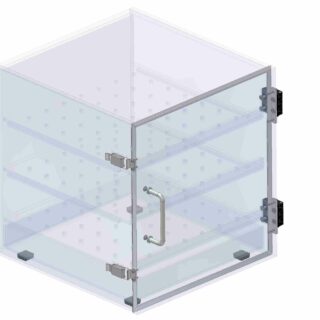
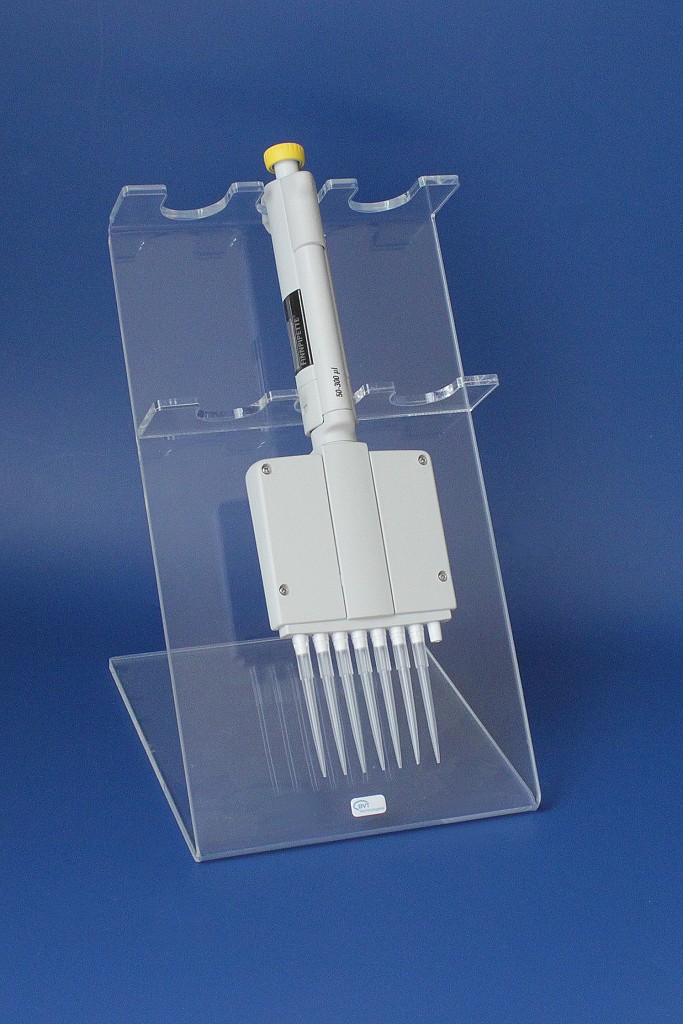
The BVT Pipettor Rack is designed with user needs in mind, the design has been made to maximize bench space by using the Pipettor Rack to store pipettors when not in use. Holds up to three pipettors. Material of the rack is PMMA.
Related products
-
PME011 Microdialysis Catheter Microeye
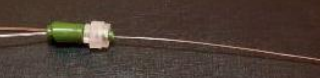
Read moreMicrodialysis catheter is provided with a special membrane which produces a “plasma-like” sample without the need for blood centrifugation.
It enables “plasma-like” samples taking and continuous monitoring of low-molecular substances in circulating blood without withdrawing blood from the patient. It offers virtually real-time information. Samples can be collected for off-line analysis if required. This catheter is easy to use and reduces risks of contact with blood borne pathogens. The MicroEye is intended for intravenous use for periods up to 48 hours and is inserted via 18G blood catheter.
The range of substances that can be monitored using this catheter
- Electrolytes (such as potassium, magnesium etc.)
- Energy metabolites (glucose, lactate, pyruvate, etc.)
- Amino acids (glutamate, GABA, etc.)
- Hormones and neurotransmitters (dopamine, serotonin, etc.)
- Inflammatory mediators and growth factors (cytokines, etc.)
- Drugs and their metabolites (unbound “free fractions and /or total
-

Sample Holder 25 mm x 25 mm (redox.me)
Read moreThe sample holder (known also as flat specimen holder) is used for holding flat, circular or square/rectangular samples. It enables contacting the sample from the front (e.g. ITO/FTO glass, Monolayer Graphene on SiC, or Boron-Doped Diamond thin film on various substrates) and from the back (e.g. metal specimen, Glassy Carbon plate, Boron-Doped Diamond plate). The default nominal aperture is 1cm2, but other value can be provided on request. The large electrical contact with Tantalum (formerly Copper) foil surface (not being in contact with an electrolyte) ensures optimal current collection by minimizing electrical resistance and unifying current distribution. The rod with electrical connection has a diameter of 6 mm, which makes the sample holder compatible with our voltammetry cells and jacketed cells, as long as it fits in. We may also provide an adapter to install this sample holder in openings larger than 6 mm dia.
The sample holder elements are constructed with materials that are inert to the electrochemical system (PEEK, Fluorocarbons). It well fits aqueous (FKM/EPDM O-Rings) and organic solvent (FFKM O-Rings) electrolyte requirements. The construction is well sealed which prevents the electrolyte to leak inside.
Application note
The sample holder is used largely for corrosion studies. It can be installed in a beaker type cell as well as in testing environments such as open water reservoirs, cans, tanks etc. It can also be used wherever it is necessary to make an electrode using a thin layer of an active material deposited on a flat substrate (conducting or insulating).Specification
nominal aperture range: 0.008 cm2 (1 mm dia.) – 4.155 cm2 (23 mm dia.)
minimum aperture: 0.008 cm2 (1 mm dia.)
maximum aperture: 4.9 cm2 (23 mm dia.)
electrical connection diameter (rod): 6 mm
minimum substrate size:nominal aperture minimum substrate size 0.008 cm2 (1 mm dia.) 10 x 10 mm2 (square) or 12 mm dia. (circular). 0.196 cm2 (5 mm dia.) 7 x 7 mm2 (square) or 10 mm dia. (circular). 0.283 cm2 (6 mm dia.) 8 x 8 mm2 (square) or 11 mm dia. (circular). 0.385 cm2 (7 mm dia.) 9 x 9 mm2 (square) or 12 mm dia. (circular). 1 cm2 (11.3 mm dia.) 13 x 13 mm2 (square) or 16 mm dia. (circular). 1.76 cm2 (15 mm dia.) 17 x 17 mm2 (square) or 20 mm dia. (circular). 3 cm2 (19.5 mm dia.) 22 x 22 mm2 (square) or 24 mm dia. (circular). 3.5 cm2 (21 mm dia.) 23 x 23 mm2 (square) or 25 mm dia. (circular). 4.155 cm2 (23 mm dia.) 25 x 25 mm2 (square only) maximum substrate size: 25 x 25 mm2
maximum sample thickness: 4 mm
contact type: front or backIntrastat data
HS Code: 90309000
Country of Origin: Sweden
NET weight: 100 gProduct includes
1 x chamber
1 x lid
1 x contact (Tantalum foil)
1 x rod with electrical connection -
Activation furnance for electrochemical sensors
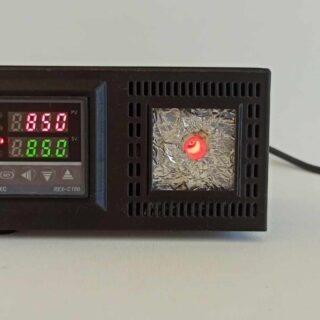
Read moreThe activation furnance is a device used for curing individual sensors of the AC1 type. At a defined temperature (up to 1000 °C) depending on the electrode and sensor materials. When the sensor is cured, the surface of the electrodes is cleaned from surface oxides and organic impurities, which results in regeneration of the sensor or its activation. In this way, for example, old sensors with immobilized enzyme layers can be cured for reuse – see example at the end ot the document.