


Spectro-electrochemical flow cell setup (redox.me)
This is a horizontally mounted, multi-purpose spectroelectrochemical cell designed to be used with standard UV-Vis or IR spectrometers. It enables obtaining electrochemical and spectroscopic information from liquid sample or thin films in systems where variations in applied potential induce changes in observed spectra. It consists of a polyether ether ketone (PEEK) flow chamber equipped with a magnetic or screw mount sample holder, screw mount quartz window holder and two different mini tripods. It well fits aqueous (FKM O-Rings) and organic solvent (FFKM O-Rings) electrolyte requirements.
The cell is meant to be used with a standard reference electrode having 6 mm in diameter and a counter electrode either in the form of a rod or helix with 6 mm in diameter and 15 mm active length.
Application note:
The spectroelectrochemical cell is used to study the relation between absorbance/transmittance and electrochemical potential. It enables real-time monitoring of optical change in electrochromic materials. It also enables in-situ spectral acquisition for detection, identification and characterization of short-lived electrochemically-generated species/intermediates, resulting in a detailed investigation of the mechanistic pathways of redox processes.
Specification:
nominal exposure area: 1 cm2 (other values on request)
optical path length (electrolyte thickness): 12 mm
flow chamber volume: 1.75 mL
maximum substrate thickness: 4 mm
electrode plug diameter: 6 mm
minimum substrate size: 17 mm x 25 mm
recommended substrate size: 25 mm x 25 mm
Intrastat data:
HS Code: 90275000
Country of Origin: Sweden
NET weight: 300 g
Setup includes:
1 x Magnetic Mount Spectro-Electrochemical Flow Cell – MM spectro-EFC 1.75 mL (or Spectro-Electrochemical Flow Cell – spectro-EFC 1.75 mL)
1 x Metal Wire Auxiliary Electrode – 35HX15 0.6/235 mm (Platinum)
1 x Reference electrode (Ag/AgCl, or Ag/Ag+)
Select configuration
Electrolyte type: water-based / organic electrolyte
Related products
-
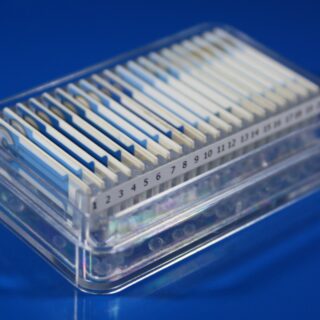
STK-C Customer Starting kit
Read moreStarting Kit STK.S-C
The customer starter kit is a set of twenty different electrochemical sensors to find the best one that suits your application.
The starter set contains at least 5 pcs of sensors type AC1.W*.R* from the given type of sensors with a working electrode diameter (Dw) 1 or 2 mm stored in a box with numbered positions and silica gel.
The exact choice of the given types of sensors in the kit is at the request of the customer.
-
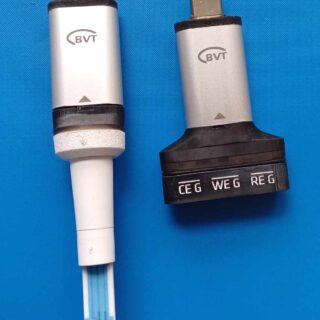
USB Potentiostat Galvanoplot
Read moreUSB Potentiostat Galvanoplot is a super small, low-cost and affordable device suitable for dedicated volume applications, which is optimized for screen-printed sensor and biosensor applications. It can be used in many other research areas and with other electrochemical sensors, for corrosion measurement, battery and super-capacitors or fuel cells.
It is capable of performing all common Amperometric and Voltammetric electrochemistry protocols (CA, LSV, CV, DPV, NPV, SVW, GAL) and can be used with three electrode (WE/RE/CE) and two electrode (WE/RE-CE) setups. Plug the device directly into an Android mobile device through OTG port for a true on-site analysis experience. It is possible to choose from two types of interfaces allowing direct insertion of the BVT SPE sensors or the use of 3 classical electrodes with 2 mm banana plugs (WE, RE, CE).
- Dimensions: 39x17x8 mm
- Weight: 5 g without sensor interface
- Voltage scan range: +-3V @1mV resolution
- Max current: 2000 nA (*at the request of the customer, it is possible to change the range, but this will change the resolution, noise and other parameters)
- Current resolution: 300pA@1KSPS/ 100pA@100SPS/ 30pA/10 SPS resolution
- Noise around: 50nA@1KSPS/ 7nA@100SPS/ 400pA/10 SPS
- Protocols: CA, LSV, CV, DPV, NPV, SVW, GAL
- Cell type: WE/RE/CE and WE/RE-CE
Connectivity: USB-C (Plug the device directly into an Android mobile device through OTG port for a true on-site analysis experience)
- Operating system compatibility: Windows 8, 10+
- Advanced analysis – filtering and auto peaks
Device Usage
- Electrochemical measurements
- Measurements with biosensors and electrochemical sensors
- Measurement of biochemical activity of a sample
- Corrosion measurement
-
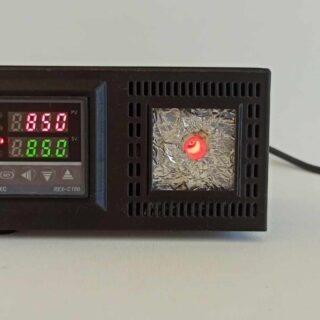
Activation furnance for electrochemical sensors
Read moreThe activation furnance is a device used for curing individual sensors of the AC1 type. At a defined temperature (up to 1000 °C) depending on the electrode and sensor materials. When the sensor is cured, the surface of the electrodes is cleaned from surface oxides and organic impurities, which results in regeneration of the sensor or its activation. In this way, for example, old sensors with immobilized enzyme layers can be cured for reuse – see example at the end ot the document.
-
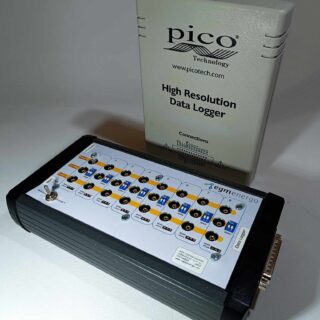
8/16-Channel Potentiostat for High Resolution Data Logger
Read moreThe device consists of a combination of an multi-channel potentiostat/converter (BVT Technologies) and an external USB Pico ADC high resolution data logger (Pico Technology).
The data logger can be supplied in two versions: ADC-20 (20 bits, 8 channels) or ADC-24 (24 bits, 16 channels). For detailed specifications, see the attachment at the end of the document. The device allows measurements from up to 8 or from up to 16 independent channels. The basic output signal is a voltage in the range of -2.5 to 2.5 V. All channels are programmable (the output can be concentration, temperature, pressure…).
After connecting the device to a PC with Pico Technology’s Picolog 6 measurement program installed, the voltage [V] can be processed using math channels and directly recorded in real time as temperature, current, resistance, frequency, % and pressure, see measurement example at the end of the document.
For temperature measurement, the device is compatible with resistance thermometers (Ni 1000, Ni 5000, Pt 1000. Power is provided via USB-B, the maximum electrical consumption of the device is 500 mA.
Device Usage
- Temperature measurement with different temperature sensor (resistance thermometers Ni 1000, ni 5000, Pt 1000)
- Voltage measurement
- Conductivity and resistance measurement
- Amperometry measurement
* For this product, we recommend our customers use the Training Service from BVT.
(https://bvt.cz/produkt/offer-of-long-term-automated-measurements-on-bvt-apparatus/)