


ZIVE MP1-4CH housing – high quality multichannel potentiostat/galvanostat/impedance analyzer
- High quality multichannel potentiostat/galvanostat/impedance analyzer
- Voltage range : ±10V
- Current range : 100nA~1A (10nA with gain)
- Channel expandable up to 16 channels per PC
Application
- Corrosion
- Material testing
- Sensor
- Bio-Electrochemistry
- Battery / Supercapacitor
- Fuel cell
- Solar cell
- Other Echem experiments
Features
- high quality multichannel potentiostat/galvanostat/impedance analyzer
- voltage range : ±10V
- current range : 9 ranges
– 100nA to 1A (10nA with gain) - capable of multitude of applications
– corrosion, general electrochemistry, sensor, battery, fuel cell,
supercapacitor, solar cell, etc. - plug & play type fully independent channel
- channel expandable up to 16 channels per PC
- frequency range : 10uHz ~ 1Mhz
- 14 EIS techniques capability including multisine
- voltage pulse or current pulse charge/discharge test(GSM,CDMA etc.),
sine wave function for ripple simulation in energy software package
& pulse plating available - high speed data sampling time
– 2usec or 3usec depending on data point numbers - fast sweep mode(5000V/sec with 10mV data sampling)
- iR compensation and measurement
- 3 measurement/control voltage ranges &
9 measurement/control current ranges - internal 542,000 data point storage & continuing experiment regardless
of PC failure. - can be interfaced to a separate booster for high current applications
- one auxiliary voltage measurement is available
- inclues basic software, Energy/Impedance/Battery/Echem analysis software packages
- free software upgrade
Experimental Techniques
Basic techniques
- Potentiostatic
- Galvanostatic
- Double step potentiostatic
- Double step galvanostatic
- OCP measurement
- Potential sweep
- Current sweep
- Cyclic voltammetry
- Fast potential sweep
- Potentiostatic Ru measurement
- Galvanostatic Ru measurement
Advanced Software Package(Included)
- EIS software package(EISe)
– Potentiostat EIS
– Galvanostatic EIS
– Pseudo galvanostatic EIS
– OCP* EIS
– Potentiodynamic PEIS
– Galvanodynamic GEIS
– Poteniodynamic HFR
– Galvanodynamic HFR
– Potentiostatic HFR monitor
– Galvanostatic HFR monitor
– Multisine potentiostatic EIS
– Multisine galvanostatic EIS
– Intermittent potentiostatic EIS
– Intermittent galvanostatic EIS
(*) The system measures open circuit potential before each frequency
change and applies AC sine wave on this potential. - Corrosion software package(CORe)
– Tafel(Tafel experiment)
– Rp(Polarization resistance)
– RpEc trend
– PDYN(Potentiodynamic)
– CYPOL(Cyclic polarization resistance)
– GDYN(GalvanoDynamic)
– Reactivation
– Galvanic corrosion
– Potentiostatic ECN
– Galvanostatic ECN
– ZRA mode ECN - Energy software package(BATe)
a) Battery test technique
– CC/CV testforcycle life test of lithium battery
– CC/CC tet forcyclelifetestofNiCd or NiMH battery
– Discharging test
– EVS(electrochemical voltage spectroscopy)
– Variable scan rate CV
– Potentiostatic IV curve
– Galvanostatic IV curve
– Steady state CV
– PITT(Potentiostatic intermittent titration technique) test
– GITT(Galvanostatic intermittent titration technique) test
– Pulse mode is available for GSM & CDMA profile.
Pulse shape profile can be measured by user’s demand.
b) Control mode
– Charge : CC, CC-CV, pulse, sine wave
– Discharge : CC, CP, CR, pulse, sine wave
c) Cut-off condition
– Time, voltage, current, power, auxV etc.
– Various battery charge/discharge test is available including
pulse discharge for GSM, CDMA application - Electrochemical analysis software package(EASe)
a) Step techniques
– CA(Chronoamperometry)
– CC(Chronocoulometry)
– CP(Chronopotentiometry)
b) Sweep techniques
– LSV(Linear sweep voltammetry)
– SDV(Sampled DC voltammetry)
– Fast CV
– Fast LSV
c) Pulsed techniques
– DPV(Differential pulse voltammetry)
– SWV(Square wave voltammetry)
– DPA(Diff.pulse amperometry)
– NPV(Normal pulse voltammetry)
– RNPV(Reverse normal pulse voltammetry)
– DNPV(Differential normal pulse voltammetry)
Options
- Power booster
| Power amplifier (CE) | |
| Power | 12Watt(12V@1A) |
| Compliance voltage | ±12V |
| Max. current | ±1A |
| Control speed selection | 4 ea |
| Bandwidth | 2MHz |
| Slew rate | 10V/usec |
| Potentiostat mode(voltage control) | |
| Voltage control | |
| Control voltage range | ±10, ±1V, ±100mV |
| Voltage resolution | 16 bit per each range |
| Voltage accuracy | ±0.02% fs (gain x1) |
| Max. scan range | ±10V vs. ref. E |
| Current measurements | |
| Current range | 9 ranges (auto/manual setting) 100nA ~ 1A (10nA with gain) |
| Current resolution | 16 bit; 30uA, 3uA, 300nA, 30nA, 3nA, 300pA 30pA, 3pA (300fA with gain) |
| Current accuracy | ±0.05% f.s.(gain x1) >100nA |
| Galvanostat mode(current control) | |
| Current control | |
| Control current range | max. ±1A ± full sacle depending on selected range |
| Current resolution | 16 bit; 30uA, 3uA, 300nA, 30nA, 3nA, 300pA 30pA, 3pA (300fA with gain) |
| Current accuracy | ±0.05% f.s.(gain x1) >100nA f.s. |
| Voltage measurements | |
| Voltage range | 10V, 1V, 100mV |
| Voltage resolution | 16 bit; 0.3mV, 30uV, 3uV |
| Voltage accuracy | ±0.02% fs (gain x1) |
| Electrometer | |
| Max. input voltage | ±10V |
| Input impedance | 2×10¹³Ω||4.5pF |
| Bandwidth | >22MHz |
| CMRR | >114dB |
| EIS(Internal FRA) for system | |
| Frequency range | 10uHz ~ 1MHz |
| Frequency accuracy | <0.01%> |
| Frequency resolution | 5000/decade |
| Amplitude | 0.1mV ~ 5V rms (potentiostatic) 0.1 ~ 70% f.s. (galvanostatic) |
| Mode | Static EIS: potentiostatic, galvanostatic, pseudo-galvanostatic, OCP Dynamic EIS: potentiodynamic, galvanodynamic Fixed frequency impedance: potentiostatic, galvanostatic, potentiodynamic, galvanodynamic Multisine EIS: potentiostatic, galvanostatic |
| Main system | |
| PC communication | USB2.0 high speed |
| Line voltage | 100~240VAC, 50/60Hz, 1Amp |
| Max. channel number per unit | 4 independent channel per unit |
| Max. channel | 16 channels expandable per PC |
| Size | 199.4×465.6x315mm(WxHxD)/4ch housing system |
| Software | |
| Max. steps per experiments | 1000 |
| Shutdown safety limits | voltage, current, power, auxV, etc. |
| Max. sampling rate | 2usec or 3usec depending on data point numbers |
| Min. sampling time | unlimited |
| Sampling condition | time, dv/dt, dI/dt, etc. |
| Interface for system | |
| Auxiliary port | |
| – Auxiliary voltage input | 1 analog input: ±10V |
| – Zero resistance ammeter | 100nA~1A ranges |
| – External booster interface | via booster I/F cable |
| Channel System | |
| Cell cable | 1 meter shielded type (standard) working, reference, counter, working sense, auxiliary V+, AuxV- |
| Control DAC |
DSP with FPGA 2x16bit DAC(50MHz) for bias & scan |
| Data acquisition ADC |
2x16bit ADCs(500kHz) for voltage & current 1x16bit ADCs(250kHz) for auxiliary reading |
| Calibration | automatic |
| Filter | 4ea (5Hz, 1kHz, 500kHz, 5MHz) |
| Scan rate | 0 ~ 200V/sec in common mode 0 ~ 5000V/sec in fast mode |
| Front panel LED | busy, run |
| Internal data memory | 542,000 points |
| Max. output power | 12 Watt per channel |
| PC requirement | |
| Operating system | WindowsXP SP3/7/8/10(32bit/64bit) |
| PC specification(minimum) | Pentium4, RAM 1GB or higher |
| Display | 1600×900 high color or higher |
| USB | high speed 2.0 |
| General | |
| Dummy cell | one external dummy cell included |
| Impedance analysis software | ZmanTM |
| DC data analysis software | IVMANTM |
The specifications are subject to change without notice.
Related products
-

Basic Sample Holder – metal contact, 4 mm max. thickness (redox.me)
Read moreBasic Sample Holder with a metal contact works as an electrical conductor between an electrode material (free-standing or deposited on a substrate) and an external circuit. This holder consists of PEEK body, pure Tantalum, Stainless Steel 316L, Titanium, Copper or Nickel metal electrical contact, and PEEK screw to fix the electrode. It is compatible with most of inorganic and organic based plates, free-standing membranes or thin films deposited on flexible and rigid substrates. A maximum thickness of the sample is 4 mm. Tantalum is known to be inert to practically all organic and inorganic compounds. Tantalum’s corrosion resistance is very similar to that of glass, as both are unsuitable for use in hydrofluoric acid and strong hot alkali applications. Therefore, in those cases, we recommend the other wire contact variant. The metal contact can be fully immersed in the electrolyte.
Application note
Generally, the electrode is fabricated by fixing the electrochemical active sample into the holder using a screw. Such electrode is immersed in the ion-conducting solution as a working electrode or counter electrode. An electric current is passed between the working electrode and the counter electrode for a certain amount of time. Metal wire contact is permanently installed in the PEEK body. The holder is designed to be used multiple times. The holder should be cleaned prior to the installation of electrode material.Specification
holder body material: PEEK
rod diameter: 6 mm
contact material: Ta, SS 316L, Ti, Cu or Ni
contact wire diameter: 0.6 mm
contact wire total length: 110 mm
holder length: 70 mm
maximum sample thickness: 4 mmIntrastat data
HS Code: 90309000
Country of Origin: Sweden
NET weight: 100 gProduct includes
1 x Basic Sample Holder
1 x PEEK M3 screw
1 O-Ring (FKM for aqueous or FFKM for organic electrolytes) -
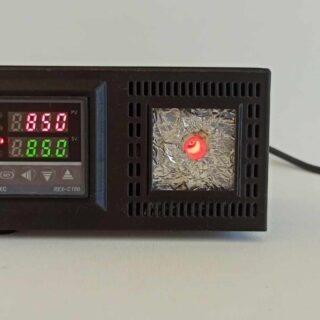
Activation furnance for electrochemical sensors
Read moreThe activation furnance is a device used for curing individual sensors of the AC1 type. At a defined temperature (up to 1000 °C) depending on the electrode and sensor materials. When the sensor is cured, the surface of the electrodes is cleaned from surface oxides and organic impurities, which results in regeneration of the sensor or its activation. In this way, for example, old sensors with immobilized enzyme layers can be cured for reuse – see example at the end ot the document.
-
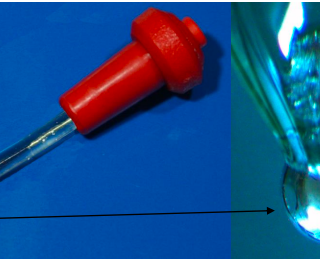
Hanging Platinum Drop Electrode
Read moreThe Hanging Platinum Drop Electrode (HPDE) is solid phase alanogy of HMDE.
The drop of liquid Pt at 2000 °C forms a drop of Pt. The surface of HPDE has nearly ideal surface which is impossible to obtain using polishing. HPDE has also spherical symmetry which enables mathematical treatment of its response.
The material is not toxic and it is chemically stable. The only disadvantage is HPDE cleaning, which can be, however, in some cases solved by carefull insertion of the electrode tip to the flame of an alcohol burner.
Thus HPDE can be used as reference electrode for complicated electrochemical studies, where it is necessary to distinguish the analytical signal from the signal generated by surface inhomogenities.Hanging platinum drop electrode (HPDE) is designed for measurements with thermostated cell TC4, TC5, TC6 and TC9.
-

ZIVE SP3 – potentiostat/galvanostat/impedance analyzer
Read more- Research grade potentiostat/galvanostat/impedance analyzer
- Control voltage range: ±10V, ±1V, ±100mV
- Control current range: 2nA ~ 2A (2nA with gain, 10 ranges)
Application
- Battery/Super capacitor
- Fuel cell
- Coating
- Corrosion
- Sensor
- Solar cell
- Other Echem experiments
Features
- high compliance voltage potentiostat/galvanostat/impedance analyzer
- ±10V@2Amp control range
- current range (10 ranges)
– 2A to 20nA
– 2nA with gain - frequency range : 10uHz ~ 1MHz
- 14 EIS techniques capability including multisine
- Electrical isolation floating potentiostat can be used with autoclaves, mechanical stress apparatus, or pipeline probes.
- suitable for typical corrosion applications
– pitting, crevice corrosion, and passivation behavior
– corrosion rate (Tafel Plot) determination
– active/passive characteristics
– passivation rates
– anodic and cathodic protection - high speed data sampling time
– 2usec or 3usec depending on data point number - fast sweep mode (5000V/sec with 10mV data sampling)
- iR compensation & measurement
- 3 measurement/control voltage ranges &
10 measurement/control current ranges - internal 542,000 data point storage & continuing experiment regardless of PC failure
- LCD display
- software package
– Corrosion software package(COR3)
– EIS software package
– Electrochemical analysis software package
– Energy software package - multichannel configuration available by connecting multiple SP3 or other ZIVE products
- included basic software, Energy(battery)/Impedance/Corrosion/Echem analysis software packages
- free software upgrade
Experimental Techniques
Basic techniques
- Potentiostatic
- Galvanostatic
- Double step potentiostatic
- Double step galvanostatic
- OCP measurement
- Potential sweep
- Current sweep
- Cyclic voltammetry
- Fast potential sweep
- Potentiostatic Ru measurement
- Galvanostatic Ru measurement
Advanced software techniques (Included)
Options
- Power booster