


Membrane Capacitive Deionization configurable cell (redox.me)
Membrane Capacitive Deionization (MCDI) configurable cell has been designed to conduct research on removal of charged ionic species from aqueous or organic solutions (i.e., Desalination/Demineralization) via electrostatic (i.e., non-Faradaic) or electrochemical (redox) interactions. The MCDI cell contains two graphite current collectors that can serve as polarization electrodes. However, if the electrode material is the subject of research, it should be applied to an additional current collector, such as graphite paper or metal felt (not included in the product). Different electrode materials can be installed on both sides of the cell. If the thickness of these electrodes exceeds 250 micrometers, different gaskets are required. In such a case, please contact us for a solution.
The cell is designed in such a way that replacing the electrodes does not require removing the membranes or flow fields. It is enough to unscrew the plungers on both sides and replace the electrodes. In the standard configuration, the liquid in the main channel and side channels flows through the flow field cut from PEEK. However, these can be replaced with a porous material such as felt or a battery spacer, which will allow fluid flow. If work with materials of dimensions different from those listed in the specification is required, we can supply seals of different thicknesses or customize the cell. The cell allows for the installation of one or two ion-exchange membranes (not included in the setup). Their thickness is not critical, and it is not necessary to adjust the thickness of the membrane gaskets pressing them. The cell elements are constructed with inert materials to the sample (PEEK). It well fits aqueous (FKM gaskets and O-rings) and organic solvent (FFKM gaskets and O-rings) electrolyte requirements. The construction of the cell is gas-tight.
Application note:
MCDI cell can be configured to allow the following cell architectures:
- Flow-by CDI consisting of: (i) two porous carbon or metal based current collectors coated with capacitive (e. non-Faradaic) material, and (ii) a main flow field enabling the feed water to be transported between electrodes. In this configuration, side flow fields and membranes are not installed.
- Membrane CDI consisting of: (i) two porous carbon or metal based current collectors coated with capacitive (e. non-Faradaic) material, (ii) two ion-exchange membranes (cation exchange membrane and anion exchange membrane) separating electrodes from the main flow field, and (iii) a main flow field enabling the feed water to be transported between electrodes. In this configuration, side flow fields are typically not installed. However, there are cases where installing both side flow fields is justified. All the graphics included in the product page refer to that configuration.
- Inverted CDI consisting of: (i) two porous carbon or metal based current collectors coated with capacitive (e. non-Faradaic) material where anode is treated for net negative surface charge and a cathode is treated for net positive surface charge, and (ii) a main flow field enabling the feed water to be transported between electrodes. In this configuration, side flow fields and membranes are not installed.
- Flow-electrode CDI consisting of: (i) two porous carbon or metal based current collectors with flowing electrodes made of capacitive (e. non-Faradaic) carbon suspension, (ii) two ion-exchange membranes (cation exchange membrane and anion exchange membrane) separating electrodes from the flow chamber, (iii) a main flow field enabling the feed water to be transported between electrodes, and (iv) two side flow fields for liquid electrodes. All the graphics included in the product page refer to that configuration.
- Hybrid CDI consisting of: (i) a Faradaic (e. battery) electrode for cation adsorption/desorption, (ii) a capacitive (i.e. non-Faradaic) electrode for anion adsorption/desorption, (iii) an anion exchange membrane placed adjacent to the capacitive electrode, and (iv) a main flow field enabling the feed water to be transported between electrodes. In this configuration, side flow fields and a cation-exchange membrane are not installed.
- Cation intercalation desalination consisting of: (i) two porous carbon or metal based current collectors coated with Faradaic cation intercalation materials, (ii) an anion exchange membrane separating electrodes, and (iii) a main flow field enabling the feed water to be transported between electrodes. In this configuration, one side flow field and cation-exchange membrane are not installed.
- Desalination battery consisting of: (i) two porous carbon or metal based current collectors coated with redox (e. Faradaic) material (one for cation adsorption/desorption and the other for anion adsorption/desorption), and (ii) a main flow field enabling the feed water to be transported between electrodes. In this configuration, side flow fields and membranes are not installed.
Specification:
tubing size: 4 mm OD
fitting type: push-in, M5 male
electrode size: 60 mm x 60 mm (36 cm2)
recommended total electrode thickness: 200-250 µm
membrane size: 70 mm x 85 mm
maximum operating pressure: 20 bar
maximum operating temperature 150 ºC
Intrastat data:
HS Code: 90278080
Country of Origin: Sweden
NET weight: 1300 g
Product includes:
2 x stand, anodized aluminum
2 x plunger holder, SS 316L
2 x PEEK plunger
2 x tantalum current collector
2 x graphite current collector
1 x threaded end plate, SS 316L
1 x unthreaded end plate, SS 316L
1 x PEEK outer cell body
1 x PEEK inner cell body
1 x set of fittings
2 x female banana connectors, 4 mm dia.
1 x PEEK main flow field, 0.5 mm thick
2 x PEEK side flow field, 0.5 mm thick
1 x set of gaskets (FKM or FFKM) including:
1 x main flow gasket, 0.5 mm thick
2 x membrane gasket, 0.25 mm thick
2 x side flow gasket, 0.5 mm thick
2 x electrode gasket, 0.25 mm thick
Select configuration
Electrolyte type: water-based / organic electrolyte
Related products
-

Front contact photo-electrochemical H-Cell setup (redox.me)
Read moreThis is a horizontally mounted, double compartment photo-electrochemical H-Cell used to simultaneously or individually investigate thin film photo-anode and photo-cathode. The cell elements are made of PEEK and Fluoropolymers. It well fits aqueous (FKM O-Rings) and organic solvent (FFKM O-Rings) electrolyte requirements. The construction is gas-tight having two separate chambers, each equipped with gas inlet and outlet. This allows bubbling the solution and evacuating gases. Chambers are separated with an ion-exchange membrane (e.g., DuPont’s Nafion® membrane), so the electrochemical products appearing at photo-anode and (photo-)cathode do not affect the opposite electrode.
Application note:
This cell allows several approaches to perform measurements in 2- or 3-electrode setups. It is designed to investigate performance of a thin film photo-anode or photo-cathode (e.g. nanocrystalline material or conducting polymer) deposited on a rigid or flexible transparent substrate (typically fused quartz glass). The counter electrode is mounted in the second chamber either in a top casing or attached on the side of the cell as a thin film deposited on rigid or flexible substrate. The reference electrode is mounted in a top casing of the same chamber as the studied photo-electrode. Various auxiliary electrodes are suitable for this cell including metal wire, gauze and foil electrodes as well as non-metal electrodes and thin films. Typical applications include: basic photochemistry (photo-catalysis), photolytic water splitting, photoinduced charge separation and photo-corrosion.Specification:
minimum electrolyte volume: 2×10 mL
maximum electrolyte volume: 2×15 mL
electrode plug diameter: 6 mm
maximum substrate thickness: 3 mmIntrastat data:
HS Code: 90309000
Country of Origin: Sweden
NET weight: 600gSetup includes:
1 x Front Contact Photo-Electrochemical H-Cell
2 x lid – 0001CPEMA
2 x chamber
2 x sample mount
2 x Tantalum contacts
1 x micro tripod
4 x plug
1 x set of O-Rings (18 pcs)
1 x Metal Wire Auxiliary Electrode – 50HX15 0.6/250 mm (Platinum)
2 x Reference electrode (Ag/AgCl, or Ag/Ag+), 30 mm -
STK Starting kit
Read moreStarting kit STK.S
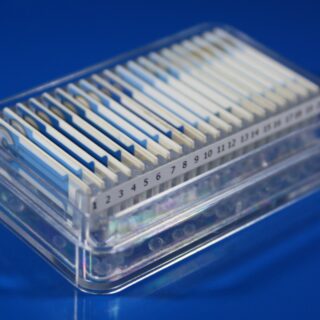
Set of twenty electrochemical sensors with a simple connector to find the best one to fit your application.
Starting kit is the set of twenty different electrochemical sensors to find the best one to fit your application. Starting kit contains 10 types of electrochemical sensors (2 sensors of each type), simple sensors connector and sensors box with numbered positions and silica gel.
-

Modular PEM Electrolyzer Test Station up to 3 kW (redox.me)
Read moreThe Modular PEM Electrolyzer Test Station is a versatile and flexible solution designed for the testing and evaluation of proton exchange membrane (PEM) electrolyzers. Unlike fully automated, integrated systems, this platform features modular components that can be easily swapped by the end user, allowing for customized setups and adaptability to different testing needs. The platform is engineered to provide precise control and measurement of electrochemical performance while offering the convenience of easily replaceable parts.
This design enables users to test various configurations, integrate new modules, and adapt the system to specific research or development objectives without the need for specialized equipment or extensive downtime. Ideal for research labs and development environments, this platform supports the advancement of PEM electrolyzer technology through hands-on, flexible experimentation.
Application note:
Ideal for researchers investigating new PEM materials, flow field designs, and cell configurations. The system is an excellent tool for academic institutions and training centers, providing students and researchers with a hands-on understanding of PEM electrolysis processes and system operation. PEM Electrolyzer Test Station with power up to 3 kW is suitable for testing lab-scale or small to medium-scale electrolyzers, typically up to 60 cm². If the power requirements for a given electrolyzer are less than 2 A/cm², larger electrolyzers up to 100 cm² or more can also be tested.
The entire system, as well as its component parts, are CE certified, which signifies that a product meets European Union (EU) health, safety, and environmental protection standards. Other certificates are available upon request.The Modular PEM Electrolyzer Test Station is continuously being improved, so the photos may not fully represent the current version of the device.
Specification:
weight: 150 kg
height: 129 cm (25U)
width: 135 cm (85 cm with folded monitors)
depth: 90 cm
maximum input power: 3 kW
maximum input current: 120 A
maximum input volatge: 60 V
power connection: 230V, 3 kW, single phaseIntrastat data:
HS Code: 85433000
Country of Origin: Sweden
NET weight: 150 kgSetup includes:
1 x Modular PEM Electrolyzer Test Station or selected module(s) -

Basic electrochemical cell setup (redox.me)
Read moreThis is a stationary solution basic electrochemical cell for measurements of electrodes in a form of:
a) rod/disc (6 mm dia.),
b) thin film deposited on a flat substrate (using a wire clip) and
c) membrane (using a wire clip).
The working, counter, and reference electrodes are mounted in a top casing either in 2-, or 3-electrode setup. The cell elements are constructed with materials that are inert to the sample (glass and PEEK). It well fits aqueous (FKM/EPDM O-Rings) and organic solvent (FFKM O-Rings) electrolyte requirements. The construction is gas-tight and can be used when the removal and exclusion of contaminants such as oxygen and water is required by bubbling of an inert gas through the electrolyte. The cell chamber is available in several material variants here (glass, PTFE, PEEK)
Application note:
The reference electrode tip should be placed at the level of working electrode center. This will ensure a low potential drop throughout the electrolyte solution for low-current experiment. Various auxiliary electrodes are suitable for this cell including metal wire and metal foil electrodes as well as graphite rod. The bubbling of gas through the solution must be stopped prior to experiment.Specification:
maximum electrolyte volume: 50 mL
electrode plug diameter: 6 mm
number of electrode slots: 3Intrastat data:
HS Code: 90309000
Country of Origin: Sweden
NET weight: 200 gSetup includes:
Item Qty B-A-BEC-50 B-O-BEC-50 BEC 50 mL – Basic Electrochemical Cell 1 C-A-BEC-50 C-O-BEC-50 Metal wire auxiliary electrode – 50HX15 0.6/250 mm, platinum (99,9%), 1 mm dia. gold plated pin 1 E-A-50HX15_Pt-1mm E-O-50HX15_Pt-1mm Silver / Silver Chloride Reference Electrode – Ag/AgCl 70 mm 1 E-Ag/AgCl_70 Non-aqueous Silver / Silver Ion Reference Electrode – Ag/Ag+ 70 mm 1 E-Ag/Ag+_70 Working disk electrode – 2 mm dia., PEEK BODY 6 mm dia. – 70 mm, glassy carbon 1 E-A-DISK_GC-70 E-O-DISK_GC-70 10 pcs of Tantalum wire clip with septum plug 0.6 mm dia., 60 mm long 1 E-A-Ta_CLIP-0.6/60-10p E-O-Ta_CLIP-0.6/60-10p