SOE.D*.E** Subminiature Oxygen Electrode
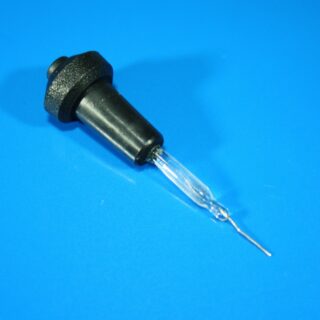
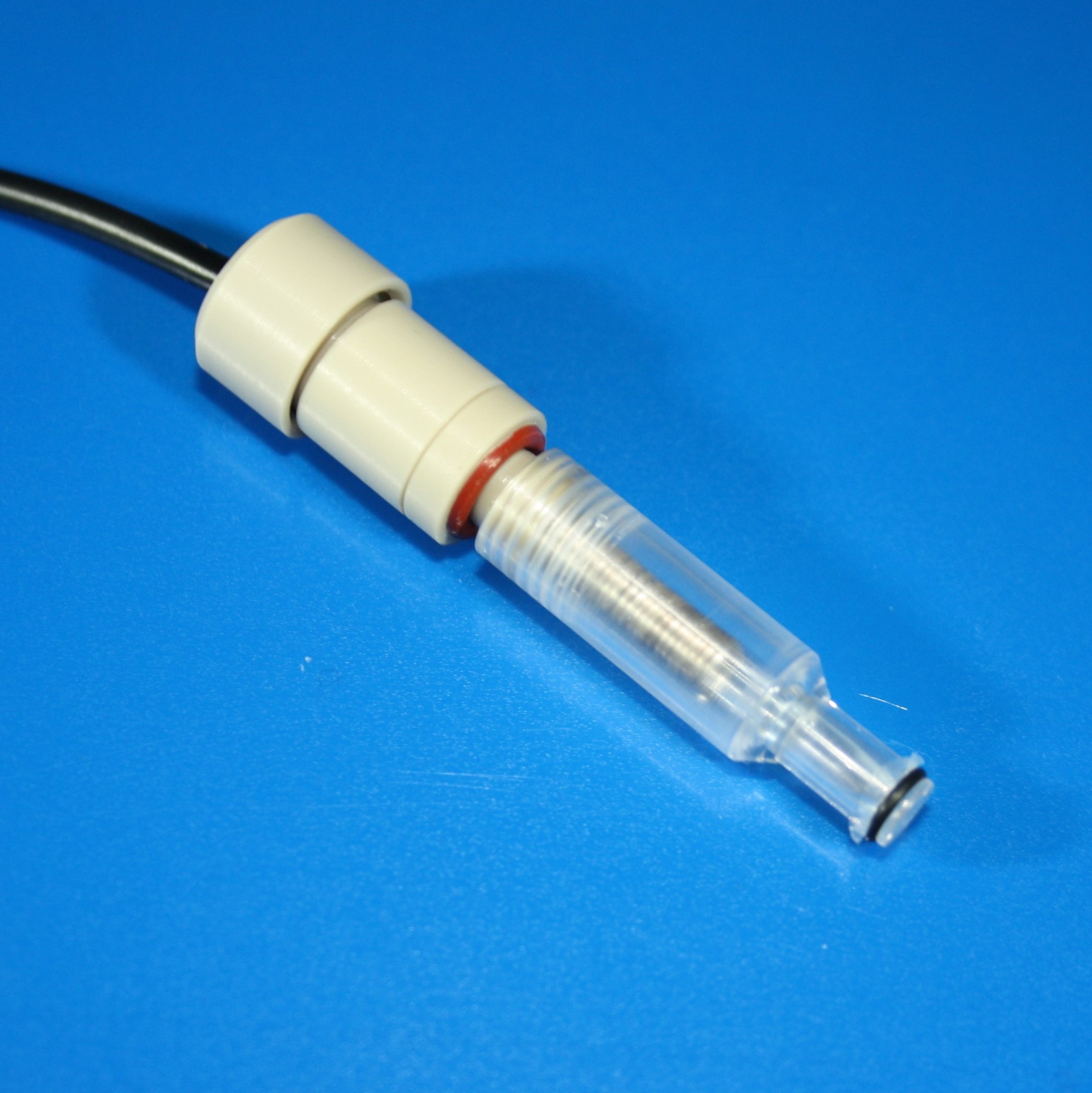
The subminiature oxygen electrode consists of a PEEK body, platinum electrode, silver reference electrode and membrane holder.
The platinum electrode is melted in glass. The membrane holder with electrolyte is attached by thread. Subminiature oxygen electrode (SOE) is designed for measurements with thermostated cell TC4, TC5, TC6. It can be used for measurement in microtitration desk.

You may also like…
-
MPH 472 Universal Potentiostat
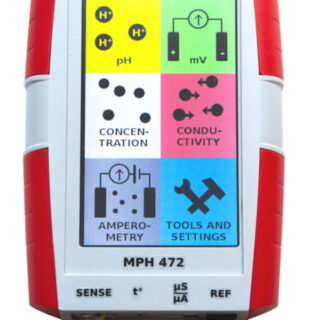
Read moreThe instrument enables measurement of amperometry, potentiometry and conductometry. Communication with the computer is provided via USB or Bluetooth. This hand-held device is equipped with GPS navigation so the measured data may be enhanced by the exact coordinates of the location where the measurement was made.
Measured data can be stored and later processed in a PC because of the SD card slot incorporation. The ability to record a waveforms or integrate the measure values is enabled. Basic evaluation methods are also implemented – linear and non-linear calibration and standard addition method is available. The influence of the type of oxygen electrode membrane, temperature or gas solubility can be compensated for the measured values.
The measured data are automatically recalculated and displayed in units of current, voltage, concentration (g∙L-1 or mol∙L-1) or saturation. Potentiometric measurement allows connection of pH electrodes and ISE.
Key Properties
- Up to 200 hours of battery life depending on the operating mode.
- Excellent analytical tools (graphs, unit conversions, internal standard method for potentiometry, coulometric titration, 10 Henry’s constants for various redox active gases).
- Power supply and data communication via USB, possibility of connection via Bluetooth.
- Data logging to memory card.
- Up to 5-point calibration for ISE and pH electrodes.
- Up to 4-point calibration of the conductivity cell makes it possible to compensate the non-linearity of the measurement.
- GPS equipment enables measurements in the field with location storage.
- Calibration stored separately in the device (possibility of changing the memory card without having to recalibrate the device).
- Possibility of separate calibration for 4 probes for amperometry and potentiometry.
- The possibility of using different temperature sensors (PT100, PT1000, Ni1000, ATC Monocrystals).
- Advanced power management (display sleep and automatic device shutdown can be set according to the user’s preferences
- Vector voltmeter for accurate conductivity measurement.
- Powerful thirty-two-bit microprocessor for accurate measurement calculations.
Improvements:
- Faster battery charging via USB charger.
- Vector voltmeter for precise conductometric measurement.
- A more sensitive GPS module.
- More robust input circuits for ametrometric measurement – less susceptible to noise.
More information can be found through the link: https://www.monokrystaly.cz/cs/ph-mv-ion-metry.html?fbclid=IwAR3ieir-mH-D10LZ-SZkrx74OHZYvOHjZPnOX8nfi9WdcwostsUgTAVaZPM#MPH471
-
ISE Ion Selective Electrodes
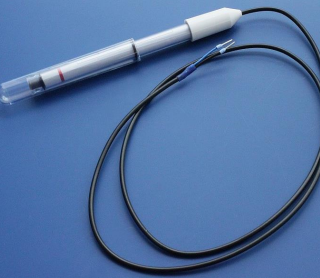
Read moreIon Selective Electrodes, ISEs, are analytical tools widely used for potentiometric analysis of large scale of various ionic analytes.
ISEs enable routine analysis in agriculture, food process, soil analysis, environmental anylysis, tribotechnical analysis, explosives and pyrotechnical mixtures analysis. They can be used for water, pot-, waste-, boiler-, mineral-, and well water samples.
These electrodes allow for direct measurements of Ammonium, Lithium, Sodium, Calcium, Fluoride, Nitrate, Potassium and Barium.
Electrodes are applicable to all commonly used measuring apparatus, with internal resistance of above 10^9 – 10^12 ohm.
Diameter: 12 mm.
Standard electrical connecting cable is 0.8 to 1 m. coaxial cable with BNC connector.
The work with ion selective electrodes is time effective, requires an only small amount of chemicals, and a friendly price of measuring equipment MPH472.
-
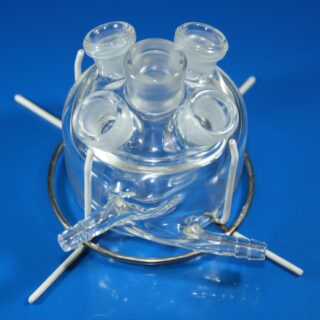
TC5 Electrochemical Glass Cell
Read moreBorosilicate glass cell serves for electrochemical measurements. The cell is jacketed.
The analyzed solution can be thermostated by external thermostat.
Cell openings are designed for electrochemical sensors connector KA1.C, classical electrodes WCEc, ACEc, RCEc and stirrer ST1, ST3 separately.
-
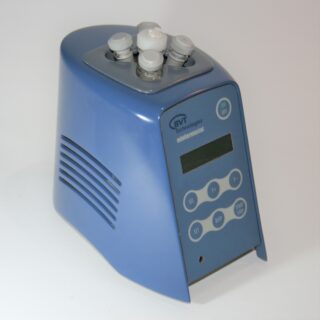
MT-1 Minithermostat
Read moreTechnical Parameters
- Supply: 12 V
- Min temperature: -9.9°C
- Max temperature: 59.9 °C
- For TC4, TC6 or Eppendorf microvials
Device Usage
- Cooling/heating of solution of temperature sensitive chemicals during experiments
- Maintaining of chemicals at exact temperature
- The electrochemical measurement with thermodiffusion
- Heated electrodes technology
The option with Eppendorf microvials 0.2 ml, 0.5 ml, 1.5 ml is possible
Minithermostat device is designed for tempering an electrolytic bath for electrochemical measurements. The temperature is stabilized and the Peltier thermal element, which allows cool or warm the measured electrolytic samples.
Related products
-
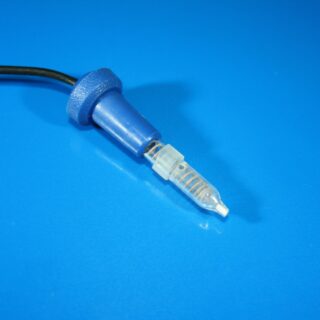
RCEc.R* Reference Classic Electrode Conic
Read moreRCEc is a glass hollow tube with silver or silver covered by silver chloride wire inside. The tube is hollow with the hole in the wall for inserting KCl solution.
Hole is covered by a rubber band. Reference classic electrode (RCEc) is designed for measurements with glass cell TC4, TC5, TC6, TC9.
Standard connection is with a 2 mm banana connector.
Connector or banana plug colour is blue.
-
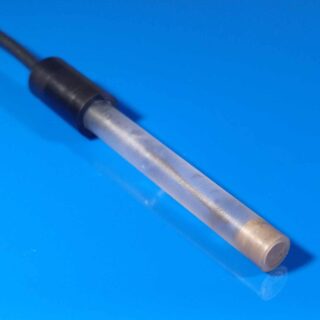
Mini *-ISE-L60.C* Miniature ion selective elecrodes
Read moreMiniature ion selective electrodes for potentiometric measurements of Chloride ions, Sodium ions, Calcium and Potassium ions concentration in aqueous solutions when used together with a reference electrode (following prior calibration) with a diameter of 6 mm and a length of 60 mm.
Specifically, these applications may include analyses for agricultural purposes, online monitoring of the representation of selected ions in water management, certain industrial areas or agriculture (hydroponic cultivation of plants) etc.
Electrodes are applicable to all commonly used measuring apparatus, with input resistance of at least 1012 Ω. The work with ion selective electrodes is time effective, requires an only small amount of chemicals, and a friendly price of measuring equipment (potentiostat with measuring method potentiometry).
Possibility of integration with a FC.1ISE.1REF Flow cell for single ion selective electrode with integrated stirring – possible automation and continuous measurement.
* For this product, we recommend our customers use the Training Service from BVT.
(https://bvt.cz/produkt/offer-of-long-term-automated-measurements-on-bvt-apparatus/)
-

Silver / Silver Chloride Refillable Reference Electrode – 6 mm dia. (redox.me)
Read moreIt is a compact refillable Ag/AgCl reference electrode equipped with ceramic frit molten into the glass body. This electrode outperforms competing products in terms of mechanical stability, voltage stability and lifetime. In general, the reference electrode is composed of a system of phases, which retain an essentially constant composition, and therefore provides a stable potential by which the working electrode potential can be monitored. The phases present in reference electrodes undergo reversible redox processes at a very high rate, enabling them to rapidly adjust to changes in the solution’s ionic activity, but leaving them sensitive to the passage of large current densities.
Application note
This electrode is commonly used with aqueous acidic electrolytes, but due to the low resistance of the frit it can be used with standard non-aqueous electrolytes, as well. The reference electrode should be stored with the rubber plug applied on the tip. Please see the full instruction here. Keeping in the solution may shorten its lifetime (the electrode operates well as long as there is at least ¼ of the solution in the electrode tube). Before use rinse it with deionized water. If air bubbles are present around the porous frit, flick the tip several times to remove them. For cleaning use detergent (dish washing detergent with water), alcohols or acetone and rinse it with deionized water at the end. To re-fill the electrode please follow this article.Specification
effective length: 30 mm or 70 mm
tube diameter: 6 mm
filling solution: 3M KCl
potential stability: <5 mV
frit resistance: 2-10 kohm at RT
operating temperature: 0-100 deg C
potential vs SHE at 25 °C: 0.207 VIntrastat data
HS Code: 90278930
Country of Origin: Sweden
NET weight: 100gProduct includes
1 Ag/AgCl refillable reference electrode
1 O-Ring
1 glass tube for storing purposes