Category: Potentiostats

Potentiostats

Showing 17–28 of 28 results

  • MultiPalmSens4

    Multi-channel Potentiostat / Galvanostat / Impedance Analyzer

    • 4 to 10 channels available in different configurations
    • FRA / EIS: 10 μHz up to  1 MHz
    • 9 current ranges: 100 pA to 10 mA
    • potential range: ±5 V or  ±10 V


    The MultiPalmSens4 is a flexible multi-channel potentiostat, galvanostat and impedance analyzer which you can fully tailor to your requirements and budget. The MultiTrace software allows for using each channel individually or simultaneously or running a sequence of automated tasks on each channel. Each channel provides an additional auxiliary port for controlling peripherals or monitoring temperature or other analog signals.


    More information can be found through the link: https://www.palmsens.com/product/multipalmsens4/


    Configure your ideal multi-channel potentiostat

    Each channel can be configured with:

    • ±5 V or ±10 V maximum potential range
    • EIS/FRA with maximum frequency of 100 kHz or 1 MHz
    • Bipotentiostat module for second WE
    • iR-Compensation
    • Galvanic isolation


    Always a backup

    Every channel of the MultiPalmSens4 is equipped with 8 GB storage space. This means all your measurements* can automatically be saved on-board as backup.
    Measurements can be browsed and transferred to the PC easily using the MultiTrace software for Windows.


    Synchronizing channels in Synched mode

    By enabling synchronization of channels and adjusting the setup of your cables, you can use the MultiPalmSens4 as a polypotentiostat. This means you can use multiple working electrodes, one counter and one reference electrode in the same cell at the same time. Your working electrodes all perform the same measurement.


    Read more
  • MUX8-R2 Multiplexer

    Multiplexer for 8 up to 128 cells

    • Automatically switch between electrochemical cells
    • Easy stacking with magnetic feet and top
    • 4 different electrode or sensor configurations
    • Daisy chain multiplexers, up to 128 channels!

    The PalmSens series and the EmStat4X can be used to work with multiple working electrodes or a sensor array by means of a multiplexer.


    The multiplexer switches between the working electrodes in the range of milliseconds.

    • each MUX8-R2 multiplexer enables to work with up to eight 2- or 3- electrode systems.
    • daisy chaining multiple MUX8-R2 boards (expansion up to 128 channels)
    • all hardware settings are controlled by the software making it unnecessary to flick a physical switch
    • LEDs to show which channel is selected
    • allows to connect auxiliary input (like temperature sensor)


    More information can be found through the link: https://www.palmsens.com/product/mux8-r2/


    Connection options

    The most selected connection option uses two double shielded D-Sub cables ending in 2 mm banana plugs. As alternatives we can provide a PCB with screw terminalsD-Sub cable ending in ferrules or Screen Printed Electrode Adapter. Each of these cables can be connected to 4 channels, if all 8 channels are used, two cables are needed.

    Specifications

     System
    number of channels  8 (up to 128 when daisy chained)
    multiplexer switches 8 x (WE, S, RE and CE)
    on resistance for WE 1.5 ohm typical
    charge injection on WE 20 pC typical
    leakage current < 55 pA (30 pA typical) at 25 ºC
    switching time 2 ms

    compliance voltage


    ± 10 V
    Other
    housing aluminium: 138 mm x 121 mm x 37 mm
    weight  +/- 500 g
    temperature range 0 ºC to + 50 ºC
    power supply USB


    The MUX8-R2 has the following connectors:

    Connector Function
    Input Y-cable connects to both potentiostat sensor connector and (digital) AUX
    AUX Can be used to measure auxiliary input like temperature or pH, and to switch external hardware using two digital control lines that can be set in PSTrace
    Link Connects to Input of next multiplexer, for daisy-chaining multiple multiplexers
    USB-C Input for extra power when
    ≥3 multiplexers are daisy-chained
    Channel 1-4 Connects to sensor cables 1-4
    Channel 5-8 Connects to sensor cables 5-8
    Read more
  • Nexus

    Building on PalmSens’ legacy of providing top-tier solutions for accurate low-current measurements, Nexus delivers an ultra-low-noise performance that exceeds even our existing portable devices, while also supporting measurements up to 1 Ampere.


    More information could be found trough link:

    https://www.palmsens.com/product/nexus/


    • Bi)Potentiostat/ Galvanostat/ Impedance analyzer
    • FRA / EIS: 10 μHz up to 1 MHz
    • 11 current ranges: 100 pA to  1 A
    • Dual EIS with second sense electrode
    • Script your experiments using MethodSCRIPT
    • Use with PSTrace software for Windows


    Versatile

    Our high-end instrument, the Nexus, is a Potentiostat, Galvanostat, and optional a Frequency Response Analyser (FRA) for Electrochemical Impedance Spectroscopy (EIS). The Nexus has a large potential range (-12V to +12V) and current range (100 pA to 1 A) with a high resolution and low noise.

    The research software PSTrace makes using the Nexus a breeze. The scripting language MethodSCRIPT gives a user full control when needed. Looking for a multi-channel instrument? Just stack multiple instruments on top of each other.

    Configurable

    Nexus comes in different configurations:

    • optional EIS/FRA module with maximum frequency of 1 MHz
    • optional BiPotentiostat module for second WE

    Standard included

    Carrying padded bag containing:

    • High quality, double shielded cell cable with
      2 mm banana connectors for Working, Sense, Counter, Reference electrode and Ground
    • Chassis ground cable with croc clip (4 mm)
    • Hardware Sync Link cable
    • Crocodile clips
    • Calibration report
    • Dummy cell
    • USB cable and Ethernet cable
    • Manual and Quick Start document
    • PSTrace software for Windows
    • iR-compensation (ohmic drop compensation) module
    • Second Sense lead cable
     

    S2 and BiPot

    Nexus includes a Second Sense lead (S2) and an optional BiPotentiostat (BiPot) module.

    S2 – Additional voltage (potential) measurement point

    BiPot – Independent second working electrode for simultaneous current measurement

    These two features are independent and serve distinct purposes:

    • S2 (Second Sense Lead)
      S2 acts as an additional voltage-sensing input, with the same specifications as the main reference electrode. It measures the potential at a specific point in the cell and, because the current at that point is known, it can also be used to calculate impedance.
    • BiPot (BiPotentiostat Module)
      The BiPot module introduces a second working electrode (WE2), operating versus the same reference and counter electrodes as the main channel. In BiPotentiostat mode, both working electrodes (WE1 and WE2) are recorded simultaneously. WE2 operates in potentiostatic mode, meaning it can independently control its potential and measure its current.

    Why choose the Nexus?

    Read more
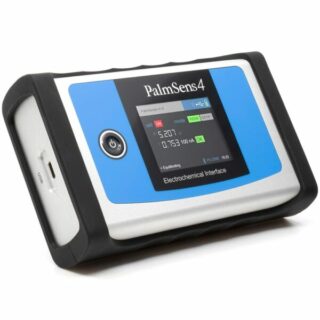
  • PalmSens4

    The PalmSens4, is a USB and battery powered Potentiostat, Galvanostat, and optional a Frequency Response Analyser (FRA) for Electrochemical Impedance Spectroscopy (EIS).


    Compact, versatile and powerful

    • (Bi)Potentiostat / Galvanostat / Impedance Analyzer
    • FRA / EIS: 10 μHz up to  1 MHz
    • 9 current ranges: 100 pA to 10 mA
    • 18-bit resolution
    • Bluetooth or USB connection


    The PalmSens4 has a large potential range (-5V to 5V or -10V to 10V) and current range (100 pA to 10 mA) with a high resolution and low noise. The economical PalmSens4 is a complete laboratory instrument but its compact and rugged design makes it also ideal for field work.

    Connecting via Bluetooth guarantees a perfectly floating measurement.


    More information can be found through the link: https://www.palmsens.com/product/palmsens4/


    Configurable

    PalmSens4 comes in different configurations:

    • ±5 V or ±10 V potential range
    • EIS/FRA with maximum frequency of 100 kHz or 1 MHz
    • optional BiPotentiostat module for second WE
    • optional iR-Compensation

    Standard included

    • Rugged carrying case
    • High quality, double shielded cell cable with
      2 mm banana connectors for Working, Counter, Reference electrode and Ground
    • Crocodile clips
    • Dummy cell
    • USB cable
    • Manual and Quick Start document
    • PSTrace software for Windows


    Read more
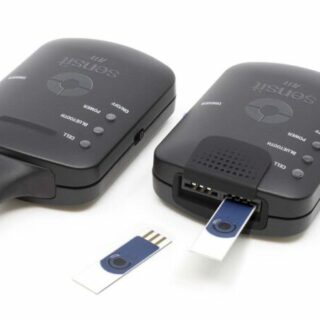
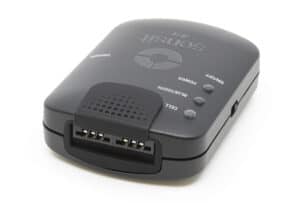
  • Sensit BT

    Handheld and wireless dual-channel potentiostat

    • Capable of EIS up to 200 kHz
    • Built around the EmStat Pico module
    • Potential range -1.7 to +2 V
    • Current ranges 100 nA – 5 mA (max ±3 mA)
    • Can be used without PC or smartphone connection


    The Sensit BT is ideal for electrochemical sensor applications. The Sensit BT connects via Bluetooth to your smartphone or tablet and controlled via the Android app PStouch. You can use the USB-C port to charge the Sensit BT or connect to a classic USB port on your PC and control the Sensit BT via our PC software PSTrace

    The Sensit BT supports most common electrochemical techniques, including Cyclic Voltammetry, Square Wave Voltammetry and Impedance Spectroscopy (FRA/EIS). 


    More information can be found through the link: https://www.palmsens.com/product/sensit-bt/


    Two versions:

    Sensit BT.SPE Sensit BT.SNS
    Sensor pitch 2.54 mm Cable length 40 cm
    Electrode connections RE, WE, CE Connectors 2 mm banana
    Allowed sensor thickness Between 0.1 mm and 0.8 mm Electrode connections RE, WE, WE2, CE
    Maximum sensor width 11 mm  


    Dual-channel and Bipotentiostat

    The Sensit BT.SPE can be used for running sequential measurements on two different Screen-Printed Electrodes (SPE’s) each with their own Reference, Counter and Working electrodes.

    The second channel can also be used in Bipotentiostat mode, functioning as second Working Electrode versus the Reference and Counter electrode of channel 1. Both working electrodes are recorded simultaneously in the Bipotentiostat mode.

    The Sensit BT.SNS has a lead connected to the WE of channel 2 and can be used out-of-the-box for BiPotentiostat measurements.


    On-board data storage
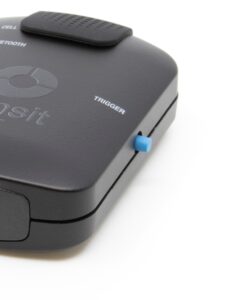
    The Sensit BT is equipped with 500 MB internal storage memory.

    Save measurements on-board as a backup. Or pre-program the device with a script and use the trigger button to run and store measurements: no need to connect a PC or smartphone. Browse and transfer all internally stored measurements back to the PC easily using PSTrace for Windows.

    Read more
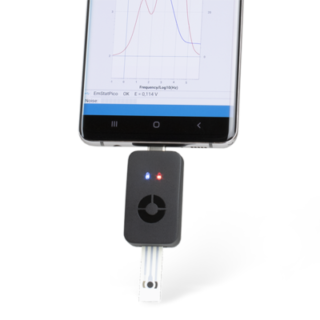
  • Sensit Smart

    Smartphone potentiostat

    • Capable of EIS up to 200 kHz
    • Built around the EmStat Pico module
    • Potential range -1.7 to +2 V
    • Current ranges 100 nA – 5 mA (max ±3 mA)


    The Sensit Smart can be directly inserted in a smartphone or tablet and controlled via the Android app PStouch. You can use the USB-C Female to USB-A cable to connect the Sensit Smart to a classic USB port on your PC and control the Sensit Smart via our PC software PSTrace

    The Sensit Smart supports most common electrochemical techniques, including Cyclic Voltammetry, Square Wave Voltammetry and Impedance Spectroscopy (FRA/EIS).


    More information can be found through the link: https://www.palmsens.com/product/sensit-smart/


    The Sensit Smart comes with:

    • Dummy Cell (SPE version)
    • SPE to screw-terminal adapter
    • USB-C Female to USB-A cable
    • USB-C Female to Micro USB adapter
    • USB-C Extension cable
    • USB-C port protector
    • PSTrace software for Windows (activation code for my.palmsens.com)
    • PStouch app for Android (find it in the Google Play Store)


    Compatible with most common Screen Printed Electrodes / Sensors
    Sensor pitch: 2.54 mm
    Electrode connections: RE, WE, CE
    Allowed sensor thickness: Between 0.1 mm and 0.8 mm
    Maximum sensor width: 11 mm


    Read more
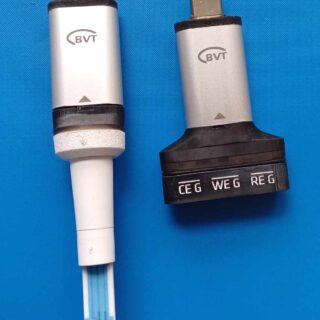
  • USB Potentiostat Galvanoplot

    USB Potentiostat Galvanoplot is a super small, low-cost and affordable device suitable for dedicated volume applications, which is optimized for screen-printed sensor and biosensor applications. It can be used in many other research areas and with other electrochemical sensors, for corrosion measurement, battery and super-capacitors or fuel cells.

    It is capable of performing all common Amperometric and Voltammetric electrochemistry protocols (CA, LSV, CV, DPV, NPV, SVW, GAL) and can be used with three electrode (WE/RE/CE) and two electrode (WE/RE-CE) setups. Plug the device directly into an Android mobile device through OTG port for a true on-site analysis experience. It is possible to choose from two types of interfaces allowing direct insertion of the BVT SPE sensors or the use of 3 classical electrodes with 2 mm banana plugs (WE, RE, CE).


    Specifications

    • Dimensions: 39x17x8 mm
    • Weight: 5 g without sensor interface
    • Voltage scan range: +-3V @1mV resolution 
    • Max current: 2000 nA (*at the request of the customer, it is possible to change the range, but this will change the resolution, noise and other parameters)
    • Current resolution: 300pA@1KSPS/ 100pA@100SPS/ 30pA/10 SPS resolution
    • Noise around: 50nA@1KSPS/ 7nA@100SPS/ 400pA/10 SPS


    • Protocols: CA, LSV, CV, DPV, NPV, SVW, GAL
    • Cell type: WE/RE/CE and WE/RE-CE
      Connectivity: USB-C (Plug the device directly into an Android mobile device through OTG port for a true on-site analysis experience)


    • Operating system compatibility: Windows 8, 10+
    • Advanced analysis – filtering and auto peaks


    Device Usage

    • Electrochemical measurements
    • Measurements with biosensors and electrochemical sensors
    • Measurement of biochemical activity of a sample
    • Corrosion measurement


    Read more
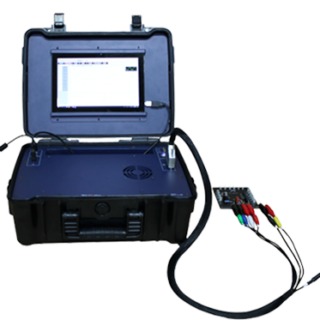
  • ZIVE MP1-4CH housing – high quality multichannel potentiostat/galvanostat/impedance analyzer

    • High quality multichannel potentiostat/galvanostat/impedance analyzer
    • Voltage range : ±10V
    • Current range : 100nA~1A (10nA with gain)
    • Channel expandable up to 16 channels per PC


    Application

    • Corrosion
    • Material testing
    • Sensor
    • Bio-Electrochemistry
    • Battery / Supercapacitor
    • Fuel cell
    • Solar cell
    • Other Echem experiments

    Features

    • high quality multichannel potentiostat/galvanostat/impedance analyzer
    • voltage range : ±10V
    • current range : 9 ranges
      – 100nA to 1A (10nA with gain)
    • capable of multitude of applications
      – corrosion, general electrochemistry, sensor, battery, fuel cell,
      supercapacitor, solar cell, etc.
    • plug & play type fully independent channel
    • channel expandable up to 16 channels per PC
    • frequency range : 10uHz ~ 1Mhz
    • 14 EIS techniques capability including multisine
    • voltage pulse or current pulse charge/discharge test(GSM,CDMA etc.),
      sine wave function for ripple simulation in energy software package
      & pulse plating available
    • high speed data sampling time
      – 2usec or 3usec depending on data point numbers
    • fast sweep mode(5000V/sec with 10mV data sampling)
    • iR compensation and measurement
    • 3 measurement/control voltage ranges &
      9 measurement/control current ranges
    • internal 542,000 data point storage & continuing experiment regardless
      of PC failure.
    • can be interfaced to a separate booster for high current applications
    • one auxiliary voltage measurement is available
    • inclues basic software, Energy/Impedance/Battery/Echem analysis software packages
    • free software upgrade

    Experimental Techniques

    Basic techniques

    • Potentiostatic
    • Galvanostatic
    • Double step potentiostatic
    • Double step galvanostatic
    • OCP measurement
    • Potential sweep
    • Current sweep
    • Cyclic voltammetry
    • Fast potential sweep
    • Potentiostatic Ru measurement
    • Galvanostatic Ru measurement

    Advanced Software Package(Included)

    • EIS software package(EISe)
      – Potentiostat EIS
      – Galvanostatic EIS
      – Pseudo galvanostatic EIS
      – OCP* EIS
      – Potentiodynamic PEIS
      – Galvanodynamic GEIS
      – Poteniodynamic HFR
      – Galvanodynamic HFR
      – Potentiostatic HFR monitor
      – Galvanostatic HFR monitor
      – Multisine potentiostatic EIS
      – Multisine galvanostatic EIS
      – Intermittent potentiostatic EIS
      – Intermittent galvanostatic EIS
      (*) The system measures open circuit potential before each frequency
      change and applies AC sine wave on this potential.
    • Corrosion software package(CORe)
      – Tafel(Tafel experiment)
      – Rp(Polarization resistance)
      – RpEc trend
      – PDYN(Potentiodynamic)
      – CYPOL(Cyclic polarization resistance)
      – GDYN(GalvanoDynamic)
      – Reactivation
      – Galvanic corrosion
      – Potentiostatic ECN
      – Galvanostatic ECN
      – ZRA mode ECN
    • Energy software package(BATe)
      a) Battery test technique
      – CC/CV testforcycle life test of lithium battery
      – CC/CC tet forcyclelifetestofNiCd or NiMH battery
      – Discharging test
      – EVS(electrochemical voltage spectroscopy)
      – Variable scan rate CV
      – Potentiostatic IV curve
      – Galvanostatic IV curve
      – Steady state CV
      – PITT(Potentiostatic intermittent titration technique) test
      – GITT(Galvanostatic intermittent titration technique) test
      – Pulse mode is available for GSM & CDMA profile.
      Pulse shape profile can be measured by user’s demand.
      b) Control mode
      – Charge : CC, CC-CV, pulse, sine wave
      – Discharge : CC, CP, CR, pulse, sine wave
      c) Cut-off condition
      – Time, voltage, current, power, auxV etc.
      – Various battery charge/discharge test is available including
      pulse discharge for GSM, CDMA application
    • Electrochemical analysis software package(EASe)
      a) Step techniques
      – CA(Chronoamperometry)
      – CC(Chronocoulometry)
      – CP(Chronopotentiometry)
      b) Sweep techniques
      – LSV(Linear sweep voltammetry)
      – SDV(Sampled DC voltammetry)
      – Fast CV
      – Fast LSV
      c) Pulsed techniques
      – DPV(Differential pulse voltammetry)
      – SWV(Square wave voltammetry)
      – DPA(Diff.pulse amperometry)
      – NPV(Normal pulse voltammetry)
      – RNPV(Reverse normal pulse voltammetry)
      – DNPV(Differential normal pulse voltammetry)

    Options

    • Power booster
    Read more
  • ZIVE SP1 – potentiostat/galvanostat/ZRA

    • Potentiostat/galvanostat/ZRA at affordable price
    • Control voltage range: ±10V
    • Control current range:9 ranges, 10nA~1A (10nA with gain)


    Application

    • Battery
    • Super capacitor
    • Fuel cell
    • Corrosion
    • Sensor
    • Solar cell
    • Other Echem experiments

    Features

    • economical high quality potentiostat/galvanostat/impedance analyzer
    • compact size with full functions
    • ±10V@1Amp control range
    • wide current ranges(1A to 10nA) for various applications
    • built-in FRA : enables EIS tests by using software
    • 14 EIS techniques capability including multisine
    • capable of multitude of applications
      – corrosion, general electrochemistry, sensor, battery, fuel cell,
      supercapacitor, solar cell, etc.
    • bipolar pulse capability
    • voltage pulse or current pulse charge/discharge test(GSM,CDMA etc.),
      sine wave function for ripple simulation withenergysoftwarepackage
      & pulse plating available
    • high speed data sampling time
      – 2usec or 3usec depending on data point number
    • iR compensation and measurement
    • 3 measurement/control voltage ranges &
      9 measurement/control current ranges
    • internal 542,000 data point storage & continuing experiment regardless
      of PC failure.
    • multichannel configuration available
    • free software upgrade

    Experimental Techniques

    Basic techniques

    • Potentiostatic
    • Galvanostatic
    • Double step potentiostatic
    • Double step galvanostatic
    • OCP measurement
    • Potential sweep
    • Current sweep
    • Cyclic voltammetry
    • Fast potential sweep
    • Potentiostatic Ru measurement
    • Galvanostatic Ru measurement

    Advanced Software Package(Included)

    • EIS software package(EISe)
      – Potentiostat EIS
      – Galvanostatic EIS
      – Pseudo galvanostatic EIS
      – OCP* EIS
      – Potentiodynamic PEIS
      – Galvanodynamic GEIS
      – Poteniodynamic HFR
      – Galvanodynamic HFR
      – Potentiostatic HFR monitor
      – Galvanostatic HFR monitor
      – Multisine potentiostatic EIS
      – Multisine galvanostatic EIS
      – Intermittent potentiostatic EIS
      – Intermittent galvanostatic EIS
      (*) The system measures open circuit potential before each frequency
      change and applies AC sine wave on this potential.
    • Corrosion software package(CORe)
      – Tafel(Tafel experiment)
      – Rp(Polarization resistance)
      – RpEc trend
      – PDYN(Potentiodynamic)
      – CYPOL(Cyclic polarization resistance)
      – GDYN(GalvanoDynamic)
      – Reactivation
      – Galvanic corrosion
      – Potentiostatic ECN
      – Galvanostatic ECN
      – ZRA mode ECN
    • Energy software package(BATe)
      a) Battery test technique
      – CC/CV testforcycle life test of lithium battery
      – CC/CC tet forcyclelifetestofNiCd or NiMH battery
      – Discharging test
      – EVS(electrochemical voltage spectroscopy)
      – Variable scan rate CV
      – Potentiostatic IV curve
      – Galvanostatic IV curve
      – Steady state CV
      – PITT(Potentiostatic intermittent titration technique) test
      – GITT(Galvanostatic intermittent titration technique) test
      – Pulse mode is available for GSM & CDMA profile.
      Pulse shape profile can be measured by user’s demand.
      b) Control mode
      – Charge : CC, CC-CV, pulse, sine wave
      – Discharge : CC, CP, CR, pulse, sine wave
      c) Cut-off condition
      – Time, voltage, current, power, auxV etc.
      – Various battery charge/discharge test is available including
      pulse discharge for GSM, CDMA application
    • Electrochemical analysis software package(EASe)
      a) Step techniques
      – CA(Chronoamperometry)
      – CC(Chronocoulometry)
      – CP(Chronopotentiometry)
      b) Sweep techniques
      – LSV(Linear sweep voltammetry)
      – SDV(Sampled DC voltammetry)
      – Fast CV
      – Fast LSV
      c) Pulsed techniques
      – DPV(Differential pulse voltammetry)
      – SWV(Square wave voltammetry)
      – DPA(Diff.pulse amperometry)
      – NPV(Normal pulse voltammetry)
      – RNPV(Reverse normal pulse voltammetry)
      – DNPV(Differential normal pulse voltammetry)
    Read more
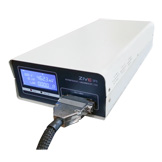
  • ZIVE SP2 – high quality potentiostat/galvanostat/impedance analyzer

    • Versatile high quality potentiostat/galvanostat/impedance analyzer
    • Control voltage range: ±10V, ±1V, ±100mV
    • Control current range: 200pA ~ 2A (200pA with gain, 11 ranges)


    Application

    • Battery/Super capacitor
    • Fuel cell
    • Corrosion
    • Sensor
    • Solar cell
    • Other Echem experiments

    Features

    • high quality potentiostat/galvanostat/impedance analyzer
    • ±10V@2Amp control range
    • current range (11 ranges)
      – 2A to 200pA
      – 200pA with gain
    • frequency range : 10uHz ~ 2MHz
    • built-in FRA : enables EIS tests
    • 14 EIS techniques capability including multisine
    • capable of multitude of applications
      – corrosion, general electrochemistry, sensor, battery, fuel cell,
      supercapacitor, solar cell, etc.
    • bipolar pulse capability
    • voltage pulse or current pulse charge/discharge test(GSM,CDMA etc.),
      sine wave function for ripple simulation in battery test package
      & pulse plating available
    • high speed data sampling time
      – 2usec or 3usec depending on data point number
    • fast sweep mode(5000V/sec with 10mV data sampling)
    • iR compensation & measurement
    • 3 measurement/control voltage ranges &
      11 measurement/control current ranges
    • internal 542,000 data point storage & continuing experiment regardless
      of PC failure.
    • LCD display
    • software package
      – Corrosion software package
      – EIS software package
      – Electrochemical analysis software package
      – Energy software package
    • multichannel configuration available by connecting multiple SP2 or other ZIVE products
    • power booster(ZIVE ZB series) available
    • inclues basic software, Energy(battery)/Impedance/Corrosion/Echem analysis software packages
    • free software upgrade

    Experimental Techniques

    Basic techniques

    • Potentiostatic
    • Galvanostatic
    • Double step potentiostatic
    • Double step galvanostatic
    • OCP measurement
    • Potential sweep
    • Current sweep
    • Cyclic voltammetry
    • Fast potential sweep
    • Potentiostatic Ru measurement
    • Galvanostatic Ru measurement

    Advanced software techniques(Included)

    • EIS software package(EIS)
      – Potentiostat EIS
      – Galvanostatic EIS
      – Pseudo galvanostatic EIS
      – OCP* EIS
      – Potentiodynamic PEIS
      – Galvanodynamic GEIS
      – Poteniodynamic HFR
      – Galvanodynamic HFR
      – Galvanostatic HFR monitor
      – Potentiostatic HFR monitor
      – Multisine potentiostatic EIS
      – Multisine galvanostatic EIS
      – Intermittent potentiostatic EIS
      – Intermittent galvanostatic EIS
      (*) The system measures open circuit potential before each frequency
      change and applies AC sine wave on this potential.
    • Corrosion software package(COR)
      – Tafel(Tafel experiment)
      – Rp(Polarization resistance)
      – RpEc trend
      – PDYN(Potentiodynamic)
      – CYPOL(Cyclic polarization resistance)
      – GDYN(GalvanoDynamic)
      – Reactivation
      – Galvanic corrosion
      – Potentiostatic ECN
      – Galvanostatic ECN
      – ZRA mode ECN
    • Energy software package(BAT)
      a) Battery test technique
      – CC/CV testforcycle life test of lithium battery
      – CC/CC tet forcyclelifetestofNiCd or NiMH battery
      – Discharging test
      – EVS(electrochemical voltage spectroscopy)
      – Variable scan rate CV
      – Potentiostatic IV curve
      – Galvanostatic IV curve
      – Steady state CV
      – PITT(Potentiostatic intermittent titration technique) test
      – GITT(Galvanostatic intermittent titration technique) test
      – Pulse mode is available for GSM & CDMA profile.
      Pulse shape profile can be measured by user’s demand.
      b) Control mode
      – Charge : CC, CC-CV, pulse, sine wave
      – Discharge : CC, CP, CR, pulse, sine wave
      c) Cut-off condition
      – Time, voltage, current, power, auxV etc.
      – Various battery charge/discharge test is available including
      pulse discharge for GSM, CDMA application
    • Electrochemical analysis software package(EAS)
      a) Step techniques
      – CA(Chronoamperometry)
      – CC(Chronocoulometry)
      – CP(Chronopotentiometry)
      b) Sweep techniques
      – LSV(Linear sweep voltammetry)
      – SDV(Sampled DC voltammetry)
      – Fast CV
      – Fast LSV
      c) Pulsed techniques
      – DPV(Differential pulse voltammetry)
      – SWV(Square wave voltammetry)
      – DPA(Diff.pulse amperometry)
      – NPV(Normal pulse voltammetry)
      – RNPV(Reverse normal pulse voltammetry)
      – DNPV(Differential normal pulse voltammetry)

    Options

    • Power booster
    Read more
  • ZIVE SP3 – potentiostat/galvanostat/impedance analyzer

    • Research grade potentiostat/galvanostat/impedance analyzer
    • Control voltage range: ±10V, ±1V, ±100mV
    • Control current range: 2nA ~ 2A (2nA with gain, 10 ranges)


    Application

    • Battery/Super capacitor
    • Fuel cell
    • Coating
    • Corrosion
    • Sensor
    • Solar cell
    • Other Echem experiments

    Features

    • high compliance voltage potentiostat/galvanostat/impedance analyzer
    • ±10V@2Amp control range
    • current range (10 ranges)
      – 2A to 20nA
      – 2nA with gain
    • frequency range : 10uHz ~ 1MHz
    • 14 EIS techniques capability including multisine
    • Electrical isolation floating potentiostat can be used with autoclaves, mechanical stress apparatus, or pipeline probes.
    • suitable for typical corrosion applications
      – pitting, crevice corrosion, and passivation behavior
      – corrosion rate (Tafel Plot) determination
      – active/passive characteristics
      – passivation rates
      – anodic and cathodic protection
    • high speed data sampling time
      – 2usec or 3usec depending on data point number
    • fast sweep mode (5000V/sec with 10mV data sampling)
    • iR compensation & measurement
    • 3 measurement/control voltage ranges &
      10 measurement/control current ranges
    • internal 542,000 data point storage & continuing experiment regardless of PC failure
    • LCD display
    • software package
      – Corrosion software package(COR3)
      – EIS software package
      – Electrochemical analysis software package
      – Energy software package
    • multichannel configuration available by connecting multiple SP3 or other ZIVE products
    • included basic software, Energy(battery)/Impedance/Corrosion/Echem analysis software packages
    • free software upgrade

    Experimental Techniques

    Basic techniques

    • Potentiostatic
    • Galvanostatic
    • Double step potentiostatic
    • Double step galvanostatic
    • OCP measurement
    • Potential sweep
    • Current sweep
    • Cyclic voltammetry
    • Fast potential sweep
    • Potentiostatic Ru measurement
    • Galvanostatic Ru measurement

    Advanced software techniques (Included)

    Options

    • Power booster


    Read more
  • ZIVE SP5 – high quality potentiostat/galvanostat/impedance analyzer

    • Versatile high quality potentiostat/galvanostat/impedance analyzer
    • Control voltage range : ±10V, ±1V, ±100mV
    • Control current range : 50pA ~ 5A (500pA with gain, 11 ranges)


    Application

    • Battery / Super capacitor
    • Fuel cell
    • Corrosion
    • Sensor
    • Solar cell
    • Other Echem experiments


    Features

    • high quality potentiostat/galvanostat/impedance analyzer
    • ±10V@5Amp control range
    • current range (11 ranges)
      – 5nA to 5A
      – 500pA with gain
    • frequency range : 10uHz ~ 1MHz
    • built-in FRA : enables EIS tests
    • 14 EIS techniques capability(option) including multisine
    • capable of multitude of applications
      – corrosion, general electrochemistry, sensor, battery, fuel cell,
        supercapacitor, solar cell, etc.
    • bipolar pulse capability
    • voltage pulse or current pulse charge/discharge test(GSM,CDMA etc.),
      sine wave function for ripple simulation in battery test package
      & pulse plating available
    • high speed data sampling time
      – 2usec or 3usec depending on data point numbers
    • fast sweep mode(5000V/sec with 10mV data sampling)
    • iR compensation & measurement
    • 3 measurement/control voltage ranges &
      11 measurement/control current ranges
    • internal 542,000 data point storage & continuing experiment regardless
      of PC failure.
    • LCD diaplay
    • multichannel configuration available by connecting multiple SP5 or other ZIVE products
    • external booster (ZIVE ZB series) available
    • inclues basic software, Energy/Impedance/Battery/Echem analysis software packages
    • can use EIS data analysis software, ZMANTM and DC data analysis software
      IVMANTMwithough purchasing license code
    • free software upgrade   


    Experimental Techniques

    Basic techniques

    • Potentiostatic
    • Galvanostatic
    • Double step potentiostatic
    • Double step galvanostatic
    • OCP measurement
    • Potential sweep
    • Current sweep
    • Cyclic voltammetry
    • Fast potential sweep
    • Potentiostatic Ru measurement
    • Galvanostatic Ru measurement


    Advanced software techniques(included)

    • EIS software package(EIS)
      – Potentiostat EIS
      – Galvanostatic EIS
      – Pseudo galvanostatic EIS
      – OCP* EIS
      – Potentiodynamic PEIS
      – Galvanodynamic GEIS
      – Poteniodynamic HFR
      – Galvanodynamic HFR
      – Galvanostatic HFR monitor
      – Potentiostatic HFR monitor
      – Multisine potentiostatic EIS
      – Multisine galvanostatic EIS
      – Intermittent potentiostatic EIS
      – Intermittent galvanostatic EIS
      (*) The system measures open circuit potential before each frequency
          change and applies AC sine wave on this potential.
       
    • Corrosion software package(COR)
      – Tafel(Tafel experiment)
      – Rp(Polarization resistance)
      – RpEc trend
      – PDYN(Potentiodynamic)
      – CYPOL(Cyclic polarization resistance)
      – GDYN(GalvanoDynamic)
      – Reactivation
      – Galvanic corrosion
      – Potentiostatic ECN
      – Galvanostatic ECN
      – ZRA mode ECN
       
    • Energy software package(BAT)
      a) Battery test technique
         – CC/CV test for cycle life test of lithium battery  
         – CC/CC tet for cycle life test of NiCd or NiMH battery
         – Discharging test
         – EVS(electrochemical voltage spectroscopy)
         – Variable scan rate CV
         – Potentiostatic IV curve
         – Galvanostatic IV curve
         – Steady state CV
         – PITT(Potentiostatic intermittent titration technique) test
         – GITT(Galvanostatic intermittent titration technique) test
         – Pulse mode is available for GSM & CDMA profile.
           Pulse shape profile can be measured by user’s demand.
      b) Control mode
         – Charge : CC, CC-CV, pulse, sine wave
         – Discharge : CC, CP, CR, pulse, sine wave
      c) Cut-off condition
         – Time, voltage, current, power, auxV etc.
         – Various battery charge/discharge test is available including
           pulse discharge for GSM, CDMA application
       
    • Electrochemical analysis software package(EAS)
      a) Step techniques
         – CA(Chronoamperometry)
         – CC(Chronocoulometry)
         – CP(Chronopotentiometry)
      b) Sweep techniques
         – LSV(Linear sweep voltammetry)
         – SDV(Sampled DC voltammetry)
         – Fast CV
         – Fast LSV
      c) Pulsed techniques
         – DPV(Differential pulse voltammetry)
         – SWV(Square wave voltammetry)
         – DPA(Diff.pulse amperometry)
         – NPV(Normal pulse voltammetry)
         – RNPV(Reverse normal pulse voltammetry)
         – DNPV(Differential normal pulse voltammetry)


    Options

    • Power booster  
    Read more