
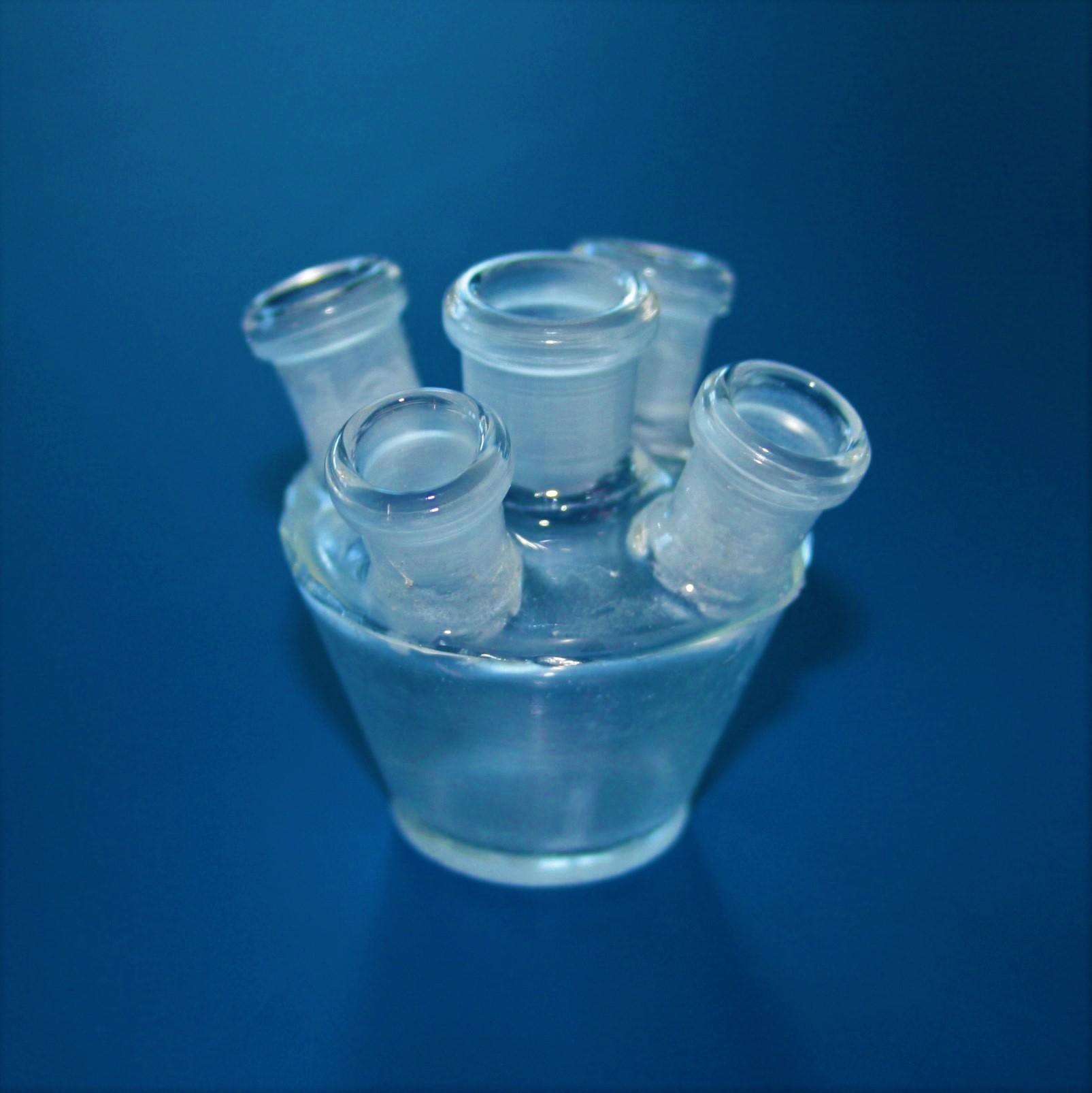
TC4 Electrochemical Glass Cell
Simple borosilicate glass cell serves for electrochemical measurements.
The temperature of the analyzed solution can be controlled when placing the cell in MT1-1 minithermostat.
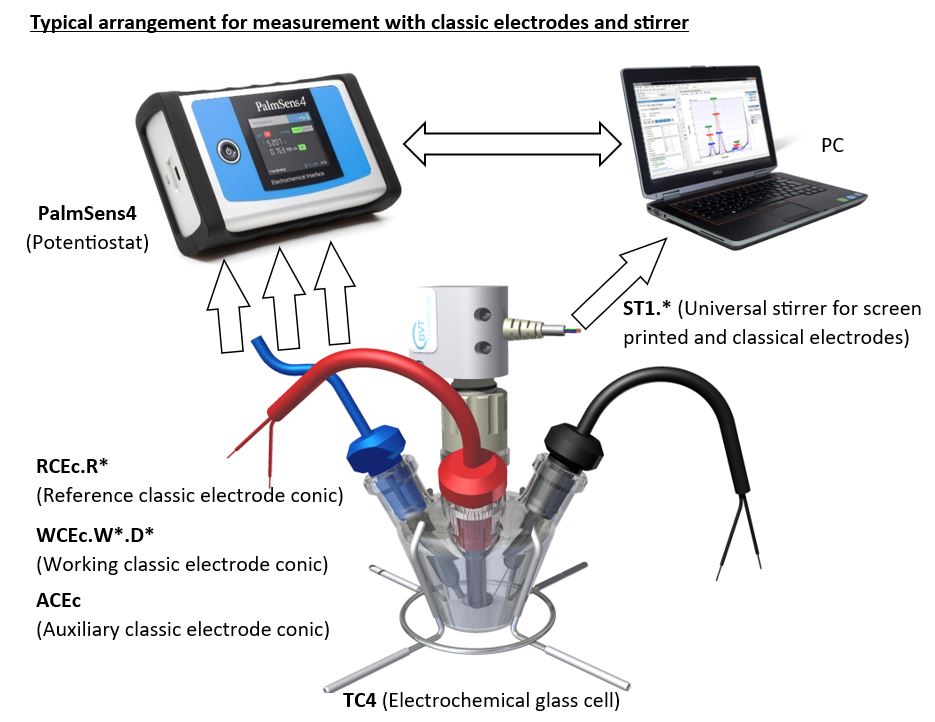
Cell openings are designed for electrochemical sensors connector KA1.C, classical electrodes WCEc, ACEc, RCEc and stirrer ST1, ST3 separately.
You may also like…
-
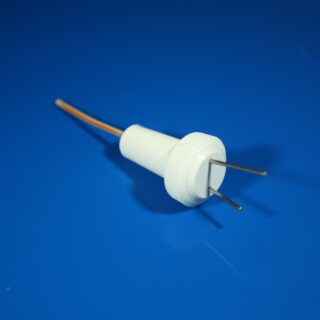
STP1.* Stoppers for Cells
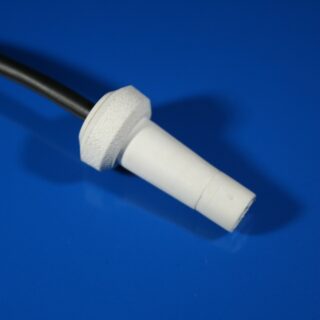
Read moreStoppers are formed from white PBTP (Polybutylenterephtalate). They are used for covering of the glass cells produced by BVT.
The system with the stopper is closed and space is prevent from solution evaporation.
Model Recommended Vessel Termination STP1.S TC4, TC5, TC6 Stopper for TC4, TC5, TC6 STP1.1 TC4, TC5, TC6 Stopper with bubbling STP1.2 TC4, TC5, TC6 Stopper with tubing STP1.3 TC4, TC5, TC6 Middle stopper -
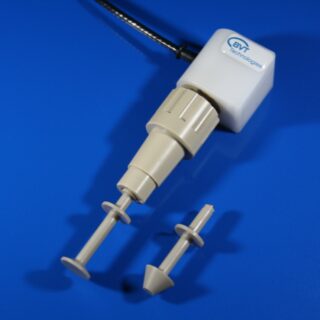
ST1.* Universal Stirrer for screen printed and classical electrodes
View products- The universal stirrer ST1 uses a common micro DC motor
- ST1 allows the solution to be mixed and the particles to be optimally transferred to the surface of the printed or conventional electrodes.
- The construction of stirrer assures the optimum mass transport with the minimum hydrodynamic noise.
- The supply voltage 0 – 5 V and the maximum current of 450 mA mean that it can be used as a USB device.
- The stirrer is manufactured from quality materials and suitable chemical measurements.
- Revolutions range: 120 – 12 000 rpm
-
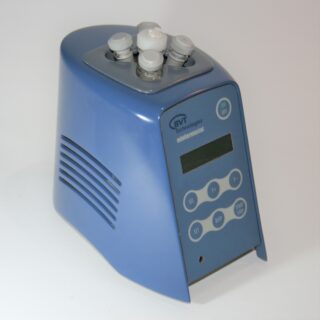
MT-1 Minithermostat
Read moreTechnical Parameters
- Supply: 12 V
- Min temperature: -9.9°C
- Max temperature: 59.9 °C
- For TC4, TC6 or Eppendorf microvials
Device Usage
- Cooling/heating of solution of temperature sensitive chemicals during experiments
- Maintaining of chemicals at exact temperature
- The electrochemical measurement with thermodiffusion
- Heated electrodes technology
The option with Eppendorf microvials 0.2 ml, 0.5 ml, 1.5 ml is possible
Minithermostat device is designed for tempering an electrolytic bath for electrochemical measurements. The temperature is stabilized and the Peltier thermal element, which allows cool or warm the measured electrolytic samples.
Related products
-

Bottom mount front contact electrochemical cell setup (redox.me)
Read moreThis is a static voltammetry cell with variants for different sample dimensions. The sample is loaded from the bottom via magnetic or screw mount, while counter or/and reference electrodes are mounted in the lid as either 2-, or 3-electrode configuration. The cell is constructed with materials that are inert to the sample environment (glass and PEEK), and it can be used with FKM/EPDM O-rings or FFKM O-rings for aqueous or organic electrolyte requirements, respectively. The construction is gas-tight and inert gas can be bubbled through the electrolyte to remove and exclude contaminants such as air or water.
Application note:
The reference electrode tip should be placed close to the sample surface to ensure a negligible potential drop throughout the electrolyte solution during low-current experiments. In the magnetic variant of the cell, the strength with which the magnets hold the sample is adjusted by adding or removing the washers under the magnets. Thanks to this procedure, the distance between the magnets changes, with it, the force of their attraction. Various auxiliary electrodes are suitable for this cell, including metal wire and metal plate electrodes as well as carbon-based electrodes (graphite or Glassy Carbon). If a purge gas is used, stop the flow during experiments for better results.Specification:
nominal exposure area: 0.07 cm2 for 5x5mm2, 0.2 cm2 for 7x7mm2, 0.5 cm2 for 10x10mm2, and 1.33 cm2 for 15x15mm2
minimum electrolyte volume: 2.5 mL
maximum electrolyte volume: 15 mL
electrode plug diameter: 6 mm
substrate size: 5x5mm2, 7x7mm2, 10x10mm2, and 15x15mm2, other sizes available on request
minimum substrate thickness: 0.4 mm**lower thicknesses are also feasible when using a pad below the sample
Intrastat data:
HS Code: 90309000
Country of Origin: Sweden
NET weight: 200 gSetup includes:
1 x BM FC EC 15mL – Bottom Mount Front Contact Electrochemical Cell, 15mL (or BMM FC EC 15mL – Bottom Magnetic Mount Front Contact Electrochemical Cell, 15mL)
1 x lid
1 x glass chamber
1 x bottom casing
1 x sample mount
1 x tantalum contact
1 x plug
1 x set of Nylon screws (screw variant only)
1 x Reference electrode (Ag/AgCl, or Ag/Ag+), 70mm, 4 mm female banana socket
1 x Metal Wire Auxiliary Electrode – 50HX15 0.6/250 mm, platinum 99.9%, 4 mm female banana socket -

Basic electrochemical H-cell setup (redox.me)
Read moreThis is a stationary solution double compartment electrochemical H-Cell for measurements of electrodes in a form of:
a) rod/disc (6 mm dia.),
b) thin film deposited on a flat substrate (using a wire clip) and
c) membrane (using a wire clip).
The working, counter and reference electrodes are mounted in a top casing either in 2-, or 3-electrode setup. The counter electrode is placed in a compartment separated from the other electrodes by ion-exchange membrane (19 mm to 25 mm dia.), so the electrochemical products appearing at working and counter electrode do not affect the opposite electrode. The counter electrode compartment is equipped with a separate inlet and outlet for easy filling with an electrolyte and evacuation of gaseous products. It can accommodate standard Metal Wire Auxiliary Electrode as well as square shape electrodes with sizes up to 25 mm x 25 mm. The cell elements are constructed with materials that are inert to the sample (glass and PEEK). It well fits aqueous (FKM/EPDM O-Rings) and organic solvent (FFKM O-Rings) electrolyte requirements. The construction is gas-tight and can be used when the removal and exclusion of contaminants such as oxygen and water is required by bubbling of an inert gas through the electrolyte. After removal of the counter electrode glass compartment, the cell gets the functionality of a Basic Electrochemical Cell – BEC 50 mL.
The cell chamber is available in several material variants here.
Application note:
The reference electrode tip and working disk electrode tip should be placed in the middle of the membrane. This will ensure a low potential drop throughout the electrolyte solution for low-current experiment. Various auxiliary electrodes are suitable for this cell including metal wire and metal foil/mesh/foam electrodes as well as graphite rod. The bubbling of gas through the solution must be stopped prior to experiment.Specification:
minimum electrolyte volume in WE compartment: 22 mL
minimum electrolyte volume in CE compartment: 6 mL
maximum electrolyte volume: 40 mL
minimum membrane diameter: 19 mm
maximum membrane diameter: 25 mm
maximum membrane thickness: 0.5 mm
electrode plug diameter: 6 mm
number of electrode slots: 3Intrastat data:
HS Code: 90309000
Country of Origin: Sweden
NET weight: 200 gSetup includes:
1 x BE H-Cell 50 mL – Basic Electrochemical H-Cell 50 mL
1 x Metal Wire Auxiliary Electrode – 50HX15 0.6/250 mm (Platinum)
1 x Reference electrode (Ag/AgCl, or Ag/Ag+)
1 x Glassy Carbon disk electrode – 2 mm dia.
1 x Plug with silicone rubber septum and set of Tantalum wire clips (set of 10) -
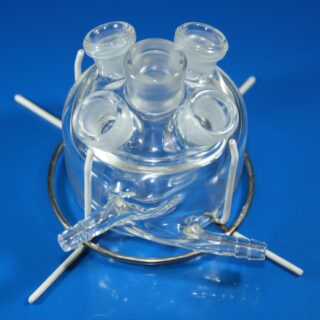
TC5 Electrochemical Glass Cell
Read moreBorosilicate glass cell serves for electrochemical measurements. The cell is jacketed.
The analyzed solution can be thermostated by external thermostat.
Cell openings are designed for electrochemical sensors connector KA1.C, classical electrodes WCEc, ACEc, RCEc and stirrer ST1, ST3 separately.
-

Standard electrochemical cell setup (redox.me)
Read moreThis is a stationary solution standard electrochemical (electrolytic) cell for measurements of electrodes in a form of:
a) rod/disc (6 mm dia.),
b) thin film deposited on a flat substrate (using a sample holder) and
c) free-standing membrane (using the basic sample holder).
The working, counter, and reference electrodes are mounted in a top casing either in 2-, or 3-electrode setup. The cell has two spare ports for connection of e.g. thermometer, Clark electrode, pH meter electrode, or other 6 mm dia. electrode/probe.
The cell elements are constructed with materials that are inert to the sample (glass and PEEK). It well fits aqueous (EPDM O-Rings) and organic solvent (FFKM O-Rings) electrolyte requirements. The construction is gas-tight and can be used when the removal and exclusion of contaminants such as oxygen and water is required by bubbling of an inert gas through the electrolyte. The jacketed model is available here.
Application note
The reference electrode tip should be placed close to a working electrode center. This will ensure a low potential drop throughout the electrolyte solution for low-current experiment. Various auxiliary electrodes are suitable for this cell including metal wire and metal foil electrodes as well as graphite rod. The bubbling of gas through the solution must be stopped prior to experiment.Specification:
maximum electrolyte volume: 100, 150, 200, 250, 350, 500 or 1000 mL
electrode plug diameter: 6 mm
number of electrode ports: 5
vial material: borosilicate 3.3 glassIntrastat data:
HS Code: 90309000
Country of Origin: Sweden
NET weight: 200 g (100, 150 mL), 300 g (200, 250, 350 mL), 400 g (500 mL), 600 g (1000 mL)