


Modular PEM Electrolyzer Test Station up to 3 kW (redox.me)
The Modular PEM Electrolyzer Test Station is a versatile and flexible solution designed for the testing and evaluation of proton exchange membrane (PEM) electrolyzers. Unlike fully automated, integrated systems, this platform features modular components that can be easily swapped by the end user, allowing for customized setups and adaptability to different testing needs. The platform is engineered to provide precise control and measurement of electrochemical performance while offering the convenience of easily replaceable parts.
This design enables users to test various configurations, integrate new modules, and adapt the system to specific research or development objectives without the need for specialized equipment or extensive downtime. Ideal for research labs and development environments, this platform supports the advancement of PEM electrolyzer technology through hands-on, flexible experimentation.
Application note:
Ideal for researchers investigating new PEM materials, flow field designs, and cell configurations. The system is an excellent tool for academic institutions and training centers, providing students and researchers with a hands-on understanding of PEM electrolysis processes and system operation. PEM Electrolyzer Test Station with power up to 3 kW is suitable for testing lab-scale or small to medium-scale electrolyzers, typically up to 60 cm². If the power requirements for a given electrolyzer are less than 2 A/cm², larger electrolyzers up to 100 cm² or more can also be tested.
The entire system, as well as its component parts, are CE certified, which signifies that a product meets European Union (EU) health, safety, and environmental protection standards. Other certificates are available upon request.
The Modular PEM Electrolyzer Test Station is continuously being improved, so the photos may not fully represent the current version of the device.
Specification:
weight: 150 kg
height: 129 cm (25U)
width: 135 cm (85 cm with folded monitors)
depth: 90 cm
maximum input power: 3 kW
maximum input current: 120 A
maximum input volatge: 60 V
power connection: 230V, 3 kW, single phase
Intrastat data:
HS Code: 85433000
Country of Origin: Sweden
NET weight: 150 kg
Setup includes:
1 x Modular PEM Electrolyzer Test Station or selected module(s)
Configuration
The Modular PEM Electrolyzer Test Station can be ordered as a complete system including Modules 1, 2, 3, 4, and 5. In that case, we will deliver a tested system ready for operation. You can also choose individual modules if you only need them for your own setup. If you need any customization for any of the modules, let us know.
The Modular PEM Electrolyzer Test Station consists of several key modules, each designed to provide flexibility and precision for various testing scenarios:
1. Enclosure and Electrical Installation Module – This module consists of a metal housing in the form of a 19-inch server rack, 25 units high, with additional rails and shelves. The rack does not have panels, so its structure is open on all sides. Only the electrical components are housed in specially designed boxes (front and rear). The module includes two 230V power rails with a total of 16 CEE7/3 electrical sockets. The module has its own LED lighting to facilitate work with system components that have their own consoles. Mounted on the left side of the rack is a holder for two monitors up to 27 inches in size, and a mount for a Tiny Form Factor computer with VESA mount. Monitors and the computer are not included with this module. The module is equipped with electrical safety circuits in the form of differential cut-off, an emergency button, a reset system, and additional circuit switches. It is powered by single-phase 230 volts, 16A, 3.7 kW. This module is delivered in an assembled form, ready to be integrated with other modules.
2. Electrolyte Supply Module – This module manages the supply of deionized water or electrolytes to the electrolyzer. This module consists of two symmetrical liquid circulation systems. Each system includes a hermetically sealed tank for water/electrolyte (3L glass jar with a PEEK lid sealed with a double FKM O-ring and secured with a stainless steel clamp), a gear pump (with a PEEK head) controlled from the pump panel or computer (software included, PC is not included in this module), an ion exchanger (with operating temperature up to 200 °F, 93 °C) with a ball valve, a conductivity and temperature sensor with a T-shaped metal enclosure, a digital sensor reader, and a set of Swagelok fittings and accessories. Additionally, a stainless steel drip tray and a rubber mat are included, on which the electrolyzer can be placed and secured in case of any fluid leakage. If you order only this module, it will be delivered as unassembled components. Tubing is not included in the set. This module does not include components allowing for operation under elevated pressure. However, thanks to the use of Swagelok fittings, you can expand the system to include this functionality yourself.
3. Temperature and Heat Management Module – This module monitors and controls the temperature of the electrolyzer system. It consists of two symmetrical heating systems. Each system includes a digital hotplate (130 mm diameter, built-in magnetic stirrer), an inline heater (500 W power, 240 V, 210 W/in², 250°C max temperature), a PID controller (two channels, controlled from the panel or computer), a Pt100 temperature sensor (stainless steel body, 3 mm diameter, 25 mm long) to be installed in the electrolyzer, a solid-state relay, a dry heat block (thermally isolated anodized aluminum), a DC power supply (24 V), and a thermal insulation set for self-installation. If you order only this module, it will be delivered as unassembled components.
4. Gas Flow Module – This module is designed to manage and control the flow of hydrogen and oxygen gases generated by the electrolyzer. It consists of two symmetrical circuits, with the only difference being the type of sensor installed. Each circuit includes a phase separator that separates gas from liquid, a back pressure regulator with an analog pressure gauge, and a safety gas sensor system. Each sensor is connected to the circuit using a T-shaped enclosure made of PEEK. In the cathode circuit producing hydrogen, an oxygen sensor is placed (linear, 0.10 ± 0.03 mA output signal, 0-25 % oxygen measurement range, 800-1200 mbar pressure range, 5-95% RH operating humidity range). In the anode circuit producing oxygen, a hydrogen sensor is placed (linear, 10 ± 5 nA/ppm output signal, 0-5000 ppm hydrogen measurement range, 800-1200 mbar pressure range, 15-90 % RH operating humidity range). The signal from each sensor is read using an OEM version of a potentiostat with a USB connection. With the attached software, it is possible to monitor gas concentration using a computer which is not included with this module. If you order only this module, it will be delivered as unassembled components.
5. Measurement and Data Acquisition Module – This is a critical module of the system that controls the operation of the electrolyzer and monitors and records its performance indicators. The main component of the module is a Programmable DC Power Supply with connection cables. It is powered by a single-phase voltage, offering an output voltage of 0-60 V, current of 0-120 A, providing up to 3 kW of power. Thanks to the use of proprietary software developed by redox.me, it is possible to measure parameters in real-time using a computer (Lenovo ThinkCentre M70q), which is part of this module. Additionally, the module includes two monitors (Lenovo ThinkVision, 27 inches), along with a docking station, keyboard, and mouse. If you order only this module, it will be delivered as unassembled components. Note that this module, as well as any of the others, does not include equipment for performing electrochemical impedance spectroscopy measurements (EIS). If this is necessary, you will need to purchase an EIS analyzer directly from your chosen supplier.
The electrolyzer is not part of the set, and if there is such a need, it should be added to the quotation separately.
You may also like…
-
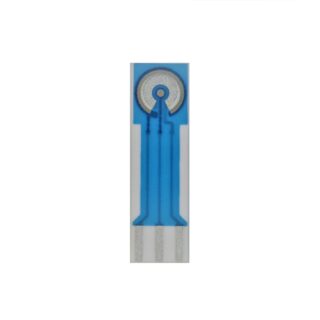
AC1.AChE Electrochemical sensor
Read moreAmperometric Acetylcholinesterase three-electrode sensor with patented structure made by thick film technology
Dimensions: 25.4 x 7.26 x 0.63 mm
WE material: Pt
Sensor Usage: Measurement of AChE inhibitor concentration – especially organophosphorous and carbamate pesticides (paraoxon, malaoxon), toxic and neurotoxic gases (sarin, soman, tabun, VX).
Acetylcholinesterase from electric eel type VI-S is immobilized on the active surface of a working electrode of electrochemical sensor AC1.W2.RS (i.e. Platinum working electrode, silver reference electrode). The diameter of the immobilized bioactive membrane is 2 mm and the mean applied activity is 1 unit/mm2.
* For this product, we recommend our customers use the Training Service from BVT.
(https://bvt.cz/produkt/offer-of-long-term-automated-measurements-on-bvt-apparatus/)
-
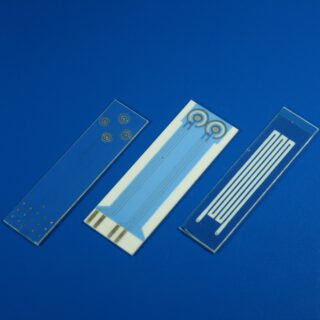
Custom and Modified Screen Printed Electrodes (SPE)
Read moreWe offer our customers Modified and Custom Screen Printed Sensors based on their demands and needs, we will also recommend to the customer if there is a better option for their intended purposes.
Examples of possible Modified SPE Surfaces
Graphine, Streptavidin, Polyaniline and High-purity Materials.
High-purity material on WE
We can provide polished working electrode or insert a high-purity material on WE (99.9% or better).
The WE can be applied also by sputtering.
Materials of WE
We can offer you not only standard materials as Au/Pt, Au, Pt, Ag, C (carbon) but also glassy carbon, Ni, Cu, and other materials.
Special Active Surfaces
We can provide SPEs with Special Active Surfaces using Copper (Cu), Nickle (Ni), Magnesium (Mg), Bismuth (Bi) and Zirconium (Zr).
Sensor/device size
The Technological capabilities and our experience and knowledge enable us to produce devices from as small as 3 x 6 mm, up to as large as 150 x 1200 mm.
-
AC1.GOD Electrochemical sensor
Read moreAmperometric Glucose Oxidase three-electrode sensor with patented structure made by thick film technology
Dimensions: 25.4 x 7.26 x 0.63 mm
WE material: Pt
Sensor Usage: Amperometric measurement of β-D-Glucose concentration in liquid samples (from 0 °C to 45 °C)
Glucose Oxidase (GOD) from Aspergillus Niger is immobilized on the active surface of a working electrode of amperometric substrate AC1.W2.RS.
The diameter of the immobilized bioactive membrane is 2 mm and the mean applied activity is 1 unit/mm2.
* For this product, we recommend our customers use the Training Service from BVT.
(https://bvt.cz/produkt/offer-of-long-term-automated-measurements-on-bvt-apparatus/)
Related products
-

Basic electrochemical H-cell setup (redox.me)
Read moreThis is a stationary solution double compartment electrochemical H-Cell for measurements of electrodes in a form of:
a) rod/disc (6 mm dia.),
b) thin film deposited on a flat substrate (using a wire clip) and
c) membrane (using a wire clip).
The working, counter and reference electrodes are mounted in a top casing either in 2-, or 3-electrode setup. The counter electrode is placed in a compartment separated from the other electrodes by ion-exchange membrane (19 mm to 25 mm dia.), so the electrochemical products appearing at working and counter electrode do not affect the opposite electrode. The counter electrode compartment is equipped with a separate inlet and outlet for easy filling with an electrolyte and evacuation of gaseous products. It can accommodate standard Metal Wire Auxiliary Electrode as well as square shape electrodes with sizes up to 25 mm x 25 mm. The cell elements are constructed with materials that are inert to the sample (glass and PEEK). It well fits aqueous (FKM/EPDM O-Rings) and organic solvent (FFKM O-Rings) electrolyte requirements. The construction is gas-tight and can be used when the removal and exclusion of contaminants such as oxygen and water is required by bubbling of an inert gas through the electrolyte. After removal of the counter electrode glass compartment, the cell gets the functionality of a Basic Electrochemical Cell – BEC 50 mL.
The cell chamber is available in several material variants here.
Application note:
The reference electrode tip and working disk electrode tip should be placed in the middle of the membrane. This will ensure a low potential drop throughout the electrolyte solution for low-current experiment. Various auxiliary electrodes are suitable for this cell including metal wire and metal foil/mesh/foam electrodes as well as graphite rod. The bubbling of gas through the solution must be stopped prior to experiment.Specification:
minimum electrolyte volume in WE compartment: 22 mL
minimum electrolyte volume in CE compartment: 6 mL
maximum electrolyte volume: 40 mL
minimum membrane diameter: 19 mm
maximum membrane diameter: 25 mm
maximum membrane thickness: 0.5 mm
electrode plug diameter: 6 mm
number of electrode slots: 3Intrastat data:
HS Code: 90309000
Country of Origin: Sweden
NET weight: 200 gSetup includes:
1 x BE H-Cell 50 mL – Basic Electrochemical H-Cell 50 mL
1 x Metal Wire Auxiliary Electrode – 50HX15 0.6/250 mm (Platinum)
1 x Reference electrode (Ag/AgCl, or Ag/Ag+)
1 x Glassy Carbon disk electrode – 2 mm dia.
1 x Plug with silicone rubber septum and set of Tantalum wire clips (set of 10) -

Nexus
Read moreBuilding on PalmSens’ legacy of providing top-tier solutions for accurate low-current measurements, Nexus delivers an ultra-low-noise performance that exceeds even our existing portable devices, while also supporting measurements up to 1 Ampere.
More information could be found trough link:
https://www.palmsens.com/product/nexus/
- Bi)Potentiostat/ Galvanostat/ Impedance analyzer
- FRA / EIS: 10 μHz up to 1 MHz
- 11 current ranges: 100 pA to 1 A
- Dual EIS with second sense electrode
- Script your experiments using MethodSCRIPT
- Use with PSTrace software for Windows
Versatile
Our high-end instrument, the Nexus, is a Potentiostat, Galvanostat, and optional a Frequency Response Analyser (FRA) for Electrochemical Impedance Spectroscopy (EIS). The Nexus has a large potential range (-12V to +12V) and current range (100 pA to 1 A) with a high resolution and low noise.
The research software PSTrace makes using the Nexus a breeze. The scripting language MethodSCRIPT gives a user full control when needed. Looking for a multi-channel instrument? Just stack multiple instruments on top of each other.
Configurable
Nexus comes in different configurations:
- optional EIS/FRA module with maximum frequency of 1 MHz
- optional BiPotentiostat module for second WE
Standard included
Carrying padded bag containing:
- High quality, double shielded cell cable with
2 mm banana connectors for Working, Sense, Counter, Reference electrode and Ground - Chassis ground cable with croc clip (4 mm)
- Hardware Sync Link cable
- Crocodile clips
- Calibration report
- Dummy cell
- USB cable and Ethernet cable
- Manual and Quick Start document
- PSTrace software for Windows
- iR-compensation (ohmic drop compensation) module
- Second Sense lead cable
S2 and BiPot
Nexus includes a Second Sense lead (S2) and an optional BiPotentiostat (BiPot) module.
S2 – Additional voltage (potential) measurement point
BiPot – Independent second working electrode for simultaneous current measurement
These two features are independent and serve distinct purposes:
- S2 (Second Sense Lead)
S2 acts as an additional voltage-sensing input, with the same specifications as the main reference electrode. It measures the potential at a specific point in the cell and, because the current at that point is known, it can also be used to calculate impedance. - BiPot (BiPotentiostat Module)
The BiPot module introduces a second working electrode (WE2), operating versus the same reference and counter electrodes as the main channel. In BiPotentiostat mode, both working electrodes (WE1 and WE2) are recorded simultaneously. WE2 operates in potentiostatic mode, meaning it can independently control its potential and measure its current.
Why choose the Nexus?

-

Three Electrode Battery Test Cell – compression controlled (redox.me)
Read moreThis cell is designed as high-quality alternative to Swagelok-type constructions for reproducible electrochemical measurements of battery and supercapacitor materials.
The cell consists of two main elements:
(i) the cell base with micrometre screw and compression spring, which allows precise control of pressure applied to the electrode sandwich; and
(ii) electrode cartridge where the anode, cathode and reference electrode are located.
The (default) electrode cartridge and plungers are designed for planar electrodes with diameter of 18 mm and total sandwich thickness of 2.5 mm. The diameter of separator shall be at least 2 mm larger than electrode diameter (max. 22 mm). The lock ring secures the separator in the electrode cartridge allowing easy and safe electrodes insertion, while ensuring accurate alignment. The upper and lower electrode plungers are available in various materials: 316L Stainless Steel (default), copper, aluminum, nickel etc. The pin-type reference electrode is installed from the side of the electrode cartridge. Thanks to sharp edged hole at the end of the pin the reference electrode (Li/Na/K etc.) can be easily punched from the metal foil and directly loaded into cell. The magnetic mount facilitates rapid assembly of the cartridge in the cell base. The force applied to the electrodes can reach up to 90N and is adjusted with the micrometer control knob. For 2-electrode measurements, the reference electrode feedthrough hole can be closed with the reference electrode punch.
The cell elements are constructed with materials that are inert to the sample (Stainless steel and PEEK). It well fits aqueous (FKM and EPDM O-Rings) and organic solvent (FFKM O-Rings) electrolyte requirements. Good electrical contact is ensured by gold plated pins. The construction is gas-tight and can be effortlessly assembled in the glove box, reducing possible human error to minimum.
Application note:
This cell can be used for all common battery measurements, such as galvanostatic cycling, cyclic voltammetry or electrochemical impedance spectroscopy. Both liquid and solid-state or gel-polymer electrolytes can be studied. Additionally, properties and performance of supercapacitor materials can be investigated. Various materials can be examined, including typical Li-ion electrodes (graphite, NMC, LTO etc.) and other chemistries – sodium, magnesium, potassium etc. It can also be applied to measure the ionic conductivity of separators and electrolytes. Owing to the micrometer control knob, the relationship between the initial pressure applied to the cell and the performance of solid-state electrolytes or metal plating process (anode-free systems) can be studied.The above graph shows relation of pressure applied to electrode stack and distance travelled from the point of contact. The point of contact can be determined by checking OCV (see manual video) or by calculation. To calculate the point of contact, subtract electrode stack thickness from 4 mm. For example, for the 0.9 mm stack, the point of contact (i.e. reading on micrometer screw) will be 4 mm – 0.9 mm = 3.1 mm. Therefore, you should set micrometer screw to 3.1 mm and measure distance/pressure relation from this point.
Specification:
recommended electrode diameter: 18 mm (other options: 12 mm, 15 mm, 16 mm)
recommended minimum separator diameter: electrode diameter + 2 mm (max. 22 mm)
maximum electrode sandwich thickness: 2.5 mm
spring rate: 10.86 N/mm
maximum spring load: 90 N
operating temperature: -40°C – 80°C (default)Intrastat data:
HS Code: 90309000
Country of Origin: Sweden
NET weight: 400gProduct includes:
1 x cell base
1 x compression control unit
1 x Three-Electrode Cartridge
1 x reference electrode punch
1 x upper plunger (Stainless Steel)
1 x lower plunger (Stainless Steel)
1 x separator locking ring
1 x gold plated piston
1 x compression spring
2 x gold plated pin contact
1 x set of O-rings
1 x set of 3 cable adapters 1mm to 4mm banana plug
1 x electrode plunger removal tool -

Silver / Silver Chloride Refillable Reference Electrode – 6 mm dia. (redox.me)
Read moreIt is a compact refillable Ag/AgCl reference electrode equipped with ceramic frit molten into the glass body. This electrode outperforms competing products in terms of mechanical stability, voltage stability and lifetime. In general, the reference electrode is composed of a system of phases, which retain an essentially constant composition, and therefore provides a stable potential by which the working electrode potential can be monitored. The phases present in reference electrodes undergo reversible redox processes at a very high rate, enabling them to rapidly adjust to changes in the solution’s ionic activity, but leaving them sensitive to the passage of large current densities.
Application note
This electrode is commonly used with aqueous acidic electrolytes, but due to the low resistance of the frit it can be used with standard non-aqueous electrolytes, as well. The reference electrode should be stored with the rubber plug applied on the tip. Please see the full instruction here. Keeping in the solution may shorten its lifetime (the electrode operates well as long as there is at least ¼ of the solution in the electrode tube). Before use rinse it with deionized water. If air bubbles are present around the porous frit, flick the tip several times to remove them. For cleaning use detergent (dish washing detergent with water), alcohols or acetone and rinse it with deionized water at the end. To re-fill the electrode please follow this article.Specification
effective length: 30 mm or 70 mm
tube diameter: 6 mm
filling solution: 3M KCl
potential stability: <5 mV
frit resistance: 2-10 kohm at RT
operating temperature: 0-100 deg C
potential vs SHE at 25 °C: 0.207 VIntrastat data
HS Code: 90278930
Country of Origin: Sweden
NET weight: 100gProduct includes
1 Ag/AgCl refillable reference electrode
1 O-Ring
1 glass tube for storing purposes