

STK Starting kit
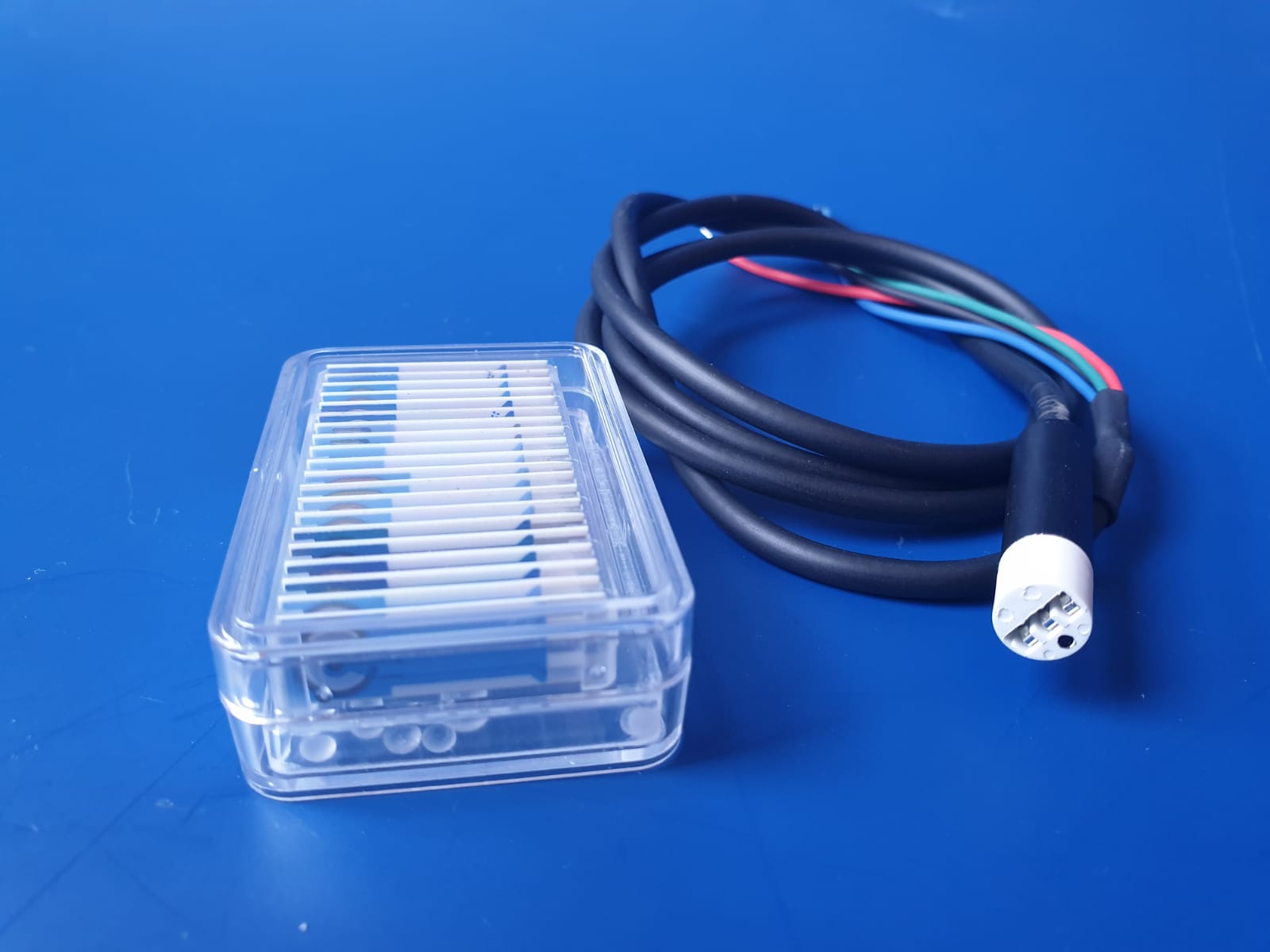
Starting kit STK.S
Set of twenty electrochemical sensors with a simple connector to find the best one to fit your application.
Starting kit is the set of twenty different electrochemical sensors to find the best one to fit your application. Starting kit contains 10 types of electrochemical sensors (2 sensors of each type), simple sensors connector and sensors box with numbered positions and silica gel.
You may also like…
-
STK-C Customer Starting kit
Read moreStarting Kit STK.S-C
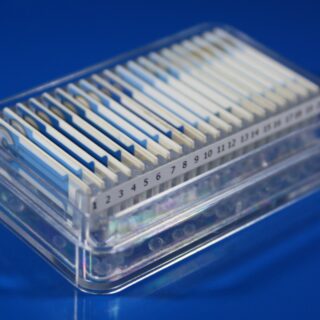
The customer starter kit is a set of twenty different electrochemical sensors to find the best one that suits your application.
The starter set contains at least 5 pcs of sensors type AC1.W*.R* from the given type of sensors with a working electrode diameter (Dw) 1 or 2 mm stored in a box with numbered positions and silica gel.
The exact choice of the given types of sensors in the kit is at the request of the customer.
-
PalmSens4
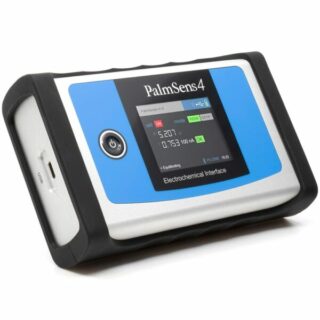
Read moreThe PalmSens4, is a USB and battery powered Potentiostat, Galvanostat, and optional a Frequency Response Analyser (FRA) for Electrochemical Impedance Spectroscopy (EIS).
Compact, versatile and powerful
- (Bi)Potentiostat / Galvanostat / Impedance Analyzer
- FRA / EIS: 10 μHz up to 1 MHz
- 9 current ranges: 100 pA to 10 mA
- 18-bit resolution
- Bluetooth or USB connection
The PalmSens4 has a large potential range (-5V to 5V or -10V to 10V) and current range (100 pA to 10 mA) with a high resolution and low noise. The economical PalmSens4 is a complete laboratory instrument but its compact and rugged design makes it also ideal for field work.
Connecting via Bluetooth guarantees a perfectly floating measurement.
More information can be found through the link: https://www.palmsens.com/product/palmsens4/
Configurable
PalmSens4 comes in different configurations:
- ±5 V or ±10 V potential range
- EIS/FRA with maximum frequency of 100 kHz or 1 MHz
- optional BiPotentiostat module for second WE
- optional iR-Compensation
Standard included
- Rugged carrying case
- High quality, double shielded cell cable with
2 mm banana connectors for Working, Counter, Reference electrode and Ground - Crocodile clips
- Dummy cell
- USB cable
- Manual and Quick Start document
- PSTrace software for Windows
-
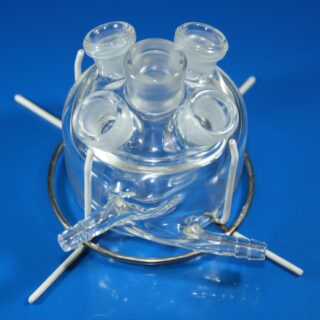
TC5 Electrochemical Glass Cell
Read moreBorosilicate glass cell serves for electrochemical measurements. The cell is jacketed.
The analyzed solution can be thermostated by external thermostat.
Cell openings are designed for electrochemical sensors connector KA1.C, classical electrodes WCEc, ACEc, RCEc and stirrer ST1, ST3 separately.
Related products
-
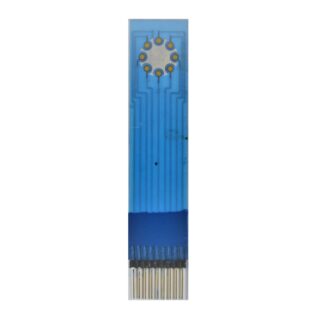
AC9C Electrochemical sensor
Read moreAmperometric sensor with an array of 8 working electrodes and 1 common reference electrode made by thick film technology with integrated connector
Dimensions: 59.0 x 12.7 x 0.63 mm
WE material: Au/Pt, Au, Pt, Ag, C
The sensor is formed on a corundum ceramic base. On to this surface eight working electrodes, and the reference electrode are applied. The electrodes can be made of variety of materials (see below). At the end of the sensor there is an integrated connector. It is connected with the active part by the silver conducting paths which are covered by a dielectric protection layer. Different bio-chemically active substances can be immobilised on the working electrodes of the sensor.
-

Spectro-electrochemical flow cell setup (redox.me)
Read moreThis is a horizontally mounted, multi-purpose spectroelectrochemical cell designed to be used with standard UV-Vis or IR spectrometers. It enables obtaining electrochemical and spectroscopic information from liquid sample or thin films in systems where variations in applied potential induce changes in observed spectra. It consists of a polyether ether ketone (PEEK) flow chamber equipped with a magnetic or screw mount sample holder, screw mount quartz window holder and two different mini tripods. It well fits aqueous (FKM O-Rings) and organic solvent (FFKM O-Rings) electrolyte requirements.
The cell is meant to be used with a standard reference electrode having 6 mm in diameter and a counter electrode either in the form of a rod or helix with 6 mm in diameter and 15 mm active length.
Application note:
The spectroelectrochemical cell is used to study the relation between absorbance/transmittance and electrochemical potential. It enables real-time monitoring of optical change in electrochromic materials. It also enables in-situ spectral acquisition for detection, identification and characterization of short-lived electrochemically-generated species/intermediates, resulting in a detailed investigation of the mechanistic pathways of redox processes.Specification:
nominal exposure area: 1 cm2 (other values on request)
optical path length (electrolyte thickness): 12 mm
flow chamber volume: 1.75 mL
maximum substrate thickness: 4 mm
electrode plug diameter: 6 mm
minimum substrate size: 17 mm x 25 mm
recommended substrate size: 25 mm x 25 mmIntrastat data:
HS Code: 90275000
Country of Origin: Sweden
NET weight: 300 gSetup includes:
1 x Magnetic Mount Spectro-Electrochemical Flow Cell – MM spectro-EFC 1.75 mL (or Spectro-Electrochemical Flow Cell – spectro-EFC 1.75 mL)
1 x Metal Wire Auxiliary Electrode – 35HX15 0.6/235 mm (Platinum)
1 x Reference electrode (Ag/AgCl, or Ag/Ag+) -
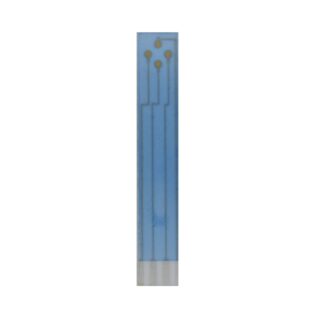
AC8 Electrochemical sensor
Read moreAmperometric sensor with 4 working electrodes made by thick film technology
Dimensions: 50.8 x 8.47 x 0.63 mm
WE material: Au/Pt, Au, Pt, Ag, C
The sensor is formed on a corundum ceramic base. On to this surface four working electrodes are applied. Electrodes are made of variety of materials (see below). At the end of the sensor there is a contact. It is connected with the active part by the silver conducting path which is covered by a dielectric protection layer. Different bio-chemically active substances can be immobilised on working electrodes of the sensor.
-
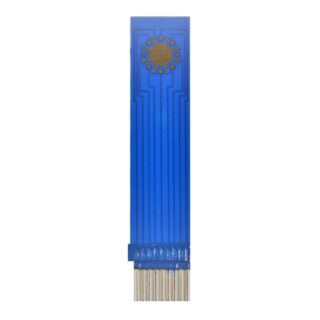
AC9C.WSP Electrochemical sensor
Read moreAmperometric sensor with an array of 8 working electrodes and 1 common reference electrode made by sputtering with integrated connector
Dimensions: 59.0 x 12.7 x 0.63 mm
WE material: Au
The sensor is formed on corundum polished ceramic base. On to this surface eight working electrodes, and the reference electrode are applied by sputtering. The working electrodes are made of gold. At the end of the sensor there is an integrated connector. It is connected with the active part by the silver conducting paths which are covered by a dielectric protection layer. Different bio-chemically active substances can be immobilised on the working electrodes of the sensor.