
Archives: Products
Showing 129–141 of 141 results
-
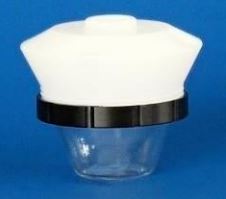
TC9 Electrochemical Glass Cell
Read moreBorosilicate glass cell serves for electrochemical measurements.
The analyzed solution can be thermostated by external thermostat MT1-1.
Cell openings are designed for stirrer ST9 or mini RDE and connector KA9.s with folder for electrochemical sensor AC9C, classical electrodes WCEc, ACEc and RCEc. The device enables the measurement with inserted samples.
-

Three Electrode Battery Test Cell – compression controlled (redox.me)
Read moreThis cell is designed as high-quality alternative to Swagelok-type constructions for reproducible electrochemical measurements of battery and supercapacitor materials.
The cell consists of two main elements:
(i) the cell base with micrometre screw and compression spring, which allows precise control of pressure applied to the electrode sandwich; and
(ii) electrode cartridge where the anode, cathode and reference electrode are located.
The (default) electrode cartridge and plungers are designed for planar electrodes with diameter of 18 mm and total sandwich thickness of 2.5 mm. The diameter of separator shall be at least 2 mm larger than electrode diameter (max. 22 mm). The lock ring secures the separator in the electrode cartridge allowing easy and safe electrodes insertion, while ensuring accurate alignment. The upper and lower electrode plungers are available in various materials: 316L Stainless Steel (default), copper, aluminum, nickel etc. The pin-type reference electrode is installed from the side of the electrode cartridge. Thanks to sharp edged hole at the end of the pin the reference electrode (Li/Na/K etc.) can be easily punched from the metal foil and directly loaded into cell. The magnetic mount facilitates rapid assembly of the cartridge in the cell base. The force applied to the electrodes can reach up to 90N and is adjusted with the micrometer control knob. For 2-electrode measurements, the reference electrode feedthrough hole can be closed with the reference electrode punch.
The cell elements are constructed with materials that are inert to the sample (Stainless steel and PEEK). It well fits aqueous (FKM and EPDM O-Rings) and organic solvent (FFKM O-Rings) electrolyte requirements. Good electrical contact is ensured by gold plated pins. The construction is gas-tight and can be effortlessly assembled in the glove box, reducing possible human error to minimum.
Application note:
This cell can be used for all common battery measurements, such as galvanostatic cycling, cyclic voltammetry or electrochemical impedance spectroscopy. Both liquid and solid-state or gel-polymer electrolytes can be studied. Additionally, properties and performance of supercapacitor materials can be investigated. Various materials can be examined, including typical Li-ion electrodes (graphite, NMC, LTO etc.) and other chemistries – sodium, magnesium, potassium etc. It can also be applied to measure the ionic conductivity of separators and electrolytes. Owing to the micrometer control knob, the relationship between the initial pressure applied to the cell and the performance of solid-state electrolytes or metal plating process (anode-free systems) can be studied.The above graph shows relation of pressure applied to electrode stack and distance travelled from the point of contact. The point of contact can be determined by checking OCV (see manual video) or by calculation. To calculate the point of contact, subtract electrode stack thickness from 4 mm. For example, for the 0.9 mm stack, the point of contact (i.e. reading on micrometer screw) will be 4 mm – 0.9 mm = 3.1 mm. Therefore, you should set micrometer screw to 3.1 mm and measure distance/pressure relation from this point.
Specification:
recommended electrode diameter: 18 mm (other options: 12 mm, 15 mm, 16 mm)
recommended minimum separator diameter: electrode diameter + 2 mm (max. 22 mm)
maximum electrode sandwich thickness: 2.5 mm
spring rate: 10.86 N/mm
maximum spring load: 90 N
operating temperature: -40°C – 80°C (default)Intrastat data:
HS Code: 90309000
Country of Origin: Sweden
NET weight: 400gProduct includes:
1 x cell base
1 x compression control unit
1 x Three-Electrode Cartridge
1 x reference electrode punch
1 x upper plunger (Stainless Steel)
1 x lower plunger (Stainless Steel)
1 x separator locking ring
1 x gold plated piston
1 x compression spring
2 x gold plated pin contact
1 x set of O-rings
1 x set of 3 cable adapters 1mm to 4mm banana plug
1 x electrode plunger removal tool -
Training Services
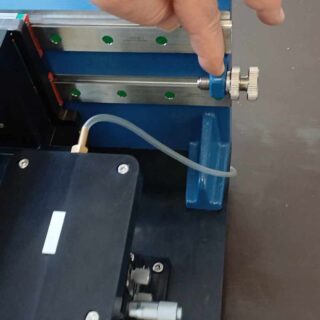
Read moreTraining Services are also provided by BVT on equipment such as BVT Developed Screen Printers, Sensors, and more. An example of the training can be seen in 2025, when students from the Czech Technical University in Prague arrived for training on handling glucose sensors AC1.GOD or in 2015, when a team from Croatia came and were trained in the use of the screen printers.
- Glucose sensors, their use and measurement
- AChE sensors, their use and measurement
- Activity of enzymes measurement
- Inhibition of enzymes measurement
- Detection of organophosphorous and carbamate pesticides
- Biosensors based on interaction between algae and analyte
- Detection of herbicides
- Measurement of bioavailable toxic compounds
- Measurement with microfluidic chips
- The application of microdialysis with biosensors
- The application of biosensor on demand of customer (If necessary the cost of preparation and special sensors or chemicals is added to standard price.)
-
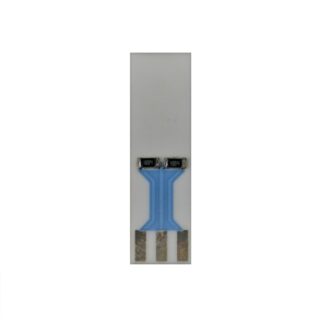
TS Testing Sensor
Read moreSimple identifier of electrochemical hardware error
Dimensions: 25.4 x 7.26 x 0.63 mm
Electrochemical measurements are very sensitive. Sometimes cables, connectors and their wetness can create the measurement errors. Testing sensor enables simple identification of electrochemical hardware error. The sensor has same geometry as AC1 type but its response produced by resistor. The response is stable and independent on chemistry. Testing sensor is formed on a corundum ceramic base. At the end of the sensor there is a contacting field which is connected with the SMD resistors by the silver conducting paths which are covered by a dielectric protection layer.
-
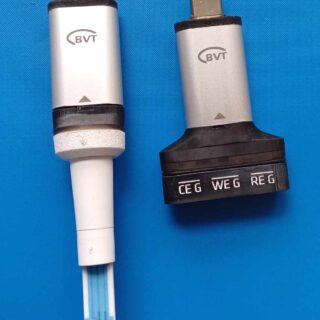
USB Potentiostat Galvanoplot
Read moreUSB Potentiostat Galvanoplot is a super small, low-cost and affordable device suitable for dedicated volume applications, which is optimized for screen-printed sensor and biosensor applications. It can be used in many other research areas and with other electrochemical sensors, for corrosion measurement, battery and super-capacitors or fuel cells.
It is capable of performing all common Amperometric and Voltammetric electrochemistry protocols (CA, LSV, CV, DPV, NPV, SVW, GAL) and can be used with three electrode (WE/RE/CE) and two electrode (WE/RE-CE) setups. Plug the device directly into an Android mobile device through OTG port for a true on-site analysis experience. It is possible to choose from two types of interfaces allowing direct insertion of the BVT SPE sensors or the use of 3 classical electrodes with 2 mm banana plugs (WE, RE, CE).
- Dimensions: 39x17x8 mm
- Weight: 5 g without sensor interface
- Voltage scan range: +-3V @1mV resolution
- Max current: 2000 nA (*at the request of the customer, it is possible to change the range, but this will change the resolution, noise and other parameters)
- Current resolution: 300pA@1KSPS/ 100pA@100SPS/ 30pA/10 SPS resolution
- Noise around: 50nA@1KSPS/ 7nA@100SPS/ 400pA/10 SPS
- Protocols: CA, LSV, CV, DPV, NPV, SVW, GAL
- Cell type: WE/RE/CE and WE/RE-CE
Connectivity: USB-C (Plug the device directly into an Android mobile device through OTG port for a true on-site analysis experience)
- Operating system compatibility: Windows 8, 10+
- Advanced analysis – filtering and auto peaks
Device Usage
- Electrochemical measurements
- Measurements with biosensors and electrochemical sensors
- Measurement of biochemical activity of a sample
- Corrosion measurement
-
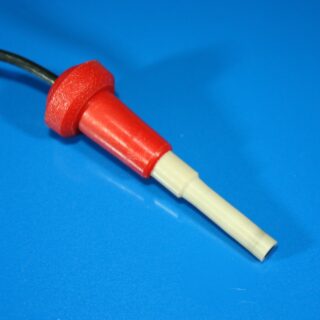
WCEc.W*.D* Working Classic Electrode Conic
Read moreWCEc is a glass tube with a Pt or Au (wire) or a peek tube with a compact glassy carbon inside.
Only the circle glossy area of the (Pt or Au) metal wire is outside the glass tube or the circular glossy area of compact glassy carbon is outside the plastic peek tube. Standard connection is with a 2 mm banana connector. Connector or banana plug colour is red. Working classic electrode (WCEc) is designed for measurements with TC4, TC5, TC6, TC9 glass cell.
-
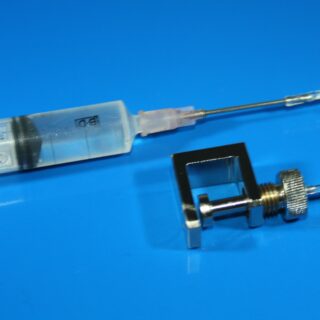
WI Wash Instrument for FC
Read moreWashing instrument for flow cells FC2, FC3 and FC4.
Flow cells FC2, FC3 and FC4 can be fouled by buffer salts, standard or sample substances especially in the tubing that brings measured liquid to the sensor.
The salts embed namely in the edges of drilled openings. It causes decrease of the flow area, thereby flow rate. These negative influences decrease the signal and measurement reliability. Most frequently it happens when high salt concentration solutions or solutions with impurities are used. The flows cell can be washed by pressured water using syringe.
-

Working Disk Electrode – PEEK body 6 mm dia., 70 mm long (redox.me)
Read moreThis is a Standard Working Electrode in which a disk of electrode material (glassy carbon, gold, platinum, silver, boron-doped diamond, palladium, titanium, and copper) is embedded into the PEEK body by a compressed PTFE or PEEK sleeve. It well fits aqueous and organic solvent electrolyte requirements. If you need a different disk material, please contact us.
Application note
The disk electrode is immersed in the ion-conducting solution as a working electrode. An electric current is passed between the working electrode and the counter electrode for a certain amount of time. After the experiment, the electrode should be washed several times with ethanol or isopropanol. If the disk electrode was used as a current collector with other electrode material, or when there are visible traces of material absorption, it should be polished down to the mirror surface after the experiment is completed. Store the working disk electrode in the glass tube sealed with an O-ring (all included in the package). Instruction on maintenance is provided on the Electrode Polishing Kit product page.Specification
disk diameter: 2, 3, 4 or 5 mm
disk length: 1.5 mm for BDD, 3 mm for the rest
body material: PEEK with PTFE or PEEK sleeve
body diameter: 6 mm
body length: 70 mmIntrastat data
HS Code: 85451900
Country of Origin: Sweden
NET weight: 100 gProduct includes
1x working disk electrode
1x O-ring
1x glass tube -

ZIVE MP1-4CH housing – high quality multichannel potentiostat/galvanostat/impedance analyzer
Read more- High quality multichannel potentiostat/galvanostat/impedance analyzer
- Voltage range : ±10V
- Current range : 100nA~1A (10nA with gain)
- Channel expandable up to 16 channels per PC
Application
- Corrosion
- Material testing
- Sensor
- Bio-Electrochemistry
- Battery / Supercapacitor
- Fuel cell
- Solar cell
- Other Echem experiments
Features
- high quality multichannel potentiostat/galvanostat/impedance analyzer
- voltage range : ±10V
- current range : 9 ranges
– 100nA to 1A (10nA with gain) - capable of multitude of applications
– corrosion, general electrochemistry, sensor, battery, fuel cell,
supercapacitor, solar cell, etc. - plug & play type fully independent channel
- channel expandable up to 16 channels per PC
- frequency range : 10uHz ~ 1Mhz
- 14 EIS techniques capability including multisine
- voltage pulse or current pulse charge/discharge test(GSM,CDMA etc.),
sine wave function for ripple simulation in energy software package
& pulse plating available - high speed data sampling time
– 2usec or 3usec depending on data point numbers - fast sweep mode(5000V/sec with 10mV data sampling)
- iR compensation and measurement
- 3 measurement/control voltage ranges &
9 measurement/control current ranges - internal 542,000 data point storage & continuing experiment regardless
of PC failure. - can be interfaced to a separate booster for high current applications
- one auxiliary voltage measurement is available
- inclues basic software, Energy/Impedance/Battery/Echem analysis software packages
- free software upgrade
Experimental Techniques
Basic techniques
- Potentiostatic
- Galvanostatic
- Double step potentiostatic
- Double step galvanostatic
- OCP measurement
- Potential sweep
- Current sweep
- Cyclic voltammetry
- Fast potential sweep
- Potentiostatic Ru measurement
- Galvanostatic Ru measurement
Advanced Software Package(Included)
- EIS software package(EISe)
– Potentiostat EIS
– Galvanostatic EIS
– Pseudo galvanostatic EIS
– OCP* EIS
– Potentiodynamic PEIS
– Galvanodynamic GEIS
– Poteniodynamic HFR
– Galvanodynamic HFR
– Potentiostatic HFR monitor
– Galvanostatic HFR monitor
– Multisine potentiostatic EIS
– Multisine galvanostatic EIS
– Intermittent potentiostatic EIS
– Intermittent galvanostatic EIS
(*) The system measures open circuit potential before each frequency
change and applies AC sine wave on this potential. - Corrosion software package(CORe)
– Tafel(Tafel experiment)
– Rp(Polarization resistance)
– RpEc trend
– PDYN(Potentiodynamic)
– CYPOL(Cyclic polarization resistance)
– GDYN(GalvanoDynamic)
– Reactivation
– Galvanic corrosion
– Potentiostatic ECN
– Galvanostatic ECN
– ZRA mode ECN - Energy software package(BATe)
a) Battery test technique
– CC/CV testforcycle life test of lithium battery
– CC/CC tet forcyclelifetestofNiCd or NiMH battery
– Discharging test
– EVS(electrochemical voltage spectroscopy)
– Variable scan rate CV
– Potentiostatic IV curve
– Galvanostatic IV curve
– Steady state CV
– PITT(Potentiostatic intermittent titration technique) test
– GITT(Galvanostatic intermittent titration technique) test
– Pulse mode is available for GSM & CDMA profile.
Pulse shape profile can be measured by user’s demand.
b) Control mode
– Charge : CC, CC-CV, pulse, sine wave
– Discharge : CC, CP, CR, pulse, sine wave
c) Cut-off condition
– Time, voltage, current, power, auxV etc.
– Various battery charge/discharge test is available including
pulse discharge for GSM, CDMA application - Electrochemical analysis software package(EASe)
a) Step techniques
– CA(Chronoamperometry)
– CC(Chronocoulometry)
– CP(Chronopotentiometry)
b) Sweep techniques
– LSV(Linear sweep voltammetry)
– SDV(Sampled DC voltammetry)
– Fast CV
– Fast LSV
c) Pulsed techniques
– DPV(Differential pulse voltammetry)
– SWV(Square wave voltammetry)
– DPA(Diff.pulse amperometry)
– NPV(Normal pulse voltammetry)
– RNPV(Reverse normal pulse voltammetry)
– DNPV(Differential normal pulse voltammetry)
Options
- Power booster
-

ZIVE SP1 – potentiostat/galvanostat/ZRA
Read more- Potentiostat/galvanostat/ZRA at affordable price
- Control voltage range: ±10V
- Control current range:9 ranges, 10nA~1A (10nA with gain)
Application - Battery
- Super capacitor
- Fuel cell
- Corrosion
- Sensor
- Solar cell
- Other Echem experiments
Features
- economical high quality potentiostat/galvanostat/impedance analyzer
- compact size with full functions
- ±10V@1Amp control range
- wide current ranges(1A to 10nA) for various applications
- built-in FRA : enables EIS tests by using software
- 14 EIS techniques capability including multisine
- capable of multitude of applications
– corrosion, general electrochemistry, sensor, battery, fuel cell,
supercapacitor, solar cell, etc. - bipolar pulse capability
- voltage pulse or current pulse charge/discharge test(GSM,CDMA etc.),
sine wave function for ripple simulation withenergysoftwarepackage
& pulse plating available - high speed data sampling time
– 2usec or 3usec depending on data point number - iR compensation and measurement
- 3 measurement/control voltage ranges &
9 measurement/control current ranges - internal 542,000 data point storage & continuing experiment regardless
of PC failure. - multichannel configuration available
- free software upgrade
Experimental Techniques
Basic techniques
- Potentiostatic
- Galvanostatic
- Double step potentiostatic
- Double step galvanostatic
- OCP measurement
- Potential sweep
- Current sweep
- Cyclic voltammetry
- Fast potential sweep
- Potentiostatic Ru measurement
- Galvanostatic Ru measurement
Advanced Software Package(Included)
- EIS software package(EISe)
– Potentiostat EIS
– Galvanostatic EIS
– Pseudo galvanostatic EIS
– OCP* EIS
– Potentiodynamic PEIS
– Galvanodynamic GEIS
– Poteniodynamic HFR
– Galvanodynamic HFR
– Potentiostatic HFR monitor
– Galvanostatic HFR monitor
– Multisine potentiostatic EIS
– Multisine galvanostatic EIS
– Intermittent potentiostatic EIS
– Intermittent galvanostatic EIS
(*) The system measures open circuit potential before each frequency
change and applies AC sine wave on this potential. - Corrosion software package(CORe)
– Tafel(Tafel experiment)
– Rp(Polarization resistance)
– RpEc trend
– PDYN(Potentiodynamic)
– CYPOL(Cyclic polarization resistance)
– GDYN(GalvanoDynamic)
– Reactivation
– Galvanic corrosion
– Potentiostatic ECN
– Galvanostatic ECN
– ZRA mode ECN - Energy software package(BATe)
a) Battery test technique
– CC/CV testforcycle life test of lithium battery
– CC/CC tet forcyclelifetestofNiCd or NiMH battery
– Discharging test
– EVS(electrochemical voltage spectroscopy)
– Variable scan rate CV
– Potentiostatic IV curve
– Galvanostatic IV curve
– Steady state CV
– PITT(Potentiostatic intermittent titration technique) test
– GITT(Galvanostatic intermittent titration technique) test
– Pulse mode is available for GSM & CDMA profile.
Pulse shape profile can be measured by user’s demand.
b) Control mode
– Charge : CC, CC-CV, pulse, sine wave
– Discharge : CC, CP, CR, pulse, sine wave
c) Cut-off condition
– Time, voltage, current, power, auxV etc.
– Various battery charge/discharge test is available including
pulse discharge for GSM, CDMA application - Electrochemical analysis software package(EASe)
a) Step techniques
– CA(Chronoamperometry)
– CC(Chronocoulometry)
– CP(Chronopotentiometry)
b) Sweep techniques
– LSV(Linear sweep voltammetry)
– SDV(Sampled DC voltammetry)
– Fast CV
– Fast LSV
c) Pulsed techniques
– DPV(Differential pulse voltammetry)
– SWV(Square wave voltammetry)
– DPA(Diff.pulse amperometry)
– NPV(Normal pulse voltammetry)
– RNPV(Reverse normal pulse voltammetry)
– DNPV(Differential normal pulse voltammetry)
-

ZIVE SP2 – high quality potentiostat/galvanostat/impedance analyzer
Read more- Versatile high quality potentiostat/galvanostat/impedance analyzer
- Control voltage range: ±10V, ±1V, ±100mV
- Control current range: 200pA ~ 2A (200pA with gain, 11 ranges)
Application - Battery/Super capacitor
- Fuel cell
- Corrosion
- Sensor
- Solar cell
- Other Echem experiments
Features
- high quality potentiostat/galvanostat/impedance analyzer
- ±10V@2Amp control range
- current range (11 ranges)
– 2A to 200pA
– 200pA with gain - frequency range : 10uHz ~ 2MHz
- built-in FRA : enables EIS tests
- 14 EIS techniques capability including multisine
- capable of multitude of applications
– corrosion, general electrochemistry, sensor, battery, fuel cell,
supercapacitor, solar cell, etc. - bipolar pulse capability
- voltage pulse or current pulse charge/discharge test(GSM,CDMA etc.),
sine wave function for ripple simulation in battery test package
& pulse plating available - high speed data sampling time
– 2usec or 3usec depending on data point number - fast sweep mode(5000V/sec with 10mV data sampling)
- iR compensation & measurement
- 3 measurement/control voltage ranges &
11 measurement/control current ranges - internal 542,000 data point storage & continuing experiment regardless
of PC failure. - LCD display
- software package
– Corrosion software package
– EIS software package
– Electrochemical analysis software package
– Energy software package - multichannel configuration available by connecting multiple SP2 or other ZIVE products
- power booster(ZIVE ZB series) available
- inclues basic software, Energy(battery)/Impedance/Corrosion/Echem analysis software packages
- free software upgrade
Experimental Techniques
Basic techniques
- Potentiostatic
- Galvanostatic
- Double step potentiostatic
- Double step galvanostatic
- OCP measurement
- Potential sweep
- Current sweep
- Cyclic voltammetry
- Fast potential sweep
- Potentiostatic Ru measurement
- Galvanostatic Ru measurement
Advanced software techniques(Included)
- EIS software package(EIS)
– Potentiostat EIS
– Galvanostatic EIS
– Pseudo galvanostatic EIS
– OCP* EIS
– Potentiodynamic PEIS
– Galvanodynamic GEIS
– Poteniodynamic HFR
– Galvanodynamic HFR
– Galvanostatic HFR monitor
– Potentiostatic HFR monitor
– Multisine potentiostatic EIS
– Multisine galvanostatic EIS
– Intermittent potentiostatic EIS
– Intermittent galvanostatic EIS
(*) The system measures open circuit potential before each frequency
change and applies AC sine wave on this potential. - Corrosion software package(COR)
– Tafel(Tafel experiment)
– Rp(Polarization resistance)
– RpEc trend
– PDYN(Potentiodynamic)
– CYPOL(Cyclic polarization resistance)
– GDYN(GalvanoDynamic)
– Reactivation
– Galvanic corrosion
– Potentiostatic ECN
– Galvanostatic ECN
– ZRA mode ECN - Energy software package(BAT)
a) Battery test technique
– CC/CV testforcycle life test of lithium battery
– CC/CC tet forcyclelifetestofNiCd or NiMH battery
– Discharging test
– EVS(electrochemical voltage spectroscopy)
– Variable scan rate CV
– Potentiostatic IV curve
– Galvanostatic IV curve
– Steady state CV
– PITT(Potentiostatic intermittent titration technique) test
– GITT(Galvanostatic intermittent titration technique) test
– Pulse mode is available for GSM & CDMA profile.
Pulse shape profile can be measured by user’s demand.
b) Control mode
– Charge : CC, CC-CV, pulse, sine wave
– Discharge : CC, CP, CR, pulse, sine wave
c) Cut-off condition
– Time, voltage, current, power, auxV etc.
– Various battery charge/discharge test is available including
pulse discharge for GSM, CDMA application - Electrochemical analysis software package(EAS)
a) Step techniques
– CA(Chronoamperometry)
– CC(Chronocoulometry)
– CP(Chronopotentiometry)
b) Sweep techniques
– LSV(Linear sweep voltammetry)
– SDV(Sampled DC voltammetry)
– Fast CV
– Fast LSV
c) Pulsed techniques
– DPV(Differential pulse voltammetry)
– SWV(Square wave voltammetry)
– DPA(Diff.pulse amperometry)
– NPV(Normal pulse voltammetry)
– RNPV(Reverse normal pulse voltammetry)
– DNPV(Differential normal pulse voltammetry)
Options
- Power booster
-

ZIVE SP3 – potentiostat/galvanostat/impedance analyzer
Read more- Research grade potentiostat/galvanostat/impedance analyzer
- Control voltage range: ±10V, ±1V, ±100mV
- Control current range: 2nA ~ 2A (2nA with gain, 10 ranges)
Application
- Battery/Super capacitor
- Fuel cell
- Coating
- Corrosion
- Sensor
- Solar cell
- Other Echem experiments
Features
- high compliance voltage potentiostat/galvanostat/impedance analyzer
- ±10V@2Amp control range
- current range (10 ranges)
– 2A to 20nA
– 2nA with gain - frequency range : 10uHz ~ 1MHz
- 14 EIS techniques capability including multisine
- Electrical isolation floating potentiostat can be used with autoclaves, mechanical stress apparatus, or pipeline probes.
- suitable for typical corrosion applications
– pitting, crevice corrosion, and passivation behavior
– corrosion rate (Tafel Plot) determination
– active/passive characteristics
– passivation rates
– anodic and cathodic protection - high speed data sampling time
– 2usec or 3usec depending on data point number - fast sweep mode (5000V/sec with 10mV data sampling)
- iR compensation & measurement
- 3 measurement/control voltage ranges &
10 measurement/control current ranges - internal 542,000 data point storage & continuing experiment regardless of PC failure
- LCD display
- software package
– Corrosion software package(COR3)
– EIS software package
– Electrochemical analysis software package
– Energy software package - multichannel configuration available by connecting multiple SP3 or other ZIVE products
- included basic software, Energy(battery)/Impedance/Corrosion/Echem analysis software packages
- free software upgrade
Experimental Techniques
Basic techniques
- Potentiostatic
- Galvanostatic
- Double step potentiostatic
- Double step galvanostatic
- OCP measurement
- Potential sweep
- Current sweep
- Cyclic voltammetry
- Fast potential sweep
- Potentiostatic Ru measurement
- Galvanostatic Ru measurement
Advanced software techniques (Included)
Options
- Power booster
-
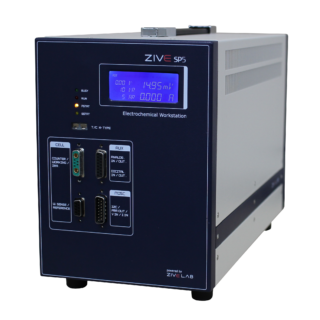
ZIVE SP5 – high quality potentiostat/galvanostat/impedance analyzer
Read more- Versatile high quality potentiostat/galvanostat/impedance analyzer
- Control voltage range : ±10V, ±1V, ±100mV
- Control current range : 50pA ~ 5A (500pA with gain, 11 ranges)
Application
- Battery / Super capacitor
- Fuel cell
- Corrosion
- Sensor
- Solar cell
- Other Echem experiments
Features
- high quality potentiostat/galvanostat/impedance analyzer
- ±10V@5Amp control range
- current range (11 ranges)
– 5nA to 5A
– 500pA with gain - frequency range : 10uHz ~ 1MHz
- built-in FRA : enables EIS tests
- 14 EIS techniques capability(option) including multisine
- capable of multitude of applications
– corrosion, general electrochemistry, sensor, battery, fuel cell,
supercapacitor, solar cell, etc. - bipolar pulse capability
- voltage pulse or current pulse charge/discharge test(GSM,CDMA etc.),
sine wave function for ripple simulation in battery test package
& pulse plating available - high speed data sampling time
– 2usec or 3usec depending on data point numbers - fast sweep mode(5000V/sec with 10mV data sampling)
- iR compensation & measurement
- 3 measurement/control voltage ranges &
11 measurement/control current ranges - internal 542,000 data point storage & continuing experiment regardless
of PC failure. - LCD diaplay
- multichannel configuration available by connecting multiple SP5 or other ZIVE products
- external booster (ZIVE ZB series) available
- inclues basic software, Energy/Impedance/Battery/Echem analysis software packages
- can use EIS data analysis software, ZMANTM and DC data analysis software
IVMANTMwithough purchasing license code - free software upgrade
Experimental Techniques
Basic techniques
- Potentiostatic
- Galvanostatic
- Double step potentiostatic
- Double step galvanostatic
- OCP measurement
- Potential sweep
- Current sweep
- Cyclic voltammetry
- Fast potential sweep
- Potentiostatic Ru measurement
- Galvanostatic Ru measurement
Advanced software techniques(included)
- EIS software package(EIS)
– Potentiostat EIS
– Galvanostatic EIS
– Pseudo galvanostatic EIS
– OCP* EIS
– Potentiodynamic PEIS
– Galvanodynamic GEIS
– Poteniodynamic HFR
– Galvanodynamic HFR
– Galvanostatic HFR monitor
– Potentiostatic HFR monitor
– Multisine potentiostatic EIS
– Multisine galvanostatic EIS
– Intermittent potentiostatic EIS
– Intermittent galvanostatic EIS
(*) The system measures open circuit potential before each frequency
change and applies AC sine wave on this potential.
- Corrosion software package(COR)
– Tafel(Tafel experiment)
– Rp(Polarization resistance)
– RpEc trend
– PDYN(Potentiodynamic)
– CYPOL(Cyclic polarization resistance)
– GDYN(GalvanoDynamic)
– Reactivation
– Galvanic corrosion
– Potentiostatic ECN
– Galvanostatic ECN
– ZRA mode ECN
- Energy software package(BAT)
a) Battery test technique
– CC/CV test for cycle life test of lithium battery
– CC/CC tet for cycle life test of NiCd or NiMH battery
– Discharging test
– EVS(electrochemical voltage spectroscopy)
– Variable scan rate CV
– Potentiostatic IV curve
– Galvanostatic IV curve
– Steady state CV
– PITT(Potentiostatic intermittent titration technique) test
– GITT(Galvanostatic intermittent titration technique) test
– Pulse mode is available for GSM & CDMA profile.
Pulse shape profile can be measured by user’s demand.
b) Control mode
– Charge : CC, CC-CV, pulse, sine wave
– Discharge : CC, CP, CR, pulse, sine wave
c) Cut-off condition
– Time, voltage, current, power, auxV etc.
– Various battery charge/discharge test is available including
pulse discharge for GSM, CDMA application
- Electrochemical analysis software package(EAS)
a) Step techniques
– CA(Chronoamperometry)
– CC(Chronocoulometry)
– CP(Chronopotentiometry)
b) Sweep techniques
– LSV(Linear sweep voltammetry)
– SDV(Sampled DC voltammetry)
– Fast CV
– Fast LSV
c) Pulsed techniques
– DPV(Differential pulse voltammetry)
– SWV(Square wave voltammetry)
– DPA(Diff.pulse amperometry)
– NPV(Normal pulse voltammetry)
– RNPV(Reverse normal pulse voltammetry)
– DNPV(Differential normal pulse voltammetry)
Options
- Power booster