Archives: Products
Showing 113–128 of 141 results
-

Silver / Silver Chloride Refillable Reference Electrode – 6 mm dia. (redox.me)
Read moreIt is a compact refillable Ag/AgCl reference electrode equipped with ceramic frit molten into the glass body. This electrode outperforms competing products in terms of mechanical stability, voltage stability and lifetime. In general, the reference electrode is composed of a system of phases, which retain an essentially constant composition, and therefore provides a stable potential by which the working electrode potential can be monitored. The phases present in reference electrodes undergo reversible redox processes at a very high rate, enabling them to rapidly adjust to changes in the solution’s ionic activity, but leaving them sensitive to the passage of large current densities.
Application note
This electrode is commonly used with aqueous acidic electrolytes, but due to the low resistance of the frit it can be used with standard non-aqueous electrolytes, as well. The reference electrode should be stored with the rubber plug applied on the tip. Please see the full instruction here. Keeping in the solution may shorten its lifetime (the electrode operates well as long as there is at least ¼ of the solution in the electrode tube). Before use rinse it with deionized water. If air bubbles are present around the porous frit, flick the tip several times to remove them. For cleaning use detergent (dish washing detergent with water), alcohols or acetone and rinse it with deionized water at the end. To re-fill the electrode please follow this article.Specification
effective length: 30 mm or 70 mm
tube diameter: 6 mm
filling solution: 3M KCl
potential stability: <5 mV
frit resistance: 2-10 kohm at RT
operating temperature: 0-100 deg C
potential vs SHE at 25 °C: 0.207 VIntrastat data
HS Code: 90278930
Country of Origin: Sweden
NET weight: 100gProduct includes
1 Ag/AgCl refillable reference electrode
1 O-Ring
1 glass tube for storing purposes -
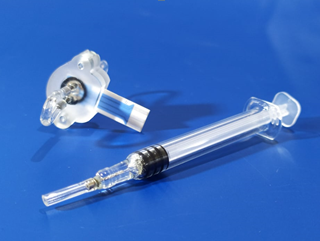
SIRE Sensor Cell Set (Sensor with Injectable Recognition Element)
Read moreThe SIRE Sensor Cell Set consists of a sensor with an integrated non-removable specialised chamber.
The set also contains a syringe which will allow the injection of the recognition element (Enzyme).
The SIRE Sensor Cell uses the concept of soluble enzymes into a reaction chamber separated from the sample by a semi permeable dialysis membrane. The analyte (for example maltose), enters into the reaction chamber by diffusion. The analyte reacts with the recognition enzymes creating H2O2 which is oxidized on a screen printed Pt electrode. The current corresponds to the amount of analyte.* For this product, we recommend our customers use the Training Service from BVT.
(https://bvt.cz/produkt/offer-of-long-term-automated-measurements-on-bvt-apparatus/)
-
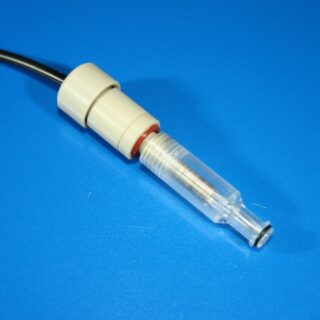
SOE.D*.E** Subminiature Oxygen Electrode
Read moreThe subminiature oxygen electrode consists of a PEEK body, platinum electrode, silver reference electrode and membrane holder.
The platinum electrode is melted in glass. The membrane holder with electrolyte is attached by thread. Subminiature oxygen electrode (SOE) is designed for measurements with thermostated cell TC4, TC5, TC6. It can be used for measurement in microtitration desk.
-
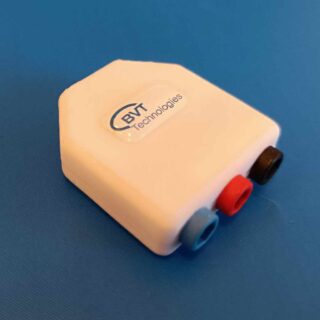
SPE Connector.1 for electrochemical sensors
Read moreThe connector enables the use of the biosensor or electrochemical sensor based on the substrates AC1, AC4, AC13 and TS1 1 in classical electrochemical arrangement.
The connector enables measurement with screen printed electrodes with width 7.26 mm and standard contact pads pitch (2.54 mm).
It is compatible with other SPE´s that use the same distance between the contact pads (2.54 mm).Termination: 2 mm Banana plugs
-
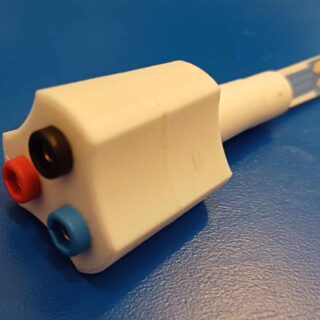
SPE Connector.GC.1 for measurements in glass
Read moreThe connector enables the use of the biosensor or electrochemical sensor based on the substrates AC1, AC4 and TS1 in glass cell TC4, TC5, TC6 or TC7.
The connector enables measurement with screen printed electrodes with width 7.26 mm and standard contact pads pitch (2.54 mm).
It is compatible with other SPE´s that use the same distance between the contact pads (2.54 mm). The cone at the connector sensor side is NJ 8/10 which enables to use the connector with any standard chemical vessels.Termination: 2 mm Banana plugs
-

Spectro-electrochemical flow cell setup (redox.me)
Read moreThis is a horizontally mounted, multi-purpose spectroelectrochemical cell designed to be used with standard UV-Vis or IR spectrometers. It enables obtaining electrochemical and spectroscopic information from liquid sample or thin films in systems where variations in applied potential induce changes in observed spectra. It consists of a polyether ether ketone (PEEK) flow chamber equipped with a magnetic or screw mount sample holder, screw mount quartz window holder and two different mini tripods. It well fits aqueous (FKM O-Rings) and organic solvent (FFKM O-Rings) electrolyte requirements.
The cell is meant to be used with a standard reference electrode having 6 mm in diameter and a counter electrode either in the form of a rod or helix with 6 mm in diameter and 15 mm active length.
Application note:
The spectroelectrochemical cell is used to study the relation between absorbance/transmittance and electrochemical potential. It enables real-time monitoring of optical change in electrochromic materials. It also enables in-situ spectral acquisition for detection, identification and characterization of short-lived electrochemically-generated species/intermediates, resulting in a detailed investigation of the mechanistic pathways of redox processes.Specification:
nominal exposure area: 1 cm2 (other values on request)
optical path length (electrolyte thickness): 12 mm
flow chamber volume: 1.75 mL
maximum substrate thickness: 4 mm
electrode plug diameter: 6 mm
minimum substrate size: 17 mm x 25 mm
recommended substrate size: 25 mm x 25 mmIntrastat data:
HS Code: 90275000
Country of Origin: Sweden
NET weight: 300 gSetup includes:
1 x Magnetic Mount Spectro-Electrochemical Flow Cell – MM spectro-EFC 1.75 mL (or Spectro-Electrochemical Flow Cell – spectro-EFC 1.75 mL)
1 x Metal Wire Auxiliary Electrode – 35HX15 0.6/235 mm (Platinum)
1 x Reference electrode (Ag/AgCl, or Ag/Ag+) -
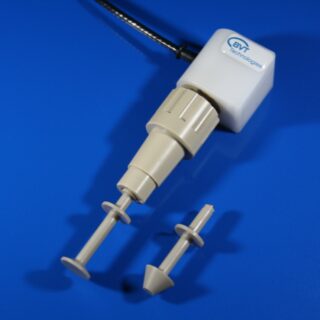
ST1.* Universal Stirrer for screen printed and classical electrodes
View products- The universal stirrer ST1 uses a common micro DC motor
- ST1 allows the solution to be mixed and the particles to be optimally transferred to the surface of the printed or conventional electrodes.
- The construction of stirrer assures the optimum mass transport with the minimum hydrodynamic noise.
- The supply voltage 0 – 5 V and the maximum current of 450 mA mean that it can be used as a USB device.
- The stirrer is manufactured from quality materials and suitable chemical measurements.
- Revolutions range: 120 – 12 000 rpm
-
ST3 Universal Stirrer for screen printed and classical electrodes
Read more- Precision Maxon motor with gearbox and encoder
- ST3 is controlled by PC software
- ST3 allows the solution to be mixed and particles to be optimally transferred to the surface of the printed or conventional electrodes
- The construction of stirrer assures the optimum mass transport with the minimum hydrodynamic noise.
- Stirrer is manufactured from quality and suitable chemical measurements.
- Revolution range: 20-1300 rpm (with resolution 1 rpm)
-

Standard electrochemical cell setup (redox.me)
Read moreThis is a stationary solution standard electrochemical (electrolytic) cell for measurements of electrodes in a form of:
a) rod/disc (6 mm dia.),
b) thin film deposited on a flat substrate (using a sample holder) and
c) free-standing membrane (using the basic sample holder).
The working, counter, and reference electrodes are mounted in a top casing either in 2-, or 3-electrode setup. The cell has two spare ports for connection of e.g. thermometer, Clark electrode, pH meter electrode, or other 6 mm dia. electrode/probe.
The cell elements are constructed with materials that are inert to the sample (glass and PEEK). It well fits aqueous (EPDM O-Rings) and organic solvent (FFKM O-Rings) electrolyte requirements. The construction is gas-tight and can be used when the removal and exclusion of contaminants such as oxygen and water is required by bubbling of an inert gas through the electrolyte. The jacketed model is available here.
Application note
The reference electrode tip should be placed close to a working electrode center. This will ensure a low potential drop throughout the electrolyte solution for low-current experiment. Various auxiliary electrodes are suitable for this cell including metal wire and metal foil electrodes as well as graphite rod. The bubbling of gas through the solution must be stopped prior to experiment.Specification:
maximum electrolyte volume: 100, 150, 200, 250, 350, 500 or 1000 mL
electrode plug diameter: 6 mm
number of electrode ports: 5
vial material: borosilicate 3.3 glassIntrastat data:
HS Code: 90309000
Country of Origin: Sweden
NET weight: 200 g (100, 150 mL), 300 g (200, 250, 350 mL), 400 g (500 mL), 600 g (1000 mL) -
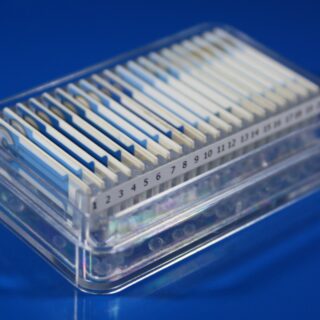
STK Starting kit
Read moreStarting kit STK.S
Set of twenty electrochemical sensors with a simple connector to find the best one to fit your application.
Starting kit is the set of twenty different electrochemical sensors to find the best one to fit your application. Starting kit contains 10 types of electrochemical sensors (2 sensors of each type), simple sensors connector and sensors box with numbered positions and silica gel.
-
STK-C Customer Starting kit
Read moreStarting Kit STK.S-C
The customer starter kit is a set of twenty different electrochemical sensors to find the best one that suits your application.
The starter set contains at least 5 pcs of sensors type AC1.W*.R* from the given type of sensors with a working electrode diameter (Dw) 1 or 2 mm stored in a box with numbered positions and silica gel.
The exact choice of the given types of sensors in the kit is at the request of the customer.
-
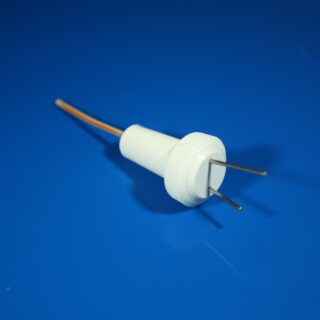
STP1.* Stoppers for Cells
Read moreStoppers are formed from white PBTP (Polybutylenterephtalate). They are used for covering of the glass cells produced by BVT.
The system with the stopper is closed and space is prevent from solution evaporation.
Model Recommended Vessel Termination STP1.S TC4, TC5, TC6 Stopper for TC4, TC5, TC6 STP1.1 TC4, TC5, TC6 Stopper with bubbling STP1.2 TC4, TC5, TC6 Stopper with tubing STP1.3 TC4, TC5, TC6 Middle stopper -
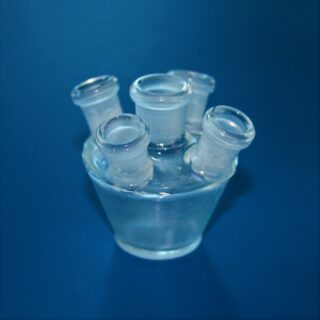
TC4 Electrochemical Glass Cell
Read moreSimple borosilicate glass cell serves for electrochemical measurements.
The temperature of the analyzed solution can be controlled when placing the cell in MT1-1 minithermostat.
Cell openings are designed for electrochemical sensors connector KA1.C, classical electrodes WCEc, ACEc, RCEc and stirrer ST1, ST3 separately.
-
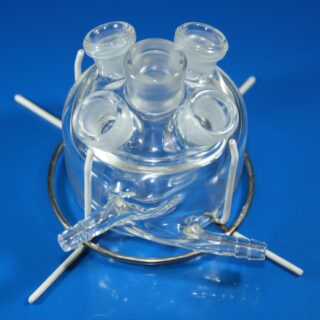
TC5 Electrochemical Glass Cell
Read moreBorosilicate glass cell serves for electrochemical measurements. The cell is jacketed.
The analyzed solution can be thermostated by external thermostat.
Cell openings are designed for electrochemical sensors connector KA1.C, classical electrodes WCEc, ACEc, RCEc and stirrer ST1, ST3 separately.
-
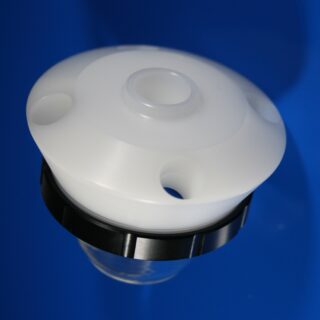
TC6 Electrochemical Glass Cell
Read moreBorosilicate glass cell serves for electrochemical measurements.
The analyzed solution can be thermostated by minithermostat MT1-1.
Cell openings are designed for electrochemical sensors connector KA1.C, classical electrodes WCEc, ACEc, RCEc and stirrer ST1, ST3 separately.
The device enables the measurement with inserted samples.